

Opinion
Opinion: Black and Brown New Yorkers deserve an immediate solution to the homeowner crisis
New York City’s ban on short-term rentals is inadvertently pushing Black and Latino homeowners towards financial hardship. The City Council must fix it.
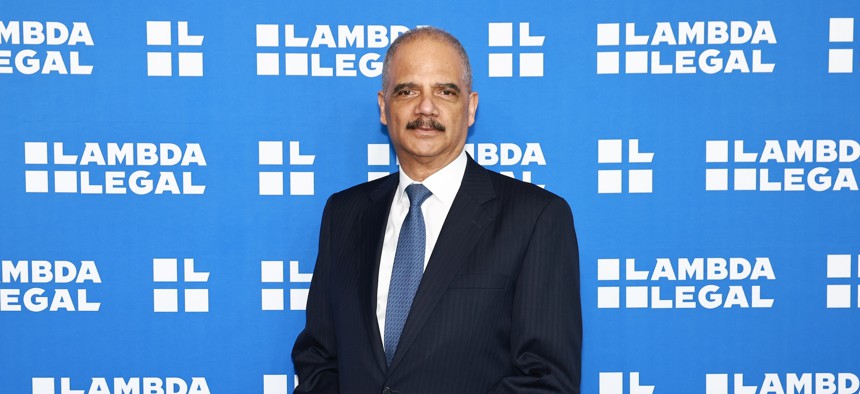
Former U.S. Attorney General Eric Holder attends Lambda Legal’s 2024 National Liberty Awards on May 30, 2024. Arturo Holmes/Getty Images


Editor’s note: Eric Holder has worked as an adviser to Airbnb on issues such as racial bias.
In the New York I grew up in, homeownership meant something. Even in a city primarily of renters, it was possible, with enough hard work, for middle-class New Yorkers to own a piece of the American dream – especially if they lived in the “outer” boroughs.
Today, that dream is fading for the grandchildren of Caribbean immigrants in Flatbush, Dominicans in the Bronx and Black families in my native East Elmhurst. New York's median home price has jumped from $450,000 in 2010 to $785,000 today. And the city's homeownership rate sits more than 50% below the national average.
It’s one reason why, over the last 25 years, more than 200,000 Black New Yorkers have left – creating not just a demographic crisis, but a political one, too. Fewer people means fewer Congressional seats and less political power for communities that built this city.
While there are many factors driving this crisis, one is entirely within our control. Local Law 18, enacted two years ago to prevent badly needed apartments from being turned into investment vehicles, is inadvertently pushing Black and Latino homeowners towards financial hardship.
Before Local Law 18, a single mom facing an unexpected property tax bill could rent her home for a couple weeks to cover the cost. A family could host guests for a month to help make their mortgage payment. Now, those same homeowners are prevented from renting their property unless they’re physically present. Even then, they’re only allowed to host two guests at a time and can’t even lock their own bedroom door.
These aren’t the predatory investors that Local Law 18 was understandably designed to keep out. They’re regular people who saved for years to buy a home, or who inherited one from parents who did. Now, they’re in danger of losing their most valuable asset. And if they’re forced into foreclosure, their homes will be sold – likely to buyers who can afford to sit on the property or flip it to make a profit.
Even some of Local Law 18’s original supporters, including former Council Member Alicka Ampry-Samuel, who chaired the City Council’s public housing committee at the time the law was being deliberated, have said publicly that this was never their intent.
The good news is that New Yorkers have a chance to start making things right. Int. 948a, a bill before the City Council right now, would make modest adjustments to Local Law 18: allowing homeowners to rent their property while traveling, removing the two-guest cap and restoring basic privacy protections.
These are reasonable corrections that maintain the protections against investor abuse while giving regular homeowners a fighting chance and a deserved choice. And while some opponents of the bill have used unfortunate racist scare tactics to try to grind progress to a halt, their arguments couldn’t be further from the truth.
I’ve seen what a foreclosure crisis looks like from the inside. As U.S. attorney general, I spent years trying to end the fraudulent lending practices that destroyed communities in the financial crisis. Now, I'm watching a new set of warning signs: rising utility bills, discriminatory lien sales and families so frustrated that they're leaving for other cities rather than fighting to stay.
As a native New Yorker, it’s heartbreaking. And if we don’t stop the exodus, everyone will feel the pain.
East Elmhurst, which was the home of Malcolm X and Louis Armstrong and produced political leaders like Helen Marshall, could lose the voting power it enjoyed for generations. A city that sent Adam Clayton Powell and Charlie Rangel to Congress could watch that legacy fade. Redistricting after the next census will reflect these losses, diminishing New York's voice in national politics for a decade or more.
Optimists may believe that New York will always be New York, and that other people will always come. But the families leaving aren't just residents – they're the foundation of the city's true soul, its diversity and deserved political strength. Replacing them with wealthier newcomers doesn't preserve what makes New York exceptional. It erodes it.
Anyone who has worked in government knows that progress is a game of inches. Fixing the unintended consequences of well-intended Local Law 18 and easing restrictions on short-term rentals won’t solve the housing crisis, but it will be progress. And we should take that every chance we can get.
Eric Holder is the former attorney general of the United States.
NEXT STORY: Opinion: What’s next for Mamdani’s criminal justice agenda?