

Opinion
Opinion: Albany must update our evidence laws to protect taxpayers
It’s wasteful and antiquated to require live grand jury testimony to authenticate digital business records like Uber receipts.
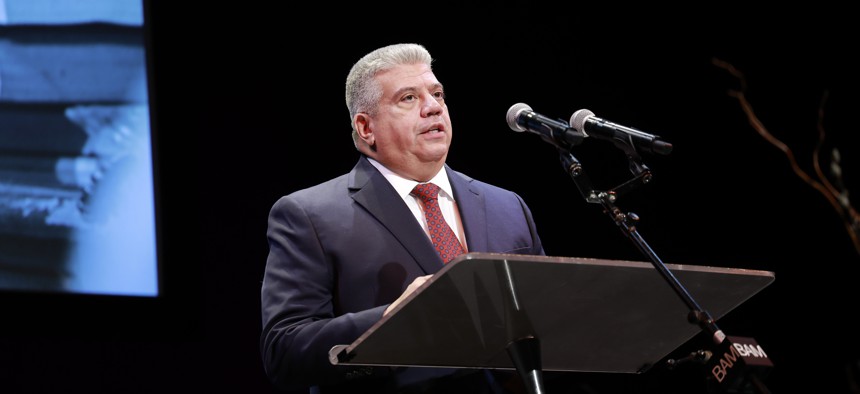
Brooklyn District Attorney Eric Gonzalez speaks at the 38th Annual Brooklyn Tribute to Dr. Martin Luther King, Jr. on Jan. 15, 2024. Jason Mendez/Getty Images for Brooklyn Academy of Music


Across New York, grand juries consider serious cases built on the evidence of modern life: Uber receipts, social media messages and digital files that reveal where someone was and when. These unremarkable records often hold the key to truth and accountability. Yet in our courtrooms, we still treat them as if they were papers pulled from a filing cabinet.
Picture a grand jury weighing a violent crime where digital evidence matters. A single Uber receipt can show when a suspect traveled and where they were dropped off. Yet in New York, using that simple record often triggers an expensive procedure that belongs in a museum, not a courthouse.
To present that evidence, taxpayers may have to pay for a company representative to fly in from across the country, someone with no connection to the case whose only role is to confirm what no one disputes: that the record is authentic and kept in the ordinary course of business. Their testimony adds nothing about guilt or innocence; it’s a formality performed at real cost. Of the 22 states that require indictment by a grand jury, New York is the only one that requires a witness to appear in person to authenticate routine business records before they can be admitted as evidence.
This outdated practice adds expense, not fairness, and diverts funds from the work that keeps communities safe.
In 2025, Brooklyn recorded the fewest homicides and shootings on record. Those results came from investing people and dollars in strategies that prevent violence, support victims, and hold offenders accountable. We should not be diverting those same funds and personnel to fly in witnesses whose only purpose is to vouch for an email receipt.
New York already knows a better way. State law allows certain business records, such as bank ledgers and telephone bills, to be admitted through sworn written statements rather than live witnesses. But that rule stops short of the digital age. A complex financial record can enter the grand jury file by affidavit, while a simple app-based timestamp still requires a witness to appear in court.
That is why the state Legislature should pass the Grand Jury Records Modernization Act (A7896/S8298) early this session. The bill modernizes our practice so that standard business records, whether digital or paper, can be introduced through a sworn affidavit with the same safeguards for privacy and accuracy.
It also preserves defendants’ rights. If a legitimate reason exists to question whether a record is authentic, live testimony can still be required. The point is not to remove scrutiny; it is to stop pretending that scrutiny requires a plane ticket every time a data log exists. And when a case proceeds to trial, those same records must still be authenticated through live testimony before a jury.
Other jurisdictions have used this approach sensibly for years. New York even began modernizing this process in 2008 but never completed the job. The result is a half-digital system that wastes time and public money and delays justice.
This reform is modest, practical and overdue. It respects taxpayers by cutting needless costs. It promotes fairness by giving every county the same access to efficient procedure. And it speeds up cases without sacrificing integrity, because a sworn affidavit carries the same penalties for dishonesty as live testimony.
Our evidentiary rules should help grand juries find truth, not turn routine records into bureaucratic theater. Passing the Grand Jury Records Modernization Act is one small fix that will make New York’s justice system smarter and fairer, ensuring that tax dollars stay focused on sustaining our record-breaking progress in public safety.