

Opinion
Opinion: How career pathways in health care help all generations of New Yorkers
SkillSpring helps connect young people to careers that allow them to stay in New York and build dignified lives while strengthening the workforce that cares for our aging population.
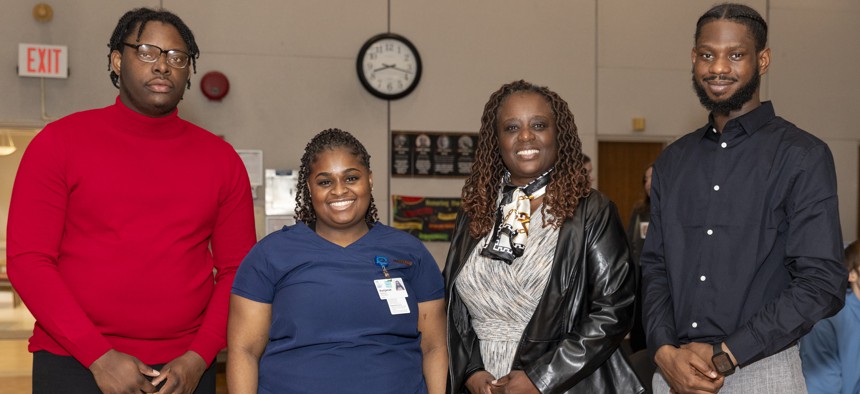
State Sen. Cordell Cleare, second from right, with participants in The New Jewish Home’s SkillSpring program, which trains young adults from underserved communities to become certified nursing assistants. Tadej Znidarcic


New York City has become an increasingly difficult place to enter the workforce and set yourself up on a successful career path. Hiring has slowed over the past year, and the youth unemployment rate is rising. For too many young people, that means being unable to break into an entry-level role and subsequently struggling to pay for everyday needs or leaving the city altogether. At the same time, our oldest New Yorkers are also at risk, as rising costs and workforce shortages strain the systems meant to care for them.
In the midst of this crisis, our city’s population is aging rapidly, while the health care workforce responsible for supporting older adults is facing severe shortages. Skilled nursing facilities across the city are struggling to recruit and retain Certified Nursing Assistants (CNAs), the backbone of hands-on care. By 2030, the New York State Department of Labor projects that New York City will need an additional 6,000 CNAs beyond current open positions. These staffing gaps compromise care quality, limit access for vulnerable older adults and place enormous pressure on the caregivers who remain.
Solving the workforce crisis begins with creating clear pathways to stable, long-term careers for young people – pathways that also reinforce the caregiving system our older residents rely on.
Becoming a CNA offers a critical entry point into the health care workforce. Entry-level CNA wages exceed $24 per hour at unionized skilled nursing facilities in New York City – approximately $14,000 more per year than full-time minimum wage work. Over 25 years, becoming a CNA can increase earnings by an estimated $350,000. CNA positions represent an initial rung on the health care career ladder, opening up opportunities to become a Licensed Practical Nurse or Registered Nurse – leading to even greater stability and strengthening the caregiving workforce.
When young people can enter fields that offer advancement and access to a brighter future, they are more likely to stay in New York and remain in caregiving roles over time. If we are serious about creating opportunities for young people while caring for an aging population, workforce development must be central to our strategy.
That is why I champion The New Jewish Home’s SkillSpring young adult program. Since 2014, SkillSpring’s full-time, 3-month program has prepared out-of-school, out-of-work young adults ages 18 – 27 for careers as CNAs. SkillSpring’s programming recently expanded to now include adults up to 40 years of age. It is specifically designed to address staffing shortages in skilled nursing facilities while creating good-paying, union health care jobs with clear opportunities for advancement for young people from underserved communities.
What sets SkillSpring apart is its understanding of real-life barriers. The program pairs rigorous classroom and clinical training with wraparound supports such as stipends, transportation assistance, case management, tutoring and one-on-one coaching. Program graduates who pass their CNA exam are guaranteed a job with benefits and clear opportunities for advancement, creating stability not just at entry, but over the long term.
Since launching with just 27 participants in 2022, SkillSpring’s young adult program has grown rapidly and is projected to serve more than 220 participants in 2026. Overall, SkillSpring’s high school and young adult programs have supported more than 1,500 participants and helped create over 900 jobs or paid internships for young New Yorkers.
For older adults, programs like SkillSpring mean better care, as caregivers can grow in their roles and build a solid future in health care. Last year, The New Jewish Home began piloting a registered apprenticeship model for SkillSpring in order to provide continued mentorship and advancement for new CNAs, reinforcing its commitment to helping people advance and stay in the sector.
This is why I am calling on the state Legislature to include a $2.5 million investment in SkillSpring in this year’s state budget. This targeted funding would allow the program to expand further, train more caregivers and directly respond to staffing shortages right now – while strengthening a long-term health care workforce pipeline.
A real solution means connecting young people to careers that allow them to stay in New York and build dignified lives while strengthening the workforce that cares for our aging population. This is how we protect both generations at once – and how we ensure our city remains livable, compassionate and better prepared for the future.
Cordell Cleare is a state senator representing the 30th Senate District, which includes Harlem, East Harlem (El Barrio), the Upper West Side, Washington Heights, Hamilton Heights and Morningside Heights. She is the chair of the Senate Committee on Aging.
NEXT STORY: Opinion: A racial equity plan must guide Mamdani’s budget process