

Policy
Hochul quietly signs bill to stop conservatives from hijacking WFP ballot line
The new law makes it easier for the progressive third party to un-enroll someone “not in sympathy with the principles” of the party.
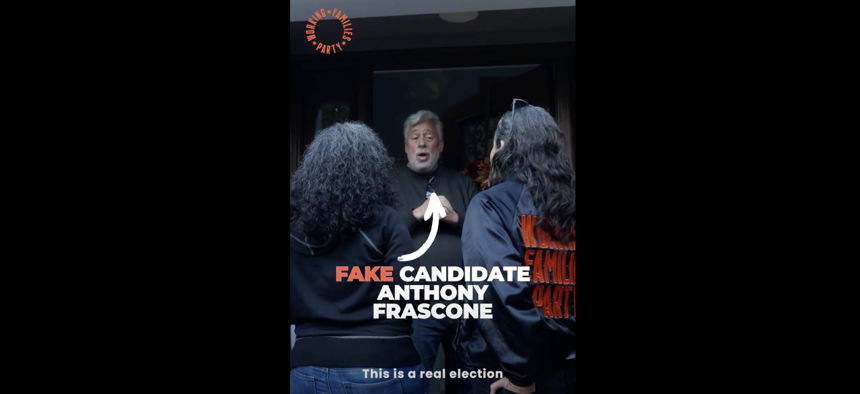
A new law would allow the New York Working Families Party to prevent their ballot line from being hijacked, so it won’t have to run attack ads against its own nominees. New York Working Families Party



In New York, one of only two states to regularly employ fusion voting, the apparent hijacking of third-party lines has been all the rage the past two years. It has been a particular thorn in the side of the New York Working Families Party, which has seen people with no apparent ties to the progressive party win their ballot line, to the detriment of Democrats. But Gov. Kathy Hochul quietly signed a new law earlier this month meant to stop this from happening in the future.
The phenomenon first became a high-profile issue in 2024, when Anthony Frascone beat out former Rep. Mondaire Jones for the WFP ballot line in his comeback bid for Congress. Party officials had no idea who Frascone was, and he had voted with the Independence and Republican Parties in the past. Frascone didn’t run a campaign and few even laid eyes on him during the race. In the end, WFP leaders encouraged their own voters in the Hudson Valley not to vote on the WFP line and accused Republicans of planting Frascone to block Jones from appearing on the WFP line, as Democrats generally do. A handful of similar apparent hijacking incidents have happened since then.
Until now, the WFP has had no recourse when someone with no apparent ties to the party attempts to gain access to its ballot line. Such ballot hijackings are usually addressed by a party’s local county committees, which the WFP does not have. That is where state Sen. Pete Harckham and Assembly Member Dana Levenberg came in.
The two legislators introduced a bill this year that would permit a state party to take action in the absence of a county party. They specifically cited the Frascone case in a memo accompanying the bill.
Normally, the chairperson of a county committee can find an enrolled member “not in sympathy with the principles” of the party after another member makes a complaint and local leaders hold a hearing. Upon that finding, a judge will cancel that person’s party enrollment, so long as the original complainant begins proceedings at least 10 days before the primary.
With the new law change, state party officials can elect a person to receive complaints, hold hearings and make determinations if no county committee exists. Had someone been able to make a complaint about Frascone while he initially ran against Jones for the WFP nomination, the party could have kicked him out before he won the line, thus removing him from the ballot.
The statutory tweaks took effect immediately after Hochul signed the bill, so the WFP now has recourse to un-enroll someone who attempts to appear on its ballot line without any apparent ties to the party or without running a campaign.
“In the absence of this legislation, political operatives have been running dubious campaigns for minor party lines to assist major party candidates seeking to win without earning the support of a majority of voters through honest campaigns,” Levenberg said in a statement. “Governor Hochul's signature on this legislation will help deprive bad actors of an increasingly popular opportunity to cheat their way to victory.”
While the Frascone incident had lots of eyes on it, Jones’ absence from the WFP line did not play an outsized role in his eventual loss to incumbent Rep. Mike Lawler. But a much lower-profile, though very contentious, race for a town supervisor position on Long Island may well have been decided thanks to a candidate with no clear ties to the WFP blocking the party’s line from the cross-endorsed Democrat.
The new law in effect benefits just the WFP – it is the only one of New York’s four parties with automatic ballot access that does not have county-level committees. And despite the attention that so-called ballot raiding has gotten over the past year, the legislative fix has gotten very little attention. Harckham and Levenberg introduced the measure in April with no public statements, and it passed in both chambers shortly before the end of the legislative session this year with little fanfare. And the WFP has repeatedly declined to comment on the record about the bill when asked by City & State both before and after Hochul signed it.
The governor did not provide an approval message with her signature, which could provide insight into her decision. In a statement to Newsday last week, a Hochul aide called the measure a “common-sense fix.”
NEXT STORY: Hochul’s year-end vetoes and signatures