

Budget
Gov. Kathy Hochul’s FY 2027 executive budget proposal: by the numbers
It’s not an “austerity budget,” but it’s cautious.
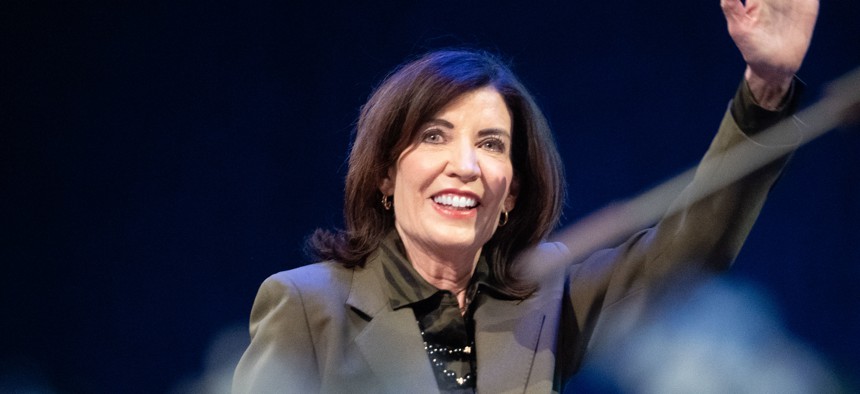
Gov. Kathy Hochul Office of the Governor



Gov. Kathy Hochul rolled out a preliminary budget proposal Tuesday that would significantly increase funding for child care, reduce energy bills, invest in infrastructure and boost money for Medicaid and food assistance to make up for federal funding cuts – all apparently without raising taxes.
The sweeping plan, much of which focuses on making the state more affordable, comes as the governor faces what’s expected to be a competitive reelection battle. While Hochul emphasized that the proposal is not an “austerity budget,” thanks to higher-than-expected Wall Street revenues, it doesn’t make too many ambitious swings, focusing largely on keeping existing programs and requirements funded. Federal funding is expected to drop significantly in the coming fiscal year and more uncertainty is on the horizon.
“We do have real momentum here in New York, you can feel it. It’s real,” Hochul said, emphasizing the need for vigilance. “But we have real volatility on the road ahead because of this uncertainty from Washington.”
Ahead of her Tuesday afternoon address, Hochul released a 140-page book detailing her budget for the 2027 fiscal year. Here’s a rundown of some of the biggest takeaways from the plan.
$260 billion – The size of the preliminary executive budget Hochul proposed for the 2027 fiscal year – an increase of about $6 billion from last year’s enacted plan. That’s a smaller increase than what’s been proposed in previous years due to the uncertainty surrounding federal funding.
$5.9 billion – The total amount of surplus funds for the fiscal year currently ending plus projections for the upcoming fiscal year.
0 – New income or corporate tax hikes proposed in the budget. This was a hot topic going into the new year given New York City Mayor Zohran Mamdani’s calls for Hochul to increase taxes for the state’s wealthiest residents and businesses. In a statement, Mamdani said, “It is time to ask New York City’s wealthiest and large corporations to pay their fair share, while also working toward a fiscal relationship with the State that better reflects New York City’s status as the economic engine of the state.”
3 – The number of years Hochul proposed extending the state’s top corporate franchise tax rate of 7.25%, which was set to expire this year. That rate was temporarily raised from 6.5% in 2021 under former Gov. Andrew Cuomo. The latest proposal would establish a sunset date of 2029.
75% – The wholesale tax on tobacco products, which currently exists, would be expanded to include other smokeless products like Zyn.
$84.4 billion – The amount of money that the state is expecting to receive in federal funding in the coming fiscal year.
$10.3 billion – The amount that federal funding is decreasing in this budget – about a 11.4% decrease from last year. While some of that was from pandemic relief funds running out, it’s a notable, consequential drop. A $3 billion decrease in recurring Medicaid funding is likely the worst cut of the bunch, at least for now.
33% – How much of the proposed budget relies on federal funding.
$14.6 billion – How much the state has in its rainy day reserves, funding that could serve as a backstop against a recession or additional federal funding cuts.
$68.4 billion – Funding for the MTA’s 2025-2029 Capital Plan, which supports a bevy of transportation-related investments.
$1.7 billion – Increased funding to expand child care across the state, raising total spending to $4.5 billion in the coming year. This is the biggest new spending area included in the budget proposal.
$77 million – New funding to keep extra police stationed within New York City’s subway system during 2026.
$30 million – Funding for New York farmers who’ve been adversely impacted by tariffs imposed by the Trump administration.