

Real Estate
‘Mr. Mayor, I would choose you as an adversary any day of the week.’ Some Council members are readying for latest rental voucher fight
Advocates and some City Council members say expanding CityFHEPS housing assistance is key to preventing homelessness. Budget watchdogs warn it’s unsustainable.
Advocates aren’t giving up on expanding CityFHEPS. Grace Thomas


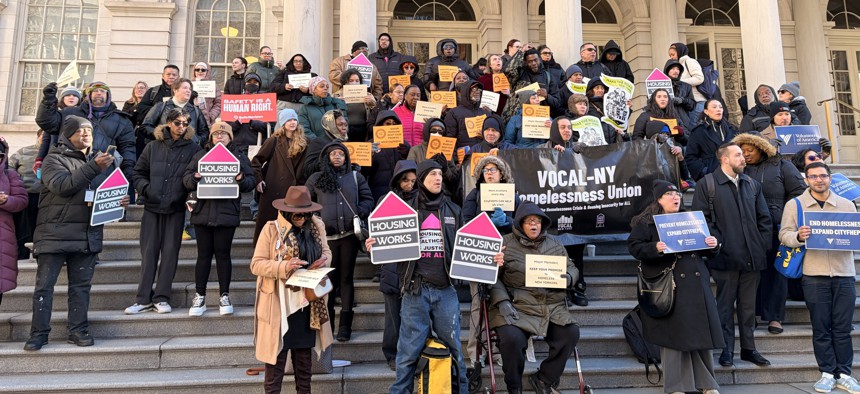
On the steps of City Hall Tuesday morning, the rallying cry was equal parts policy demand and campaign reminder. “Mayor, mayor, haven’t you heard, it’s important to keep your word,” housing advocates chanted ahead of the City Council’s preliminary budget hearing on general welfare, where the soaring cost of city rental vouchers was on the agenda.
As homelessness soars in New York City, the City Council has long wanted to expand eligibility for the rental voucher program known as CityFHEPS. They passed a law to do so in 2023, setting off a protracted legal battle with then-Mayor Eric Adams, who said the program was too expensive. Mayor Zohran Mamdani ran on a promise to expand the program and drop the lawsuit blocking the 2023 expansion. But now, facing a significant budget deficit, Mamdani has walked back that pledge.
CityFHEPS, or the City Fighting Homelessness and Eviction Prevention Supplement, was launched in 2018 as a consolidation of multiple rental subsidies. It’s the second-largest voucher program in the nation, behind NYCHA’s Section 8 housing program. More than 66,000 households receive the vouchers, or 147,000 individuals.
At Tuesday’s rally, City Council Member Pierina Sanchez told the crowd that 42,000 families have been evicted since the housing voucher expansion package passed in 2023 and said 25,000 could have stayed in their homes if they had access to CityFHEPS. She said she’s willing to go against this mayor to fight for the program. “Mr. Mayor, I would choose you as an adversary any day of the week,” she said.
Speaking at the council hearing later on Tuesday, Sanchez, who sponsored two CityFHEPS expansion bills in 2023, said the program is “one of the most effective tools that our city has to stabilize families” and noted that the Council went so far as to override Adams’ veto to broaden eligibility. It was the first veto override in a decade.
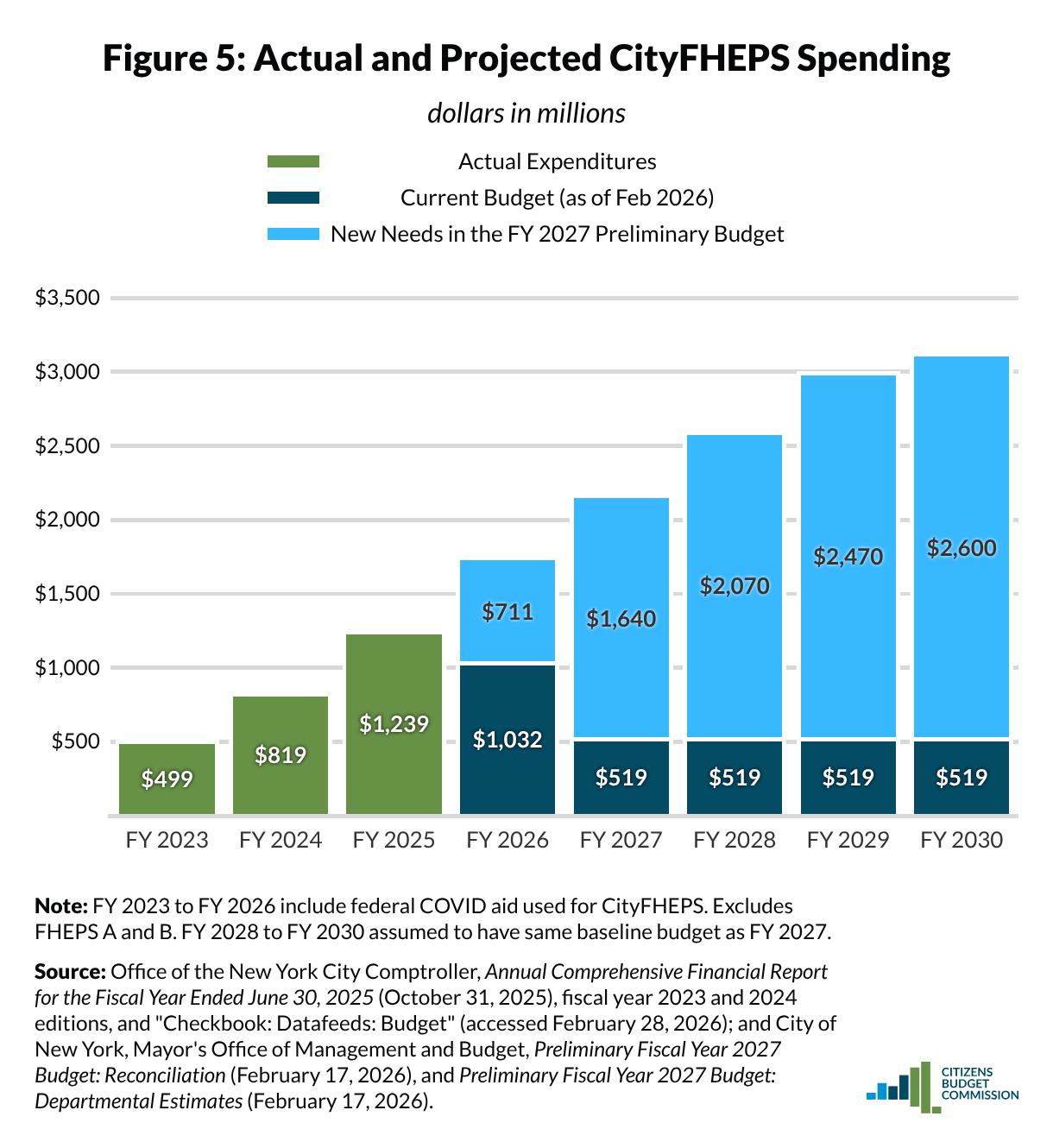
The fiscal watchdog group Citizens Budget Commission is paying attention to the price tag. The initial cost of CityFHEPS in fiscal year 2019 was about $25 million. Since then, the cost has ballooned.
The program budget has tripled in the past three years, from $500 million in fiscal year 2023 to a projected $1.78 billion this year. If the council’s broader eligibility mandates are fully implemented, the CBC warns that expansion would drive costs to between $4.7 and $9.6 billion by fiscal year 2030.
“The city cannot voucher its way out of the homelessness crisis, and it isn’t,” Ana Champeny, vice president for research at the Citizens Budget Commission, testified. “Not only is the program fiscally unsustainable, but even as the number of city-funded vouchers has more than tripled, the number of households in shelters hasn’t shrunken. In fact, excluding migrants and asylum-seekers, it has increased by 21.5%.” The CBC has advocated for capping the program at the current number of vouchers to save $3 billion over the five-year financial plan.
Housing voucher proponents don’t dispute that the program has exploded. They argue that’s the point. “For every 100 extremely low-income families in the New York City metro, there are only 35 apartments that are available and affordable to them,” said Alison Wilkey of Coalition for the Homeless. She said that, according to city data, about 70% of the exits from city homeless shelters involved CityFHEPS. “If we hadn't had CityFHEPS, then we would have far more than 100,000 people in shelters at this moment.”
There is no strong mechanism to move people out of the CityFHEPS program. “If we keep letting people in the program – and that’s good – they’re moving out of shelter or avoiding shelter in the first place,” said Erin Dalton, commissioner of the city’s Department of Social Services. “But if there's no exit (from) that program, it continues to grow.”
Moving CityFHEPS recipients toward self-sufficiency has not been a focus for DSS, representatives testified, though they do offer career service programs for those who receive cash assistance. Only 25 to 30% of households using the program report having any income, they said.
On paper, the housing voucher program looks like a bargain compared with homeless shelters. DSS officials testified that it would cost about $4,600 to put a single adult in a shelter for a month, compared to the $2,646 payment standard for a studio apartment under CityFHEPS. But the Citizens Budget Commission says the average shelter stay is 15 months, while housing vouchers run for five years or longer, turning a cheaper monthly option into an expensive long-term commitment.
For members of City Council and housing advocates, the issue is much larger than finding billions in the budget. “The city is left with a moral choice here,” said Wilkey. “Do we invest in CityFHEPS to house people and make sure our people - our residents - have a home? Or do we leave people in homelessness?”