

Rikers Island
With new leadership, advocates are daring to hope for change at Rikers
Mamdani’s Department of Correction Commissioner Stanley Richards and federal Remediation Manager Nicholas Deml will work side by side. Their task – fixing a notoriously dysfunctional jail system – is daunting.

Rikers Island won’t close by 2027, but with borough-based jails underway and new leadership, there is hope that it will eventually close. Andrew Lichtenstein/Corbis via Getty Images



The next chapter is beginning at the notorious Rikers Island jails complex, spurred by new leadership and an even newer sense of hope that finally, the system’s long-standing cycle of violence and dysfunction might come to an end.
Two potentially transformative newcomers are taking the helm: Stanley Richards, the reform-minded commissioner New York City Mayor Zohran Mamdani chose to lead the city Department of Correction, and Nicholas Deml, the powerful court-appointed manager tasked with rehabilitating city jails.
The challenges are immense. At least 50 people have died in city jails or shortly after they were released in the past three years, including two people who died just this month. Violence against incarcerated people and correction officers persists, aging infrastructure has created safety problems and the Department of Correction has struggled to retain and recruit enough officers to supervise a rising population. Despite the de Blasio-era law requiring the closure of Rikers Island by August 2027, roughly 6,700 people were incarcerated there as of Jan. 1 – a number far eclipsing the 4,500-person capacity planned for four borough-based jails and additional psychiatric hospital beds. About half of Rikers’ population has been diagnosed with a mental health issue, making city jails one of the country’s largest psychiatric institutions. And for all the opportunity that comes with having a third-party federal “remediation manager” – someone with the authority to act independently of the mayor – the lines of jurisdiction between Deml and Richards aren’t obvious. Criminal justice advocates and corrections experts expect a learning curve.
Despite this, the overarching consensus is clear. This is the best chance the city’s incarcerated population has had. Maybe ever.
“I don’t have a crystal ball, but this partnership and this administration makes for a very exciting time,” said Mary Lynne Werlwas, the director of The Legal Aid Society’s Prisoners’ Rights Project, which has been fighting to reform city jails since the 1970s. “This is a really great opportunity – one of the best opportunities the city has had in decades to make real progress.”
The federal boss on the island
Deml is a former CIA officer who led the Vermont Department of Corrections between 2021 and 2025. While he has a broad background in criminal justice, helping lead national organizations like the Council on Criminal Justice and the Correctional Leaders Association, he has little experience with the city’s jail system. Richards does, both on a personal and professional level. He was incarcerated on Rikers Island throughout his youth, later working his way up to president and CEO of The Fortune Society, a massive nonprofit that helps people reenter society after leaving jail. He also served as deputy commissioner of the Department of Correction during the last six months of the de Blasio administration, giving him administrative experience at the complex agency.
In interviews, nearly a dozen criminal justice advocates and corrections experts said they were optimistic about the different skill sets Deml and Richards bring to the table, but there is little precedent for the dynamic expected to unfold between the two men over the next few years. Deml’s appointment is the culmination of 14 years of litigation tied to a class-action lawsuit that alleged “a culture of routine and institutionalized staff violence against inmates” at city jails demanded reform. In 2015, Manhattan federal Judge Laura Taylor Swain installed a monitor to supervise Rikers and issue regular reports. Frustrated by the lack of progress, Swain took another step, announcing last year that an outside entity would assume control of city jails. It was a last resort – a court’s most aggressive tool to implement reforms, save for outright closure of the jails. Judges have only ever taken similar action in a handful of cases, only deeming it necessary for jails and prisons with the most egregious and intractable challenges. Deml was among those who applied for the position.
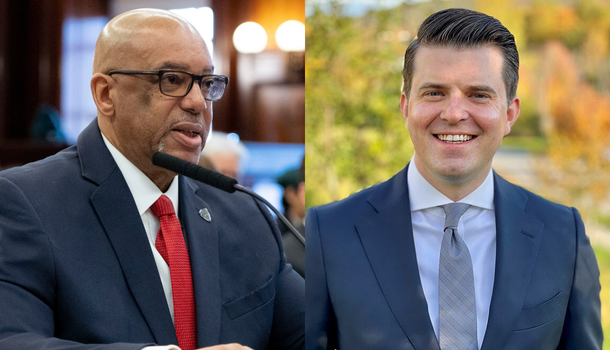
Deml did not respond to a request for comment. He has yet to speak to any reporters, likely due to an order from Swain requesting that he refrain from doing so. His first day on the job is March 30, though he has spent the past few weeks building out his team and meeting with Richards. Soon though, both men will be on the ground working side by side on Rikers Island. Deml and his team will operate out of a trailer, according to Richards, while he’ll be working from an old chapel.
The new commissioner has been very positive about their partnership despite the unorthodox arrangement. “Both of us think about this as not relying solely on our knowledge and our expertise, but to tap the expertise that’s out there. We want to learn from others, bring that information in and assess what we are doing,” Richards said of Deml. “We’ve had really good conversations, and I’m looking forward to this work ahead.”
Others have said Richards is well-positioned to work through some of the challenges likely to come with having to cede authority to an outside party. “Stanley is great, period, but he’s also very diplomatic. He gets the politics and he can certainly get along with a variety of people,” said Michael Jacobson, who served as correction commissioner under then-Mayor Rudy Giuliani. “I told Nick (Deml) this early on, he’s a perfect partner for him.”
Who has final say?
The Department of Correction now has many overlords – even going beyond Mamdani, Deml and Richards. Thanks to legislation passed by the City Council last year, the mayor is currently looking to hire a “borough-based jails czar” to oversee efforts to close Rikers Island and replace it with the four smaller facilities. Steve Martin, an Austin, Texas-based attorney, also remains as the federal monitor, reporting on progress. And there’s the city’s Board of Correction, a nine-member oversight agency.
There are many questions about who will have authority over what. It’s difficult to know so early into the arrangement, but Swain’s decision to make Deml a “remediation manager” instead of an all-powerful “receiver” further complicates things. While a typical receivership would fully strip the city of its control over Rikers Island, Swain specifically ordered Deml and the city to work together.
Broadly speaking, Deml will have authority over 18 areas of the jail system laid out in Swain’s rulings – areas that she says city officials failed to adequately reform, including the Department of Correction’s policies around the use of force, its investigations following violent incidents, disciplining staff, deescalation tactics, protecting incarcerated youth and more. He’ll also have the power to hire, fire or promote staff and create or get rid of positions as needed. While Richards will report to the mayor, as is custom for an agency commissioner, Deml will report directly to Swain. The two parties were ordered to put a plan together detailing what the arrangement would look like, though that’s yet to be released to the public. Separately, Swain ordered Deml to put together his own plan by late May.
Some experts have criticized Swain’s decision to appoint a remediation manager instead of a traditional receiver, arguing that it will lead to unnecessary confusion and expensive overlap.
“It certainly raises the question of when there are disagreements, who is the judge going to defer to? Is the judge going to defer to Deml? Is the judge going to defer to Martin (the federal monitor)?” said Martin Horn, who was the correction commissioner under then-Mayor Mike Bloomberg. “There’s no question the judge will try to knock heads together and try and get them to agree, but that may not always be possible. At the end of the day, they serve different masters.”
As the city has no authority over Deml, he won’t ever technically be required to appear before the City Council to answer oversight questions – a potential challenge given the closely entwined roles he, the Mamdani administration and the City Council all have to play in improving conditions at city jails. Council Member Selvena Brooks-Powers, the new chair of the Committee on Criminal Justice, said she hopes Deml will make himself available should the need arise. “He is now absorbing a significant amount of responsibility that has historically been under the Department of Correction commissioner,” she said. “In order for the public, especially taxpayers, to have that true visibility on how that money is being spent and making sure that we’re meeting metrics I think will be important.”
The New York City Correction Officers’ Benevolent Association has opposed any form of receivership. But a spokesperson for the union said members are currently taking “a wait-and-see approach” when it comes to assessing the new commissioner and Deml. They said union President Benny Boscio declined to be interviewed at this time.
Zachary Katznelson, executive director of the Independent Rikers Commission – formed in 2023 under then-City Council Speaker Adrienne Adams to propose a plan to close the jail complex – said he trusts Richards and Deml to find a functional working relationship. “The lines of responsibility are not yet entirely clear between the court order, but that’s something they are going to need to work out,” he said.
Deml won’t remain on as remediation manager indefinitely. As the city is able to meet court-ordered metrics across the various areas of operation now under Deml’s jurisdiction, that power will be returned to the Department of Correction. But it’ll likely take time. Swain’s estimated timeline spans about seven years.
Many pivotal moments loom. The Mamdani administration has until May 1 to submit a plan to the City Council on how it intends to close city jails. Council Member Sandy Nurse, co-chair of the council’s Progressive Caucus, said the council budget hearings are crucial. Funding is finite and the city is not allocating enough resources to close Rikers, let alone reform it. Still, she added, things are night and day compared to the Adams administration.
“Four years ago, the conversation couldn’t even start. We couldn’t even sit at the table together,” Nurse said. “So I think there is eagerness with a lot of talented, experienced people coming into the administration wanting to do this right and move forward.”