

New York City Council
Here’s what the City Council is pushing for in the NYC budget
Mamdani finds himself on the receiving end of lawmaker demands to expand spending on parks, consumer protection, rental vouchers and more.
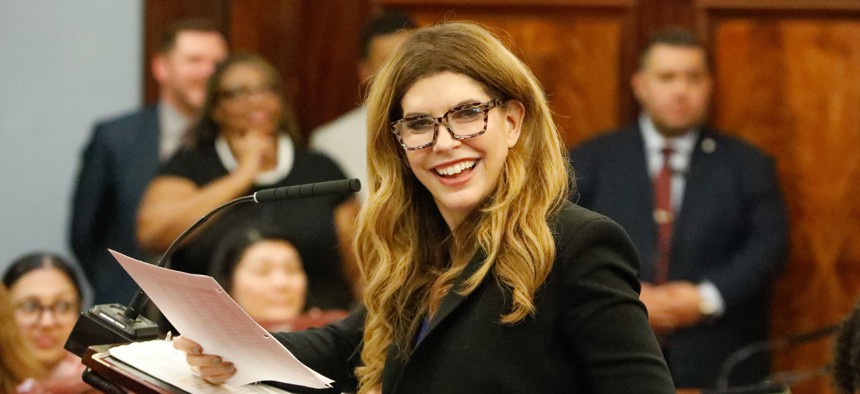
More money please! Alex Krales/ NYC Council Media Unit


With multiple rounds of budget hearings coming to a close this week, the two sides of City Hall have until June 30 to agree on a spending plan for the coming fiscal year. It’s Mayor Zohran Mamdani and City Council Speaker Julie Menin’s first time leading budget negotiations, a process that usually culminates with a ceremonial handshake between the mayor and speaker.
Compared to former Mayor Eric Adams and former City Council Speaker Adrienne Adams, who were simultaneously running against each other for mayor while hashing out their final budget, Mamdani and Menin aren’t at each other’s throats. Nor, unlike several budget cycles under their predecessors, have negotiations divulged into an all out war over across-the-board funding cuts.
But things haven’t been all copacetic. Mamdani and Menin have clashed over how to close the city’s multibillion dollar budget gap. Mamdani’s “last resort” threat to hike property taxes, differing projections on where savings could be found and Menin’s refusal to call on the governor to tax the rich were all issues that caused tensions to flare.
Thanks in large part to a major bailout from the state that helped close the city’s budget gap, the biggest hurdle is now behind both leaders. Mamdani’s executive budget proposal clocked in at $124.7 billion, balanced without cutting into reserves, increasing property taxes or slashing service delivery. Sticking points remain as the City Council pushes for additional funding for a raft of agencies and programs. Some of these requests are highly costly, last minute, and come as lingering budget pressures loom over proceedings, complicating what the Mamdani administration can and can’t allocate. A spokesperson for the mayor did not respond to a request for comment in time for publication.
Here are some of the things to keep an eye on over the next couple of weeks.
CityFHEPS
One of the biggest lingering questions tied to budget negotiations is whether the Mamdani administration will comply with the expansion of an expensive rental voucher program known as CityFHEPS. This issue goes back to 2023, when the City Council passed a package of laws expanding eligibility for who can receive the vouchers. The Adams administration refused to implement the law due to the high costs, spurring the Legal Aid Society to sue with the City Council. While Mamdani pledged to put the laws into effect as a candidate, he pivoted after taking office as the city grappled with the multibillion budget gap. In March, he appealed a ruling in the City Council’s favor that would force the city to fund the program. The program is expected to cost roughly $1.8 billion this fiscal year. Projected estimates for an expansion range somewhat, though all rapidly exceed current spending.
While the City Council didn’t include the CityFHEPS expansion in its official budget response, Menin and other members have continued to signal that it’s a priority.
Christine Quinn, president and CEO of shelter services nonprofit WIN, said that she’s feeling increasingly confident that the Mamdani administration will come to an agreement to fund the expansion before the budget is finalized. “They’re at the table in good faith. They want to get this done and they want to make sure that they can withdraw the appeal,” she said. “If you’d asked me three months ago, I was not particularly optimistic that there would be a settlement, but I’m much more optimistic now.”
City Council Member Pierina Sanchez, who chairs the council’s Committee on Housing and Buildings and helped lead the expansion, was less confident. At this point, she’s not heard “anything concrete” in terms of committed funding for a CityFHEPS expansion in this budget. Negotiations are ongoing. “If there is not a significant expansion of CityFHEPS – and I mean significant in terms of meeting the entire spirit of the 2023 laws – I’m going to have a really hard time with that budget,” Sanchez said, suggesting that and other council members could vote against the spending plan if that’s the case.
Fair Fares
The City Council is seeking an additional $130 million to $135 million in funding to expand a program known as Fair Fares – a request that would more than double the current $96 million budget. This would ensure program participants receive free MTA subway and bus fare, rather than 50% discounts. . Roughly 360,000 New Yorkers are currently enrolled in the program for qualifying residents who make a maximum income under $24,000. Since this program was enacted during the de Blasio administration, city legislators have consistently been trying to increase access for New Yorkers who cannot afford to pay the fare.
Fair Fares is funded by the city budget rather than the MTA or the state. The Mamdani administration’s campaign promise for fast and free buses came under further scrutiny earlier this week when the Independent Budget Office reported several projection models that determined expanding the Fair Fares program would ultimately be cheaper than enacting fast and free buses. Unlike expanding Fair Fares, the latter is a decision that lies with the state. The mayor has expressed his support for Fair Fares and the expansion plans but did not include it in his budget proposal.
Department of Consumer and Worker Protection funding
The City Council is seeking an additional $32 million to fund the Department of Consumer and Worker Protection along with the hiring of an additional 271 positions over the next three years. With the mayor’s support, that would bring funding for the agency to roughly $110.4 million – a fairly significant bump from the $78.4 million currently included in the Mamdani administration’s executive budget proposal. Menin, who used to lead the agency under the de Blasio administration, and other council members are justifying the request by pointing to the expanding raft of enforcement and licensing responsibilities that falls under its purview. That includes new legal protections for delivery workers and delivery drivers, additional protections and licenses for street vendors and the Safe Hotels Act.
While Mamdani pledged to double funding for the agency on the campaign trail, he’s argued that his proposal distributes sufficient resources at this point – and he’s vowed to further raise funding to $96.6 million by fiscal year 2030.
Expanding NYC Rise
The City Council is also pushing the Mamdani administration to significantly expand an existing program called NYC Rise that creates college savings accounts for public school students and many charter school students. The city currently creates an account for kindergartners automatically, setting them up with an initial deposit of $100. For students from low-income families, this early contribution could grow to $3,000 under the City Council’s proposal. Other students would receive an initial deposit of $1,000. The college savings program is of particular importance to Menin who helped establish it roughly a decade ago while leading the city’s Department of Consumer Affairs.
Altogether, the proposed expansion would cost about $180 million annually – a big bump from the current $12.7 million, albeit a fraction of the overarching $125 billion budget. The mayor has signaled that he’s receptive to the possibility, but not made any commitments at this point, according to The New York Times.
Parks funding
The City Council wants to add roughly $40 million to the parks department’s budget – approximately half of which would add an additional 200 positions to the enforcement unit overseeing quality-of-life issues across the city’s green spaces. This would be a significant reversal in fortune for the Parks Enforcement Patrol, which currently employs around 350 officers, after the mayor’s executive budget plan proposed slashing 100 positions. Critics have charged that such a cut would create a major public safety risk.
Fifth firefighter
The City Council is fighting for an additional $91.7 million to bring back a fifth firefighter position at nearly 100 of the city’s busiest Fire Department engine companies. That would be a major expansion from the current 20 companies that already have this, but mounting public safety concerns have helped propel the issue into the spotlight. Fire Department ambulance response times have steadily increased in recent years, spurred at least in part by heavy traffic and higher 911 call volumes.