

Zohran Mamdani
Lobbyists are still feeling good in Mamdani’s New York
They thought the democratic socialist mayor would send lobbyists to Siberia. They're getting a warmer welcome.

Mayor Zohran Mamdani’s administration has continued meeting with lobbyists. Eoin Ryan

Zohran Mamdani had just won the mayoral primary, and lobbyists were nervous.
The man who could be leading New York City, the capital of the western world, was an anti-capitalist. And even worse, for a business where phone numbers are currency, Mamdani was not a part of the scene.
“Nobody knew anybody in his inner circle. Nobody knew who his inner circle was,” said one lobbyist, who was granted anonymity to speak freely. “He really was an unknown.”
Sure, he’d been an Assembly member for a few years, but he was a democratic socialist, and a backbencher who hadn’t earned much attention from the movers and shakers. “What the hell could he do?” the lobbyist added. “I never met with him in a business setting.” Lobbyists weren’t playing a major role in his campaign, either. While former Mayor Eric Adams had raised at least $770,000 in his 2021 campaign through lobbyists, according to government reform group Citizens Union, Mamdani raised approximately $0 in that fashion.
“People were concerned there was going to be a ban – they weren’t going to be able to get access,” said Diane Savino, a former state senator and Adams adviser who now works as a lobbyist with Allied Government Affairs. But that hasn’t happened. “I have not heard one person who’s a lobbyist say, ‘(City Hall) won’t meet with me because I’m a lobbyist,’” she said.
More than half a year into Mamdani’s administration, with one $126 billion budget already done, the picture has come into focus. The doors are still open, and it’s business as usual at City Hall. Lobbyists can’t say they’re getting everything they want, but they all say they’re able to schedule meetings with administration figures – many of whom date back to the days of former Mayor Bill de Blasio – and that they are at least getting heard. It’s just the latest sign that Mamdani is governing as a reformer, rather than a revolutionary. That’s a disappointment for some ethics watchdogs, who hoped he’d take more dramatic action about the wheeling and dealing culture at City Hall. But it’s good news for anybody with financial interests before the city of New York.
“There’s plenty of opportunity to have business grow when the mayor is an avowed democratic socialist,” said Joe Borelli, a former Republican New York City Council member who is now lobbying with Chartwell Strategy Group. “You just have to figure out which type of businesses are going to fall on the most welcome ears.”
The business of influence
Lobbying is a whole industry in New York City. The most recent annual report from the City Clerk found that registered lobbyists reported nearly $145 million in total compensation in calendar year 2025, the last year of Adams’ term.
And the numbers suggest the business hasn’t taken a hit in 2026. Lobbyists reported making just over $78 million in the first six months of this year – a 4% year-over-year increase. In the previous mayor’s first six months, back in 2022, lobbyists reported just under $62 million in compensation. In fact, the industry’s revenue has more than tripled in the past two decades.
Lobbyists see themselves as a mix of teachers, who can educate their clients on how government works – and educate government on how the outside world works – and professional representatives. Just as you wouldn’t go to court without a lawyer, they often say, you shouldn’t appear before government without a lobbyist. The sector is broad, ranging from those who work in-house for smaller nonprofits to guns-for-hire who represent powerful interests like Google, JPMorgan and the Real Estate Board of New York.
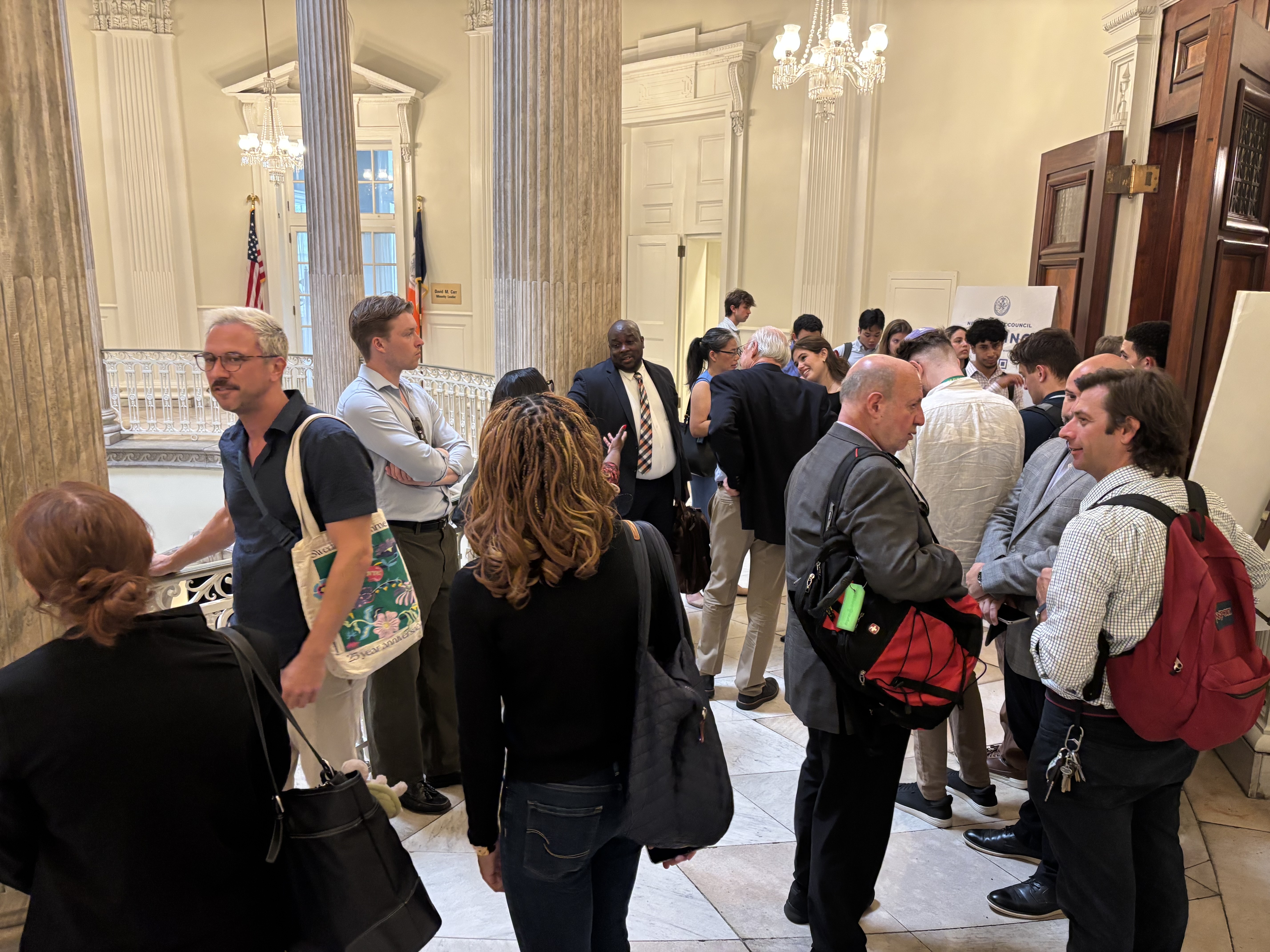
City & State talked to more than two dozen lobbyists, mostly those with portfolios of clients. Many of them agreed only to speak if their names weren’t included, fearing that errant comments could jeopardize relationships within City Hall or with their clients. By and large, they were happy with the situation, even pleasantly surprised.
“I don’t find it substantially different than prior administrations,” said Rose Christ, co-chair of Cozen O’Connor Public Strategies’ New York Practice. “I’ve found them to be genuinely curious and engaged and open-minded, especially when coming forward with opportunities to help partner on things that are early wins for the administration to help demonstrate that the government is able to deliver for New Yorkers.”
Things were slow-going at first, as lobbyists learned the organizational chart, and who reported to whom, but since then, “we haven’t found it difficult to navigate,” said another experienced lobbyist. “We haven’t experienced a ton of backlash or negativity or anything of that nature.”
One caveat: Lobbyists’ very livelihoods depend on the idea that they can get access to the administration, so it’s in their interest to paint the rosiest picture possible about life under Mamdani. It’s a competitive industry, and nobody wants their clients reading City & State and then dropping their contract to go with a firm that claims they know the mayor better.
But all the evidence suggests that it’s been a relief for an industry where some had feared the worst.
Better than Cuomo. Better than Adams.
In the immediate aftermath of Mamdani’s victory last November, lobbyists spent the Somos conference in Puerto Rico drowning their sorrows in rum and consoling clients that it wouldn’t be so bad. Some suggested it would have been even worse had ex-Gov. Andrew Cuomo, Mamdani’s chief rival, won instead.
“All of our clients that paid money were like, ‘We are going to jump off the Empire State Building now, or we’re going to move to Siberia, one or the other,’” another city lobbyist said of the choice between the difficult Cuomo and the outsider Mamdani. “Everyone was very relieved and happy that they didn’t have to deal with Cuomo anymore – but also a little worried because he’s the devil that you know.”
The lobbying class breathed another sigh of relief the very next week, when Mamdani announced he’d be tapping Dean Fuleihan as first deputy mayor. A top de Blasio appointee who spent decades working in the Assembly before that, everyone knew Fuleihan and thought of him as a consummate professional. And Mamdani kept it up, filling his administration’s top roles not with 25-year-old socialists, but with de Blasio administration veterans, who knew the players, and knew the game.
And even though Adams’ doors were open to lobbyists, and even though he was a proud capitalist, some lobbyists see Mamdani’s City Hall as a better forum to do business. The Adams administration, particularly in its final, tumultuous years, could be a chaotic target for lobbyists. The coming and going of top officials – and the in-fighting and rivalries at the highest levels – made it difficult to know who exactly to lobby.
“You might not always get the answer that you want to hear,” the lobbyist who didn’t want to end up in “Siberia” said of the Mamdani administration. “But if you do get the answer that you want to hear, executing it and having them follow through on the things that you need to do has been like night and day. The Adams administration was so incompetent that getting anything done, even if they wanted to help you, was impossible.”
“A level playing field”
Different lobbyists flourish under different administrations. Carl Figliola built a reputation as Rudy Giuliani’s golfing buddy. De Blasio had close ties with James Capalino and Sid Davidoff, while Frank Carone’s Oaktree Solutions built a lobbying practice after he departed as Adams’ chief of staff after one year. (Oaktree’s lobbying team wound down after Adams lost reelection.)
But at this early point in the Mamdani administration, everyone agrees there’s no favored firm profiting off a personal relationship with the mayor. Had Cuomo won the mayoralty, there might have been a rush of Albany insiders speeding down the New York State Thruway to expand their city practices. There were far fewer political pros who knew Mamdani. His confidants who didn’t follow him into government – like consultants Morris Katz, Andrew Bard Epstein and Amit Singh Bagga, or election attorney Ali Najmi – have mostly focused on electoral politics. Lina Khan also has the mayor’s ear, but the anti-monopolist former Federal Trade Commission chair isn’t exactly taking on corporate clients.
“Right now, their priority is not making a lot of money,” Suri Kasirer, founder of the eponymous lobbying firm that’s been the city’s biggest for the last nine years, said of the mayor’s inner circle. “Their priority is getting people elected. By the way, that may change. In two years, three years, I don’t know, there could be a DSA lobbying firm.”
There could be a Mamdani-aligned firm even sooner. Asked if he was going to go into lobbying, Bagga suggested it was an option. “There are plenty of organizations and entities doing important work to support the lives and livelihoods of New Yorkers who need guidance in navigating City government,” he said in a text message. “Helping them achieve their goals is not an ignoble endeavor.”
That’s not to suggest that nobody knew Mamdani before he won. Cozen O’Connor’s Zak Malik volunteered on the campaign. So did Francisco Lebrón, an associate with Kline Public Strategies. And Bolton-St. Johns’ Trivette Knowles knows the mayor’s circle, despite previously working for mayoral race foe Jessica Ramos.
But for now, in the broad world of city lobbyists, there are very few who were actually standing with the mayor before he won the primary. And that can be a good thing.
“I think it’s refreshing to have a level playing field,” Kasirer said. “And an administration that doesn’t play favorites and an openness to good ideas, and things that resonate with them.”
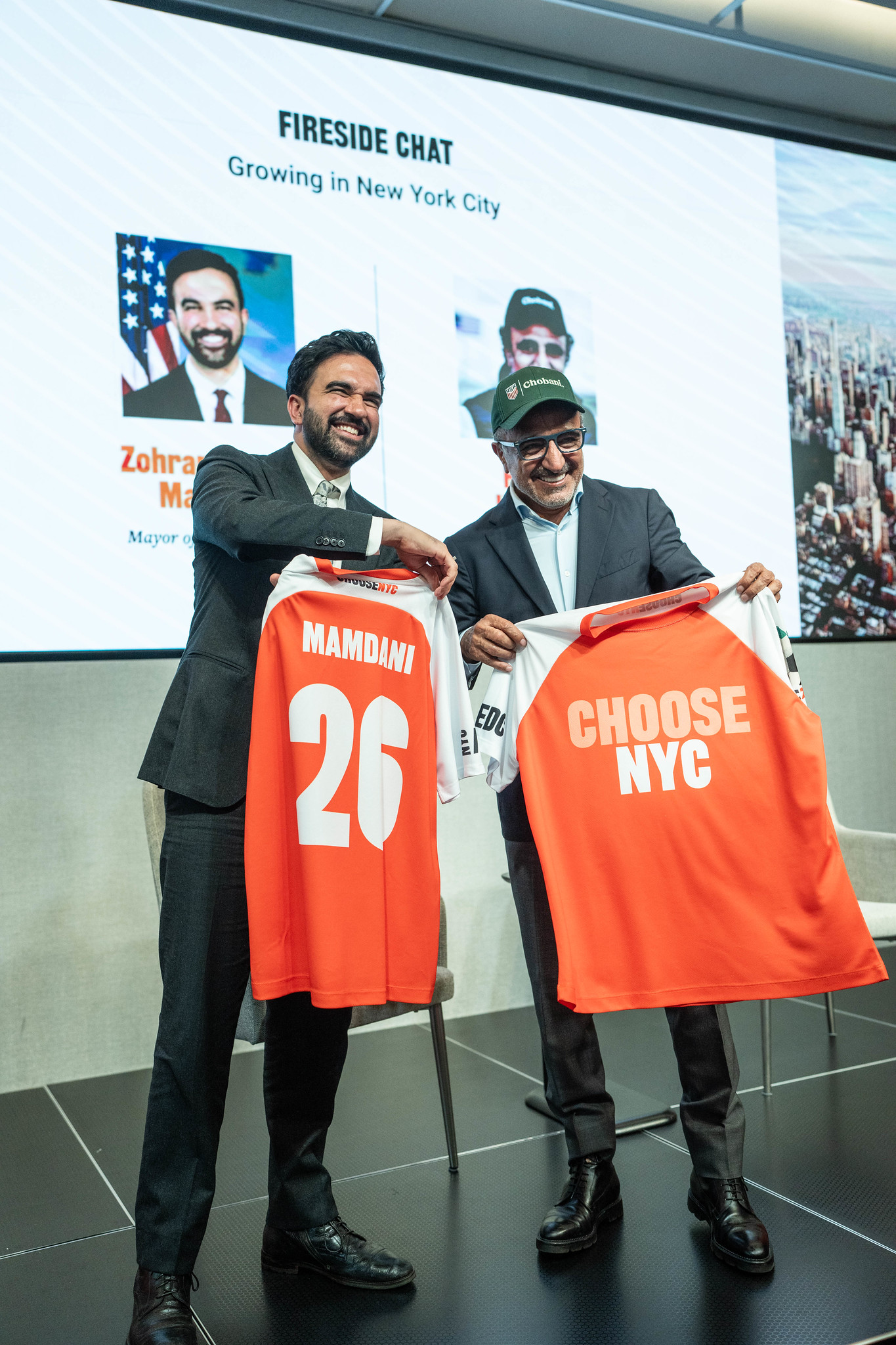
Of course, even if his staff is lending lobbyists an ear, the mayor has a democratic socialist reputation to uphold. His time is guarded and he rarely, if ever, personally meets with lobbyists – only principals like JPMorgan CEO Jamie Dimon, or Blackstone President Jonathan Gray. And while the administration’s doors are open for meetings, their arms are not open for hugs.
“The Mamdani administration works every day to better the lives of the people of New York City,” mayoral spokesperson Dora Pekec said in a statement, “not the class of lobbyists who in the last administration were often granted unfiltered access to influence policy and decision-making at the expense of working people.”
Lobbyists can spin any small step in the right direction as a victory to their clients. That could be anything from a chief of staff taking a phone call with a lobbyist to a deputy mayor making a site visit to a client’s organization. Bonus if you squeeze in a photo op. So far in the Mamdani administration, a couple lobbyists pointed to this year’s budget as being a fruitful one for nonprofit organizations, particularly in investments to arts and cultural organizations. Others were proud to see the administration reverse a proposal to delay payments to nonprofit contractors. And real estate developers are still building.
But getting a meeting doesn’t mean that the administration will actually do what your client wants. One lobbyist said it’s been difficult to get a foothold with new members of the administration, who “are very standoffish” with the lobbying class. “Have I had any wins?” they said. “I mean, we were able to get some meetings and get some calls in, but it didn’t change the outcome.”
The “culture of corruption”
The ethics watchdogs don’t feel like they’ve gotten a win yet.
On the campaign trail, Mamdani railed against a “culture of corruption” of “pay-to-play politics” and a “city for sale” under Adams, recalled Grace Rauh, executive director of government reform group Citizens Union, and a registered lobbyist herself. “It is stark, and frankly surprising to us, that a new mayor who came in on the heels of Eric Adams, and the swirl of corruption allegations and indictments that hovered over that administration … (has) made no announcements or policy changes specifically around ethics and accountability,” she said. “We think that was a real missed opportunity.”
After all, there was a criminal probe examining whether Terence Banks, the lobbyist brother of both Adams’ schools chancellor and deputy mayor, was selling access to the Adams administration. (No charges have been brought against him.) Adams’ Department of Buildings Commissioner Eric Ulrich was charged in bribery schemes, and his chief adviser Ingrid Lewis-Martin was also charged with trading her political influence for cash and gifts.
There haven’t been any ethical red flags from the Mamdani administration so far, Rauh said, but Citizens Union would still like to see proactive steps. For example, de Blasio’s City Hall publicly reported meetings that senior staff took with lobbyists. Adams ended that voluntary transparency effort upon taking office, and Mamdani has not brought it back.
Citizens Union Director of Public Policy Ben Weinberg said Mamdani could also proactively disclose when the Conflicts of Interest Board provides specific guidance to administration officials and strengthen the recusal policy to keep government officials from making decisions that could benefit their former private sector employers or clients. He could also improve funding and staffing at COIB and the Department of Investigation, and even consider moving lobbying oversight away from the City Clerk and into a more independent agency like COIB.
“The north star should be sending a message to the municipal workforce and to the senior officials that the city is turning the page on the culture of corruption,” Weinberg said.
Of course, lobbyists say Mamdani is doing exactly what he should – listening to everyone with an open mind.
“It would be like being a judge and refusing to hear from the defense,” said the lobbyist who called Mamdani an “unknown” in Albany. “Not listening to a certain segment of the population or people who are affected by laws would be malpractice.”
But government affairs professionals are aware that “lobbyist” can be a bad word. And they’re grateful they haven’t been shut out.
“I hope your story doesn’t inspire them to ban lobbyists,” the same one added. “Because they’ve actually been logical and fair about meeting with lobbyists.”
NEXT STORY: Why is Mamdani suing the City Council?