

News & Politics
Meet the new kingmaker who could lead the Brooklyn Democratic Party
What would reform look like, if Julio Peña III takes over for Rodneyse Bichotte Hermelyn?
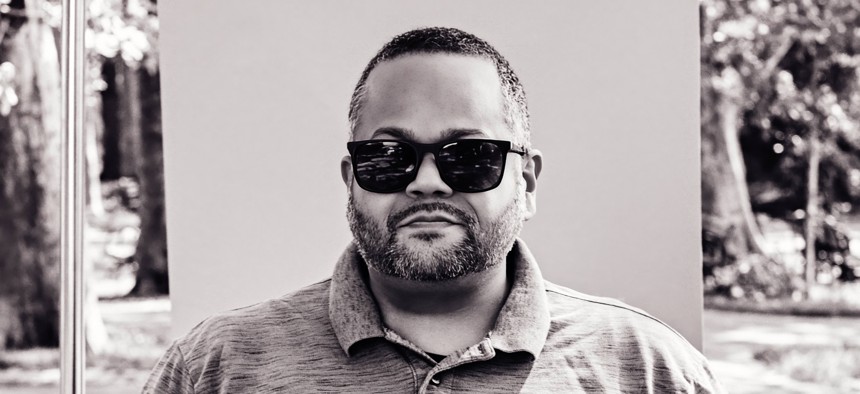
Julio Peña III is the reformers’ choice to lead the Brooklyn Democratic Party after Rodneyse Bichotte Hermelyn – if he can keep the coalition together for another month. Emily Assiran



Roughly two months out from a vote to dictate the future of the Brooklyn Democratic Party, reformer district leaders with the Brooklyn Can’t Wait coalition and their elected official allies gathered in a bar to declare an early victory against the county leader, Assembly Member Rodneyse Bichotte Hermelyn.
“I am ready to take over this party with all of you,” New York City Council Member Sandy Nurse said, eliciting a roar from the crowd as she stood balancing on a wobbly table, mic in hand at Black Forest in Boerum Hill. “We’re doing a proper coup, a Democratic coup.”
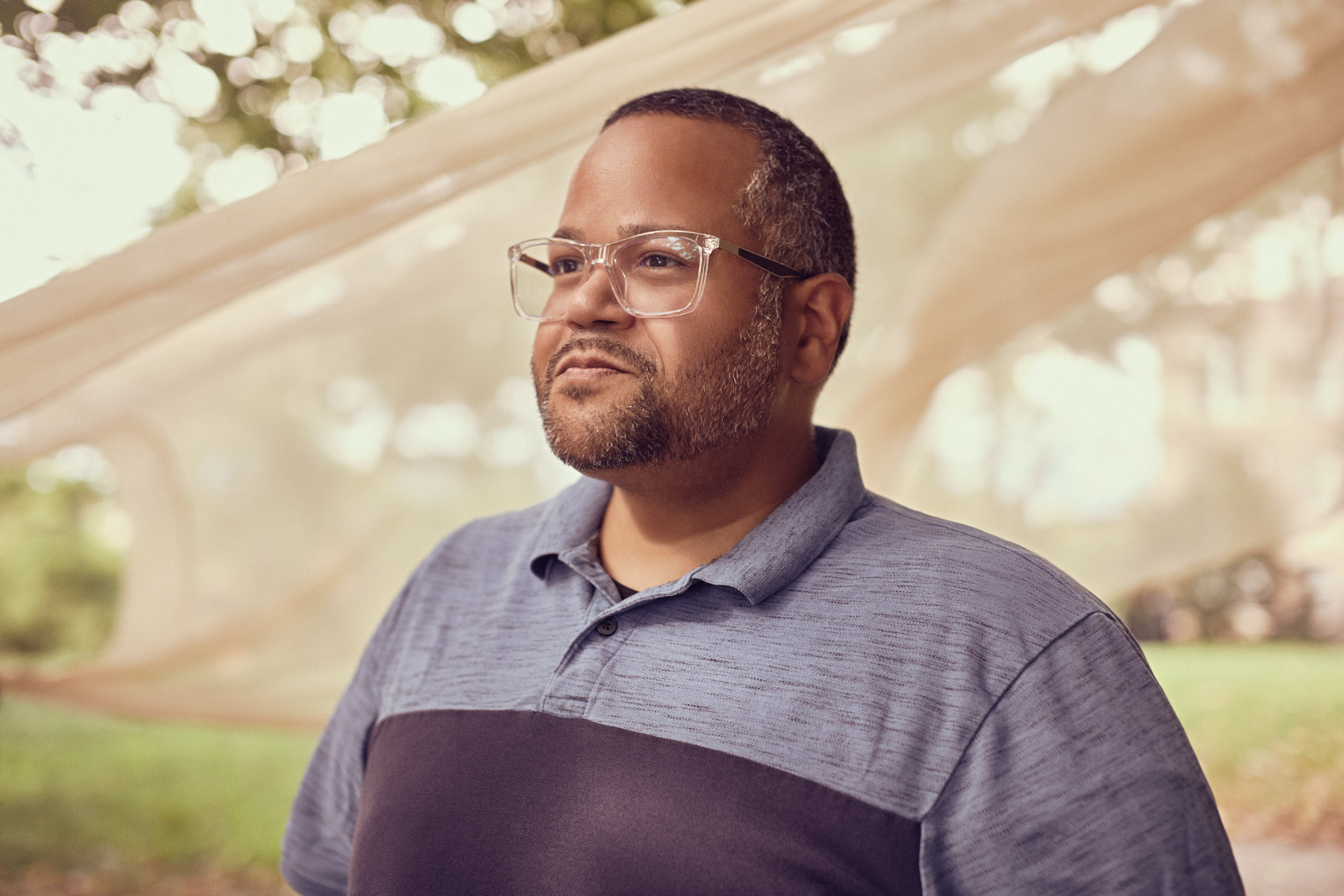
It was late July and spirits were high. Progressive reform club the New King Democrats appeared on the precipice of wresting control from Bichotte Hermelyn and elevating one of its own to lead the county machine after years of fighting to gain influence. Fresh off a slew of electoral wins over county “regulars” in the June primary, 22 district leaders, including Nurse, pledged to support Julio Peña III, a reformer from Sunset Park, in the election this fall. The ensuing celebration was a testament to how much the coalition has grown this year – part crowning, part rallying of the troops for what may still be to come.
One by one, a bevy of district leaders and elected officials addressed the crowded room, illuminated by projector slides that declared Peña the next Brooklyn Democratic Party chair, asked for donations and showcased the breadth of the coalition and its supporters.
“This is something that's been a long time coming,” said Assembly Member Jo Anne Simon, an early reformer with the NKD who helped pass sweeping changes to the party’s power structure in 2013. “Those of us who were in the reform wing of the Democratic Party for many years were very lonely.”
Speakers heaped praises on Peña, often by way of juxtaposing him with Bichotte Hermelyn, who loomed large over the evening despite nobody mentioning her directly by name.
“We have a party that wants to keep people out and to exclude, and Julio wants to bring people in and include,” returning district leader Diana Gonzalez told the crowd. “We have a party that just wants control over judges and patronage and the Board of Elections and Julio wants fair democratic processes in our courts.”
Both are frequent complaints levied against Bichotte Hermelyn and the controversial figures that preceded her at the helm of the Brooklyn Democratic Party. While the Assembly member has survived political challenges before, she’s had a particularly tough couple of years. There was a confounding dust up with Gov. Kathy Hochul involving an endorsement, an unendorsement and a reendorsement, Republicans gained ground in southern Brooklyn in 2024, and the party’s tradition of infighting hasn’t ceased under her tenure. The fact that reformers unseated eight Bichotte Hermelyn-aligned incumbents in June – thus winning a majority of seats on county’s 42-member executive committee – and then coalesced around Peña so quickly suggests her reign will soon end. That’s assuming the coalition manages to hold fast. Reformers are eager to persuade additional district leaders to join their ranks, thus giving the coalition a more decisive majority. Allies of Bichotte Hermelyn and some more neutral party members aren’t convinced everyone is truly locked in.
Bichotte Hermelyn declined an interview, saying, “write your piece, have a ball with it.” In fact, she’s been avoiding any press that isn’t prepared to write fawning coverage of her – even going as far as to hide under a table cloth to evade reporters after a meeting to nominate the party’s picks to fill several vacant state Supreme Court seats earlier this month, Hell Gate reported. She’s neither confirmed nor denied whether she intends to run again, and hasn’t even set a date for the organizing meeting where the leadership vote will be held – though it’s required by party rules to be held between Sept. 17 and Oct. 6. But the general consensus is that she only would stand for reelection if she’s confident about the odds.
“I think she’s done,” said one Brooklyn political observer. “It doesn’t look good for her.”
But a note of caution permeated the jubilant gathering at Black Forest – an understanding, perhaps, that historically, many reform movements have crashed and burned, coalitions have crumbled, well-intentioned candidates who ran on change have been swallowed by systems once they get power, and that nothing is over till it's over. After all, Bichotte Hermelyn took charge in 2020 amid high expectations. A Black woman from Flatbush who promised to bring change and unity to a party hemorrhaging support, she’d brought reformers and the old guard together when Frank Seddio named her his successor. That was six very long years ago. Now there’s another newcomer poised to take power, trumpeting his own promises of a new era.
“We have a leader that we believe in. Who has a spine. Who is going to make the right choices – or we’re going to make sure he makes the right choices because he has a movement behind him,” City Council Member Alexa Avilés said of Peña, addressing the crowd. “So let’s lock in. Let’s make sure this happens, let’s take no shorts and bring this home.”

A new leader
The Brooklyn Democratic Party, also known as the Kings County Democratic County Committee, has long been led by big, polarizing personalities. Fifty-seven years ago, Meade Esposito, who’d dropped out of school at 14, rose to the top of the party’s ranks only to be convicted in 1987 for giving a Bronx member of Congress a luxury spa vacation in Florida. Then there was Brooklyn Borough President Howard Golden, a powerful kingpin notorious for talking tough and clashing with the city’s mayors, Ed Koch, David Dinkins and Rudy Giuliani alike. He was succeeded by Assembly Member Clarence Norman Jr., whose 15-year tenure as party boss came to a raucous end in 2005 when he was convicted of shaking down a lobbyist for over-the-limit campaign contributions – and later, on a spate of other corruption charges, too. Assembly Member Vito Lopez succeeded him, until a sexual harassment scandal tanked his political career. Seddio, a wisecracking former Assembly member and judge who managed to largely keep the party together before passing the baton to Bichotte Hermelyn in 2020, remains a district leader but is currently battling allegations in court that he mishandled a case involving $2 million in missing escrow money.
Peña, meanwhile, has never been elected to anything higher than district leader. That alone makes him somewhat of an outlier. District leader is a thankless, unpaid role, which traditionally revolves around voting for party leadership, nominating judges, choosing poll workers and attending county and state committee meetings. It’s often a stepping stone to higher office, though some power players like Rep. Greg Meeks, the Queens Democratic Party leader, keep the role after they ascend. While there’s some historical precedent of nonelecteds steering their county machine in the other boroughs, Peña would be the only current party boss in the city who hasn’t served in a higher level of government.
That’s particularly notable for Brooklyn, a county with more Democrats than any other in the state, and near the biggest nationally, too. Bichotte Hermelyn has wielded her high-profile platform to convene Democrats spanning the ideological spectrum to her semiannual fundraisers. Several people described Peña as quiet and down to earth, even shy. He’s the sort of person who is passionate about bylaws, several district leaders said. At 43 years old, he would be young for a party boss. Together, they painted a picture of someone organized and good at bringing people together, but green in terms of working a room of politicians.
And of course, he’s a self-declared progressive – not a democratic socialist, but a dues-paying member of the Working Families Party. Peña supported the WFP’s mayoral slate in 2025, including Zohran Mamdani, and consistently criticized former Gov. Andrew Cuomo. Bichotte Hermelyn endorsed Cuomo in the primary, before flipping to Mamdani in the general election. James Christopher, the party’s former spokesperson, described Peña “as further to the left” than Bichotte Hermelyn.
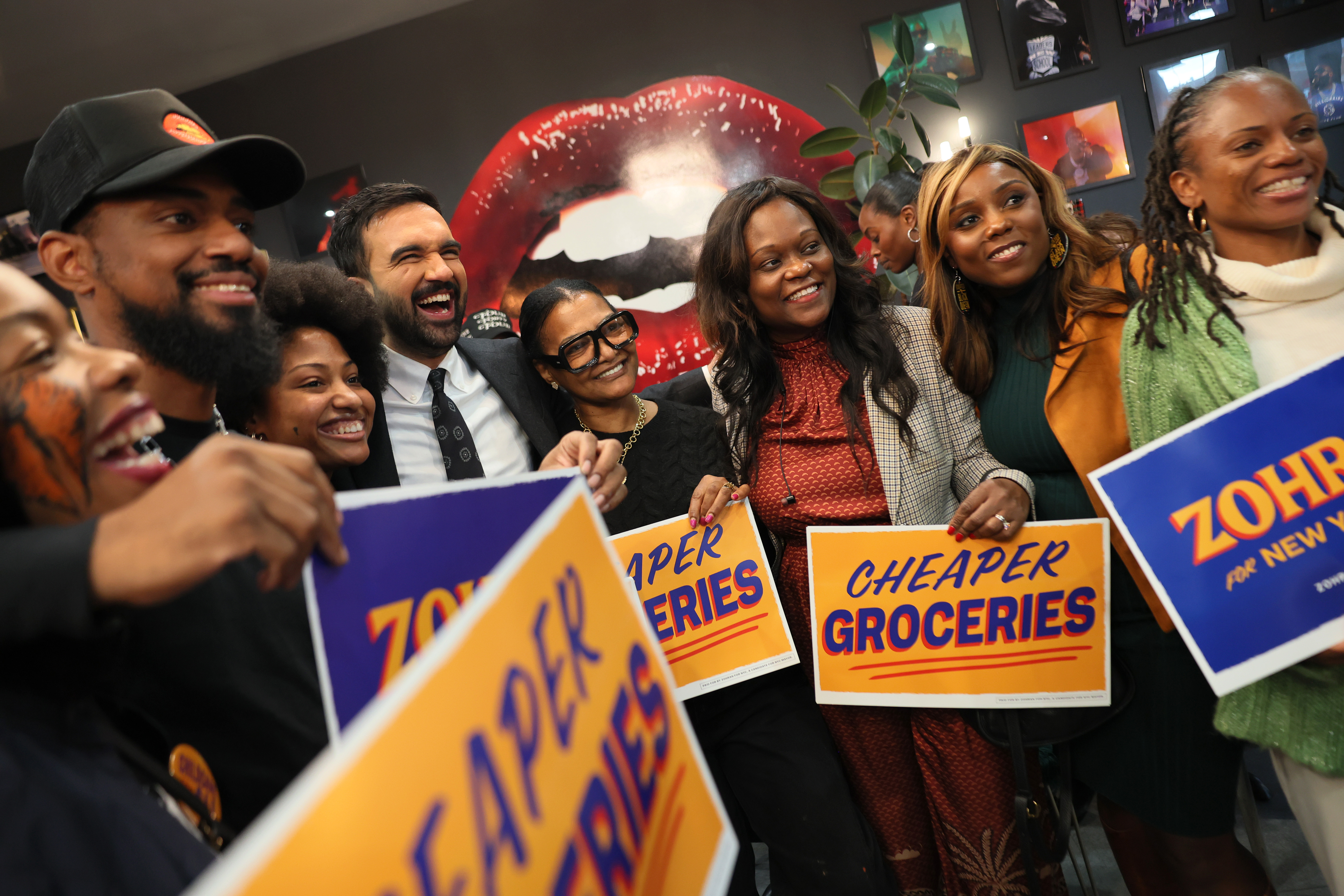
Peña is not new to the game of hyperlocal politics. While his day job consists of running after-school programming for the Chinese-American Planning Council, he recently wrapped up an eight-year tenure as chair of Brooklyn Community Board 7, which encompasses his home neighborhood of Sunset Park and Windsor Terrace. He’s also been a district leader since 2020.
The spotlight has come with some growing pains, Peña acknowledged. He spent much of the party celebrating his likely ascension hunkered down at a table off to the side of the restaurant – or as much to the side as he could be given the ever-rotating wheel of well-wishers. “I’ve held fundraisers before, but this is very different,” Peña told City & State in an interview. “This does take some getting used to.”
But Peña’s not concerned about his lack of government experience. If anything, he argued, he’d bring a fresh perspective and approach that would actually work for the party. “As a non-elected official, my time may be a bit more restricted because I have my actual job that I have to worry about to pay my bills,” he explained. “In order to make sure this party is really running effectively, I’ll be ensuring we have high-quality people who are running the day-to-day operations so I can focus on my job during the day and in the afternoons and weekends I can ensure that we have a smooth and focused party.”
That’s no doubt music to the ears of his fellow reformers who’ve lambasted being locked out of important decision-making within the party. In addition to his commitment to reform, Peña’s willingness to share the spotlight and inclination to shy away from self-promotion are also part of what made him an appealing choice. Many observers were skeptical that the coalition would be able to align behind a single candidate even if they managed to seize enough seats to oust Bichotte Hermelyn. But that was quickly proven to be unfounded. Just one day after the June 23 primary, reformers met to begin the process of zeroing in on the candidate who would take on the county party. On July 10, they informally voted for Peña to be that person.
NKD President Tony Melone said Peña was an easy choice.
“He’s not telling everyone this is how it’s going to be, he’s taking input and facilitating conversation so everybody has a part in the leadership of this coalition,” Melone said. “That’s where everybody wants this party to go – where it’s not one person ruling as a dictator, but all the district leaders and Brooklyn Democrats will have the same influence.”
Reformer or insider?
But what does it even mean to be a reformer? Is it possible to remain one when success presumably means becoming the status quo? History is rife with outside movements that swoop in with promises of change only to become the establishment and spur their own reform challenge a few years later. That’s true of the city’s Democratic clubs and beyond.
In 1977, Miriam Bockman became the first woman to lead the Manhattan Democratic Party, winning election with the support of Koch, then a mayoral candidate. But while she’d been part of the party’s reform wing, riding in with a pledge to make the judicial nominating process more democratic, Bockman was forced to resign less than four years later amid a barrage of criticism that she’d failed to quell the party’s issues. Years before he became Assembly speaker, Carl Heastie took over the Bronx Democratic Party as a rebellious reformer – and has now become a pillar of the Democratic establishment. And while Brooklyn Borough President Antonio Reynoso was a founding member of NKD, he just suffered a bruising loss to democratic socialist Claire Valdez, whose supporters argued Reynoso was too aligned with establishment forces.
“Everyone’s a reformer until they take power and become regulars,” said Scott Stringer, who’s remained enmeshed in Manhattan county politics for decades, even through his years as borough president and comptroller. “Now we have this nice, talented young man who is about to become the boss, Julio.”
“The real question for him is: How do you keep your head high as a reformer when you are going to be dispensing patronage, making judicial selection,” Stringer continued. “It’s going to be very interesting.”
Bichotte Hermelyn, for her part, has argued that her critics who call themselves reformers don’t actually care about reform at all. In an interview with NY1 in May, she charged that the NKD cares more “about winning the throne” than policy.
Asked about his vision to bring reform to the party, Peña speaks about goals both broad and technical. Like the rest of the coalition, he’d signed a pledge to adhere to a set of commitments. He wants to step up the party’s championing of Democrats in general elections and change how the party assigns proxies for county committee votes. He’s pledged to distribute decision-making more broadly, to increase financial oversight, to update the party’s code of ethics. Notably, Peña wants the party to stay neutral in district leader races. County may endorse in other races, but only if the process involves an official vote with all district leaders.
“This past primary is a good example where the party spent lots of resources and money to support their preferred candidate,” Peña said, referencing how a handful of county-aligned incumbents sought to knock their challengers from the ballot in district leader races. “If there’s no official vote-taking, then we shouldn’t be involved in primaries.”
Another goal is to mend bridges with the party’s youth arm, the Brooklyn Young Democrats. Bichotte Hermelyn feuded with the existing group, then tried to exile them and create her own aligned youth group, also called the Brooklyn Young Democrats.
But one Brooklyn source who previously served as a district leader argued that Peña has already failed to be a unifier, pointing to a handful of posts on his social media, one of which expressed frustration with Hochul over the late budget this year and other retweets of criticism levied against Rep. Dan Goldman, Rep. Adriano Espaillat and state Comptroller Tom Dinapoli.
“There’s a lot of issues that folks are raising with regards to Bichotte Hermelyn, and I’m not disputing that,” the source said. “But if not attacking other Democrats is the standard, then Julio is guilty of the same issues.”
Carlos Calzadilla-Palacio, a social media organizer and former president of Brooklyn Young Democrats (the original one), argued that Peña wouldn’t turn from his values. “Some people might call themselves a reformer, but there’s no real movement behind it holding them accountable,” he said. “Julio is going in as a reformer that he’s been his entire life. He’s been in the trenches for a long time.”
None of this is likely to matter much if reformers’ coalition falls apart. A day after the June primary, Bichotte Hermelyn was diplomatic about the group’s success, a marked difference from the flurry of legal challenges several of her allies had mounted in an attempt to boot challengers from the ballot leading up to the election. “Change is hard for many – even when it’s your own party,” she told City & State at the time. “I believe that you embrace the winners, even those you were not with, and you move forward with change. I think yesterday’s results, all of these unprecedented victories, says that progress requires both reflection and renewal.”
She said in June her decision on whether she’ll run for reelection hinges on the committee members under her charge. In the meantime, “My priority is to be supportive of our members and to continue to build a team, a party, whether I’m county leader or not,” she said.
Reformers don’t buy it. There have been various rumors about what Bichotte Hermelyn and party leadership are planning, including a potential last-minute rules change to help her hold on to power, maybe by appointing more members to the county committee. One district leader said he doesn’t think such a drastic, legally dubious, maneuver may even be necessary.
“It was a mistake to put out a target list in the way that they did,” they said of the coalition’s decision to put out the names of its 22 members so early. “It’s very short-sighted because they basically told the other side who to target. Their top number is exactly one more than the majority, which leaves a lot of room for maneuvering.” Already, Bichotte Hermelyn and her allies have tried to chip away at it, testing the waters to see whether, if not herself, the emergence of a different establishment candidate might be enough to lure them away. Assembly Member Nikki Lucas, who did not respond to a request for comment, is one name that’s been floated. Lucas is close with House Minority Leader Hakeem Jeffries, and the powerful Brooklynite hasn’t weighed in on the party’s future yet. It isn’t clear if he’ll get involved, but he would have great sway if he did.
Peña hopes he has an opportunity to prove the naysayers wrong.
“Anyone can call themselves a reformer, anyone can call themselves a progressive, anyone can call themselves a leftist, a moderate,” he said. “Reformer is more than just a label, it’s about how we move and how we organize in our communities.”