

City & Sports
Will the Lake Placid-New York City Olympic bid stick the landing?
There are still a lot of questions, but hey, 2042 is 16 years away.
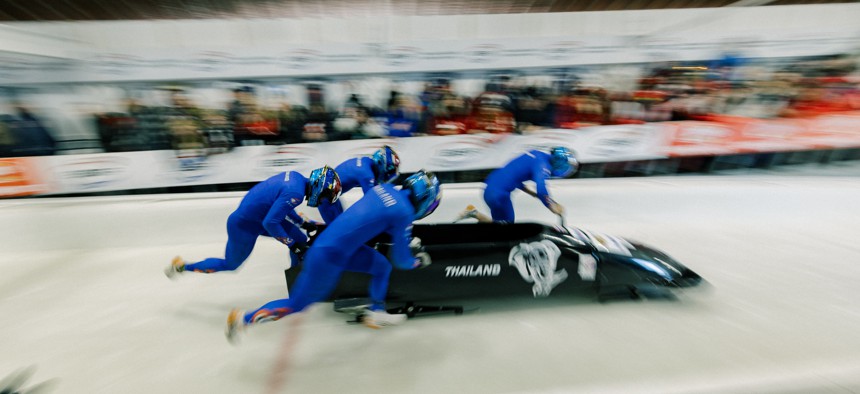
Bobsledding is among the events that would take place in Lake Placid in a potential Lake Placid-New York City Winter Olympics Ona Kwiatkowski / Olympic Regional Development Authority


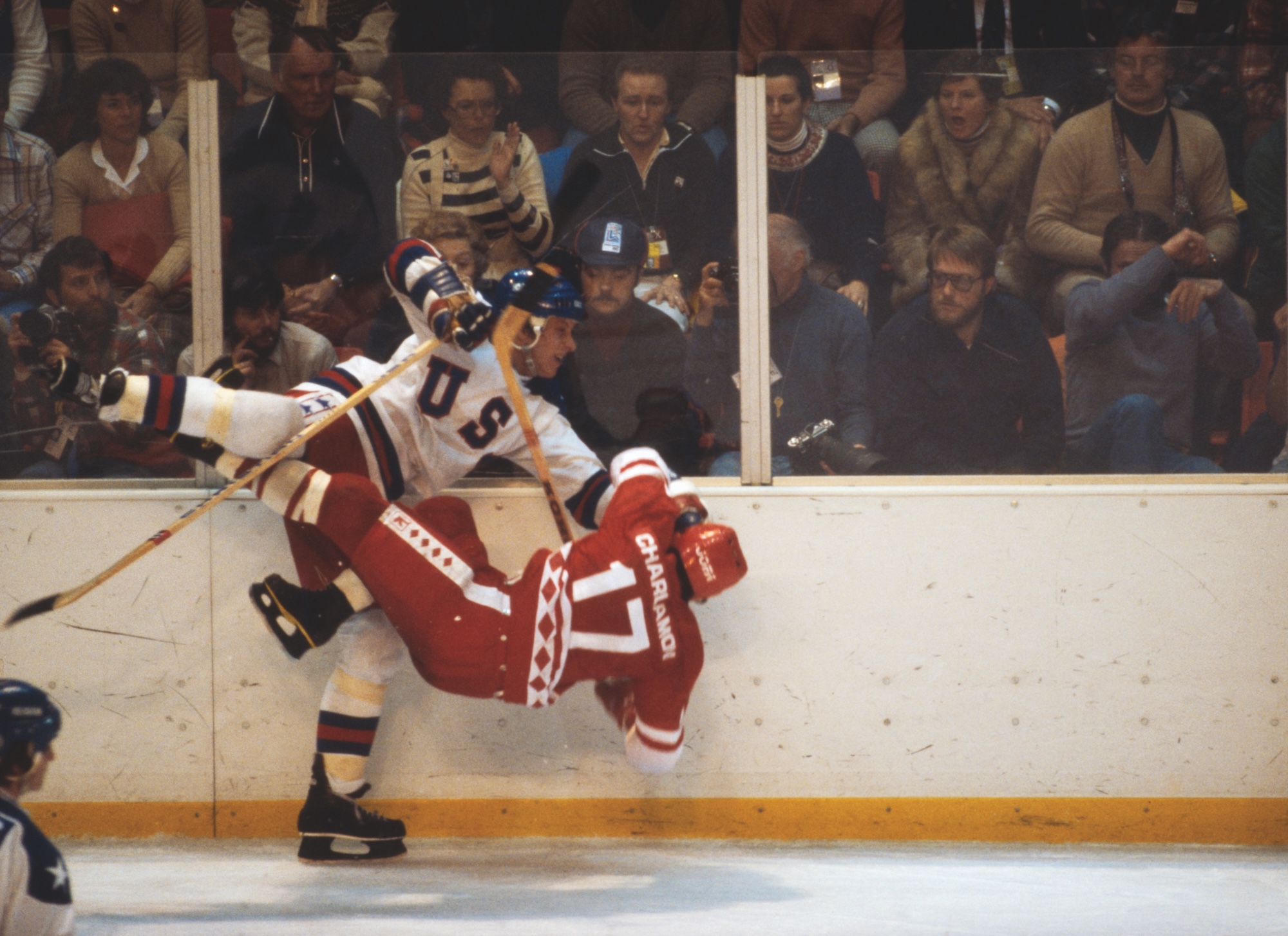
When you step inside the Herb Brooks Arena at the Lake Placid Olympic Center, the site of the famous “Miracle on Ice,” a chill runs through your veins. That’s not just because the room’s kept around 45 degrees – with the ice even colder. Decades after the 1980 U.S. Men’s Olympic Ice Hockey Team prevailed with one of the most stunning upsets in sports history, the modest North Country arena still carries the echoes of 8,500 Americans screaming in unison: “USA! USA! USA!”
It’s a cry that team captain Mike Eruzione, the left winger who scored the game-winning goal to defeat the Soviet Union 4-3 on Feb. 22, 1980, can still hear at 71.
“When you walk in there, you can almost hear the chants,” Eruzione told City & State. “Even now, it’s like ghosts in there.”
The remarkable victory from the team of 20 amateur players inspired a country that, in 1980, was desperate for joy, deeply burdened by a recession, high crime and unemployment, and at a turning point in the Cold War.
The moment that cemented Lake Placid in U.S. history can never happen again – but maybe the magic of the “Miracle on Ice” could be recreated.
In 2042, the Winter Olympics could return to Lake Placid. But unlike in 1980 – or even in 1932, when Lake Placid hosted the first Winter Games in the U.S. – the Adirondack town would not take all the glory for itself: State leaders are in the early stages of weighing a joint bid for a Lake Placid-New York City Winter Olympics.
Convened by Gov. Kathy Hochul in June, the 18-member Lake Placid-New York City Olympic & Paralympic Winter Games Exploratory Committee will take the next year to compile varying cost analyses, funding models and all potential consequences of a successful bid into a report by the end of 2027. State leaders and other key stakeholders will use that report to decide whether to submit a formal bid to the U.S. Olympic & Paralympic Committee and finally, to the International Olympic Committee, which ultimately chooses a host.
But for now, the exploratory committee is grappling with one fundamental question: Hosting the 2042 Winter Olympics is something neither the most populous city in the U.S. nor the treasured mountain village could do alone. Would uniting forces make it worthwhile?
Thinking big
Like many ideas out of Albany, the Lake Placid-New York City Winter Olympics first arose on a cold night in the Legislative Office Building over some whiskey. Only a few glasses in did it occur to the group – which included Brooklyn Assembly Member Bobby Carroll and Billy Jones (the former Assembly member who represented Lake Placid) and some lobbyists – that recent upgrades to Lake Placid’s Olympic facilities could be used for something much more.
At that point, Lake Placid was about a year away from hosting the 2023 FISU World University Games at the former Olympic facilities. To make that happen, the state spent $750 million on the facilities’ first facelift since 1980, which included efficient cooling and structure upgrades to the Olympic Center, James C. Sheffield Speed Skating Oval, the Ski Jumping Complex, as well as the Nordic Center, Biathlon Stadium and sliding track at Mount Van Hoevenberg.
“We’re spending all this money, so we’ve got this opportunity,” Carroll recalled saying to his colleagues.
The tiny rural village, which struggled to hold 50,000 spectators each day of the 1980 Games, can’t handle a modern games and its (many more) spectators alone. But, Carroll thought, New York City’s elite arenas and mass transit could.
“We have an embarrassment of riches that positions us like almost no other place in the world,” he said.
Carroll and Jones raised the idea of a joint bid to Hochul a few years ago, and she has since set her sights on making the bid part of her legacy. The governor’s top aides, Secretary to the Governor Karen Persichilli Keogh and Empire State Development President, CEO and Commissioner Hope Knight, are members of the leadership committee (Carroll, meanwhile, is part of the exploratory committee’s leadership team, and Jones co-chairs one of its subcommittees).
And committee members already have some big ideas. The Barclays Center could be optimal to hold events like hockey, figure skating, short track speed skating or curling, and venues like Madison Square Garden, Citi Field or Yankee Stadium could accommodate the opening or closing ceremonies and the bulk of the 116 medal events.
“There’s really no better city to absorb the capacity of international fans from around the world,” Marissa Shorenstein, chief external affairs officer of Brooklyn Sports & Entertainment, told City & State on a recent tour of the Barclays Center.
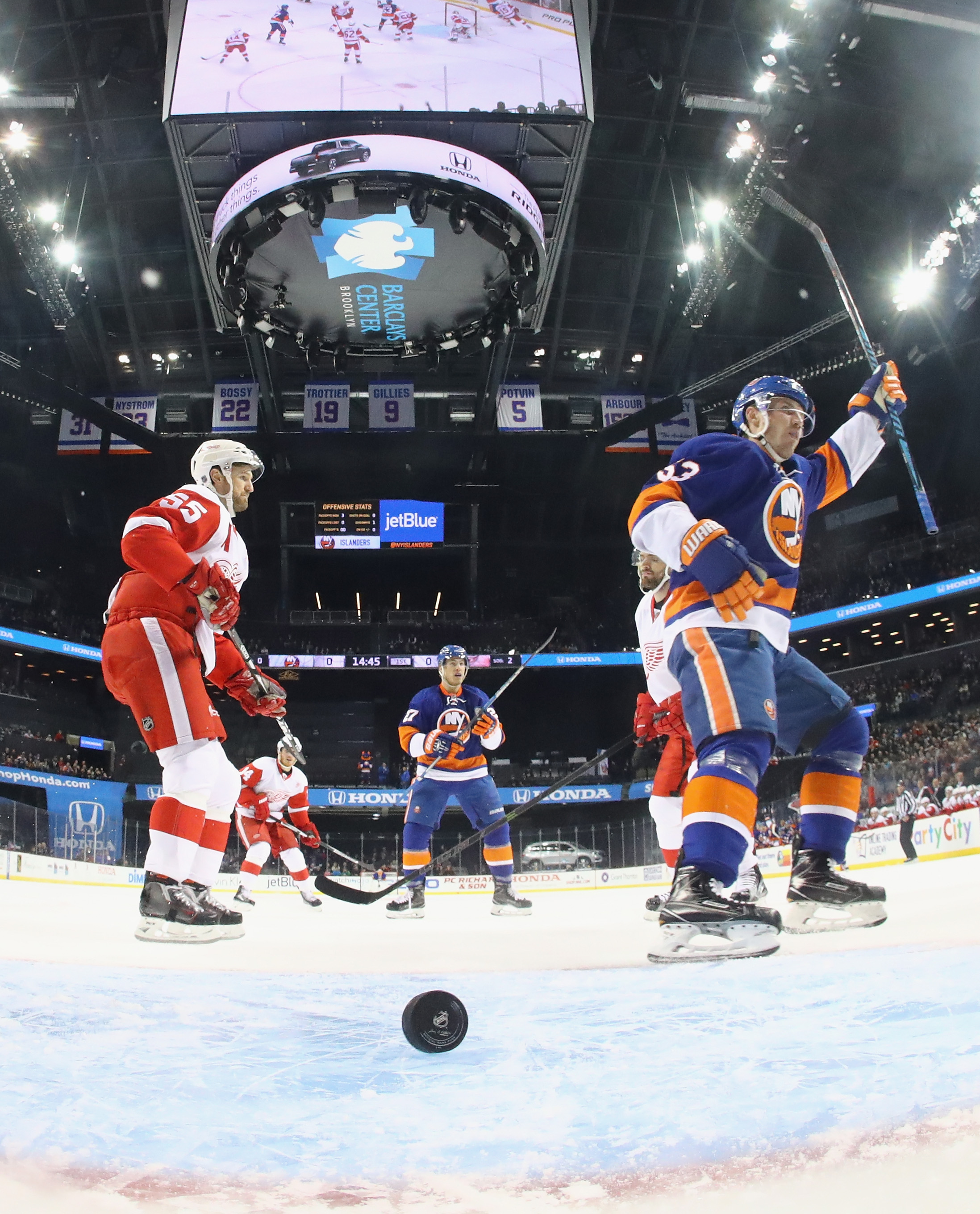
Shorenstein co-chairs the Exploratory Committee’s Games Operations Subcommittee and worked on New York City’s failed bid for the 2012 Summer Olympics and the accompanying plan for a West Side stadium. The stadium was ultimately not built after significant traffic concerns and a lack of support from community and state leaders. But unlike the 2012 bid, there are currently no plans to build any new stadiums for the Winter Games – so supporters are hopeful things will be different this time.
And New York City wouldn’t need to move mountains. Instead, Lake Placid would hold the skiing, cross-country skiing, bobsled and luge events – likely a fraction of the number hosted downstate. The world-class sliding facility at Mount Van Hoevenberg was the designated backup for several events in this year’s Milan-Cortina Games, in case the Italian sliding venue wasn’t ready – and that was almost the case.
Committee members think proposing the regional split will work in their favor. “That stretch and that distance allows (us) to play to the strengths of what New York state has,” said Ashley Walden, president and CEO of the Olympic Regional Development Authority, who also chairs the state’s exploratory committee. “What the IOC is looking for is different now than what it was at that point (in 1980).”
City & State spoke with various members of the exploratory committee’s leadership team and subcommittees, which both met for the first time last month, and it was clear they broadly support the pitch. But how gung-ho New York City leaders are about the idea is still something of a question mark. Julie Su, New York City’s deputy mayor for economic justice, is on the exploratory committee, but Mayor Zohran Mamdani has said little on the proposal beyond quoting “Cool Runnings” and has deferred questions to Su.
“The infrastructure improvements and legacy investments that were made for the World Cup will continue to benefit New Yorkers for years to come,” a spokesperson with the mayor’s office said in a statement to City & State. “We look forward to continuing to work with Gov. Hochul to explore the possibility of hosting the 2042 Winter Olympics and ensuring that all major sporting events benefit the working people of New York City.”
Bumpy slopes ahead
Even as the state has plenty of existing first-rate sports infrastructure, there are still more questions than answers at this point. And those questions are big ones.
The biggest of them all: How much would the Games cost, and how much would it cost the state?
Hosting the Olympics can be a risky financial endeavor, sometimes leaving host cities in the red. The 2022 Beijing Winter Olympics – which also had more than one site – cost about $8.7 billion, the second-highest in history for a Winter Games, according to a 2024 University of Oxford study. Half a dozen people interviewed for this story refused to estimate the cost at this preliminary planning stage.
Getting that answer will be a central part of the exploratory committee’s work. If the state wants a real shot to host the Winter Games, the committee must also find solutions for some of upstate’s most daunting issues that have plagued state leaders for decades: a lack of public transportation and housing.
Lodging for athletes was a major controversy during the 1980 Lake Placid Winter Olympics, one that was only resolved when the federal government stepped in to help build the Olympic Village – on the condition that it would immediately be converted into a medium-security federal prison afterward. The Federal Correctional Institution Ray Brook continues to house over 800 incarcerated men, just five miles from Herb Brooks Arena.
Lake Placid has many more accommodations for tourists these days, but housing for residents is in short supply. Olympic Regional Development Authority spokesperson Darcy Norfolk said athletes’ housing could be easily retrofitted into affordable apartments after the games.
“There’s opportunities to build housing for the Games that could then be used for people that we need,” Norfolk said. And that housing is also crucial to Lake Placid’s long-term economic vitality: “We need people to live here so they can work here.”
Ken Girardin, a fellow at the Manhattan Institute, said housing projects of that scale are unlikely to come together without changing state laws that have long impeded construction – especially upstate. Reforms to the State Environmental Quality Review Act, the state’s Scaffold Law and prevailing wage laws would be necessary to keep costs under control, he said, in addition to the SEQRA changes made earlier this year. “When it comes to building infrastructure, New York has the lungs of a pack a day smoker,” Girardin said. “If you want to be a serious contender to host the Olympics, they need to be running a mile under six minutes, figuratively speaking.”
Girardin said Hochul would need to petition the Legislature – and soon – to change those policies and make Olympic-sized accommodations possible. Hochul’s office did not answer questions regarding whether the governor would support further legislative changes or carveouts for Olympic-related projects.
There is also, of course, the question of transportation that comes with hosting the Olympics across two sites, 290 miles apart. In Italy, Carroll and his wife attended several events and traveled the 256 miles between Milan and Cortina. A train or bus ride took spectators up to six hours – roughly the same time to drive from Lake Placid to Manhattan. The New York State Thruway can handle more vehicles than the roads of Northern Italy, but that only solves part of the problem.
The closest major international airport to Lake Placid is in Montreal, a 2 1/2-hour drive away. And there’s no direct train to the village. The need to improve rail access between the city and upstate, or potential airport upgrades will either convince, or dissuade, Olympic, state and federal leaders to hold the 2042 Games in New York, but a combination of projects could be possible. “It’s a wish list of things, like getting a faster train from New York City to even Albany,” Norfolk said.
The challenges weren’t lost on the governor, but she remains optimistic. “I want to make sure, as far off as it sounds, we take the time to get it right,” Hochul told reporters after a tour of the Olympic Center on Aug. 3. “We figure out the housing challenges, we figure out the infrastructure that has to be done with the roads in this area (and) work on linkages between New York City and the North Country and what that looks like. So there’s a lot to do, but I think we have the right amount of time to be able to do it.”
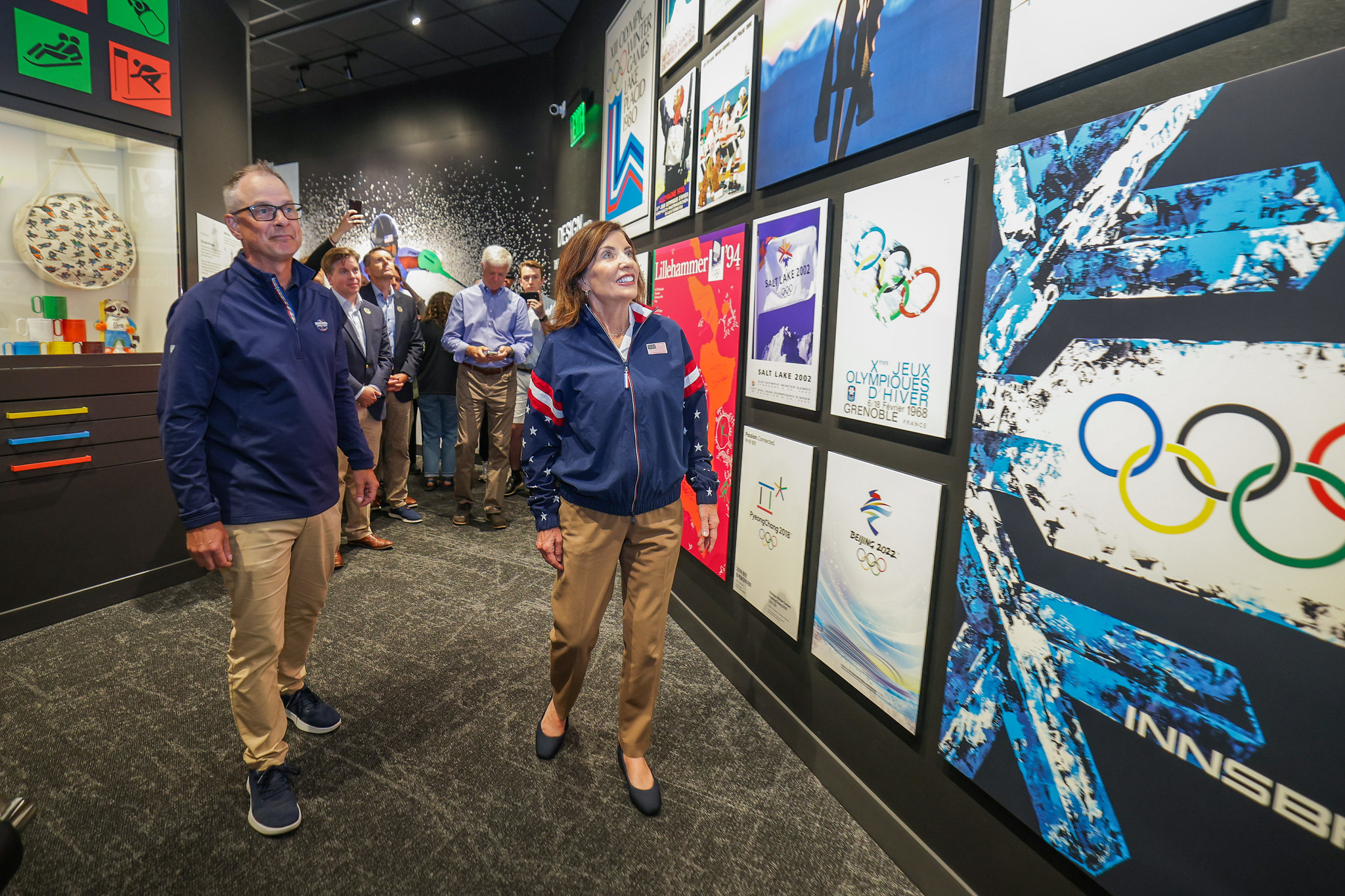
But with the 2034 Winter Games to be held in Salt Lake City, Utah, and Switzerland as the preferred 2038 front-runner, would the International Olympic Committee seriously consider a return to the U.S. only eight years later? It’s unclear which cities will pose the greatest competition to a potential Lake Placid-New York City bid, but there may be little choice.
Scientists have found the number of places that could host the Winter Olympics is rapidly shrinking due to climate change, and a 2022 study showed that Lake Placid is one of four previous Olympic hosts that will have a reliably cold enough climate by mid-century to host the Games again. The climate concerns are making the IOC prioritize bids with existing infrastructure – and where needed, new projects that would improve a host community long-term rather than sitting unused, Walden said.
Navigating the state’s red tape to build the necessary housing and transportation upgrades amid a long-standing upstate economic drought won’t be easy. Some say it would take a miracle. But Lake Placid knows a thing or two about those.