

Policy
'There’s never been a better time to be an MWBE’
Procurement players discussed minority and women-owned business enterprise contracting at a City & State conference.
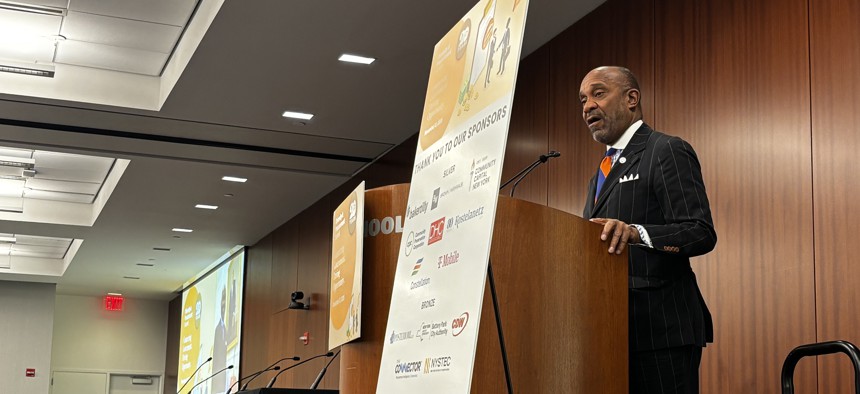
NYC MWBE Czar Michael Garner said prospective contractors could learn from the New York Knicks' grit and determination. Jeff Coltin


Leaders in procurement for Minority and Women-Owned Business Enterprises gathered Thursday at City & State’s Diversity & Procurement Summit to discuss contracting opportunities, MWBE participation, supplier diversity, procurement trends and strategies for successfully doing business with New York government agencies.
Michael Garner, chief business diversity officer of New York City and Dhanraj Singh, chief procurement officer at the state level, opened the event as keynote speakers, talking about the importance of collaboration and connection among MWBEs, public-sector, and private-sector enterprises to improve efficiency and access to opportunity.
Garner encouraged attendees to have “Grit, focus, teamwork, determination, and … a spirit of never, ever [being] willing to give up,” when seeking ways to better the playing field for MWBEs, tying his overarching argument – to the audience’s pleasure – to the path to victory of the 2025-2026 New York Knicks.
Singh drove home his dedication towards “sustainable participation,” inviting the audience to consider new ways of operationalization, prioritizing resilient procurement systems and ensuring that investments directly benefit MWBEs beyond certification.
The event held at New York Law School in Tribeca, featured representatives from state and city government speaking on panels discussing contracting opportunities, advancing MWBEs statewide, sustaining competitiveness for businesses and finding pathways for innovation in government contracting.
“There’s never been a better time to be an MWBE" (in New York),” said Jason Clark, executive vice president of the Division of Minority and Women’s Business Development at Empire State Development, speaking on a panel focused on securing and managing contracts.
Clark noted a number of projects New York state is involved with for the near future that would be of interest to MWBEs, including the multi-decade construction of a semiconductor manufacturing complex in Clay, New York, in partnership with Micron Technology. As part of the semiconductor manufacturer’s $250 billion nationwide investment plan – of which nearly $100 billion is dedicated to the New York facility located just north of Syracuse – Clark said that there would be opportunities for MWBEs to participate.
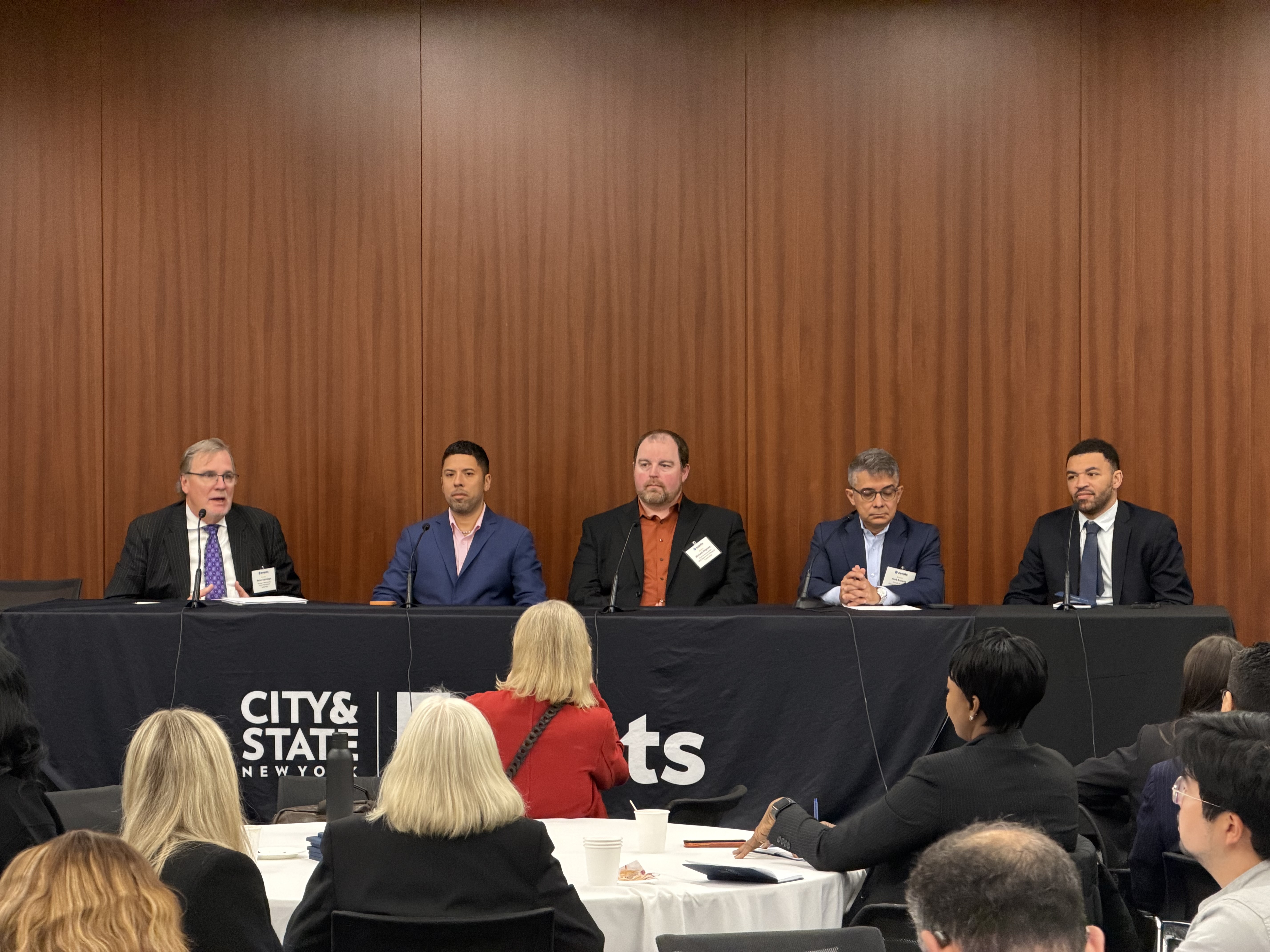
Eric Alemany, vice president of supplier relationship management for the New York Power Authority, echoed that sentiment, encouraging MWBEs to become involved with the initiatives underway across the state. He also invited the audience – and potential MWBE partners – to pay attention to the market’s increasing demand for energy, the lack of adequate infrastructure currently available, and avenues where business enterprises can contribute services or products.
“Where do I fit?” he invited the audience to consider.
Brian Sanvidge and Michael Shipman both stressed the importance of being on top of the application process and subsequently, being ready to act when contracts are awarded. “Have your ducks in a row,” Shipman, chief contracting officer at the city’s Department of Design & Construction, said, reminding businesses to consult individuals who are capable of “manag[ing] the bureaucracy.” In similar advice, Sanvidge, principal of Baker Tilly’s risk forensic accounting advisory, urged businesses to “accurately describe what you can and can’t do,” so that expectations are clear.
Panelists across the multiple sessions gave concrete, constructive advice to attendees, also highlighting common frustrations that MWBEs or individuals representing them face or bring to their attention.
“I want borrowers to be successful. You can come to the table not meeting basic qualifications and get a response,” said J.R. Dorsainvil, a loan officer at Community Capital New York. However, he stressed, business enterprises should be as prepared as possible when seeking to borrow, making his and his peers’ jobs easier when representing clients.
Wilhelmina Norma-Hernandez, vice president and head of ACCESS Programs at the Community Preservation Corporation, followed up on this, reminding the audience of the importance of speaking up for yourself, or having others speak up for you. “Advocacy is important for people who might not meet the requirements,” she said. Not that exceptions should be the norm, but many times, individuals may not meet requirements due to factors beyond their control or access. “It matters who’s sitting at the table,” she emphasized, calling on colleagues to champion those who are making honest efforts to qualify.
State Sen. James Sanders Jr., chair of the Democratic Conference MWBE Task Force, took time to encourage attendees who voiced frustration about being misdirected through the bureaucratic process to meet with him directly, reiterating his and the state’s commitment to supporting MWBEs. “MWBEs are not phasing out,” he said in response to rumors of policy changes. Using the recent midterm election results as a signal, Sanders asserted that New York continues to be committed to diversity, equity, and inclusion in supporting MWBEs. “[We’ve] never shied away from it,” he said.
Jaylen Coaxum is a freelance journalist based in New York City.
NEXT STORY: NYC budget grows $3 billion in November modification