

Eric Adams
Eric Adams’ curtain call
The New York City mayor’s last day in office may include vetoes and the creation of a new charter revision commission.
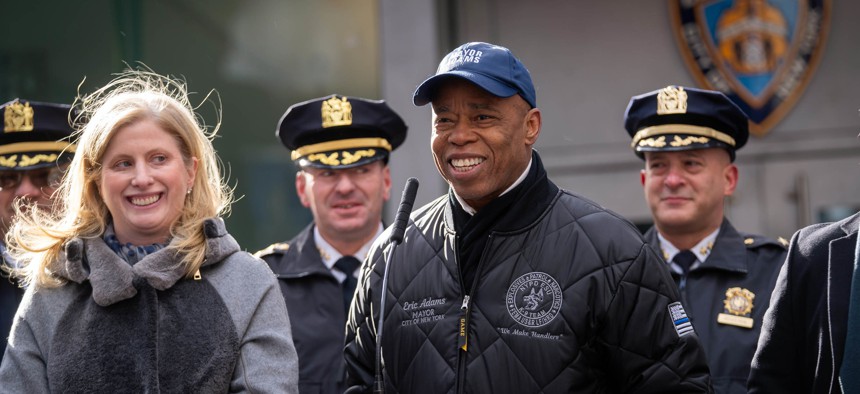
Mayor Eric Adams and NYPD Commissioner Jessica S. Tisch delivered a security briefing in Times Square on Dec. 30, 2025, ahead of New Year's Eve festivities. Ed Reed/Mayoral Photography Office



It’s the final day of New York City Mayor Eric Adams’ tumultuous, historic tenure. Come midnight, his single term will come to a close as Zohran Mamdani is sworn in as the city’s next mayor.
But don’t expect it to be a slow last day. Adams hasn’t ruled out making a flurry of last minute vetoes on his way out the door. Adams’ opposition has been in the forecast – City Hall stood against a handful of hotly contested housing measures passed by the City Council at its final meeting of the year. (The Daily News reported last week that the mayor could veto 20 or more bills.)
That could put the next City Council in a tricky spot. Presumptive City Council Speaker Julie Menin would have roughly a month to organize override votes – but it’s not yet clear which bills would have the required support from two-thirds of the council’s 51 members, or from Menin herself.
Adams is considering convening another charter revision commission on his final day, several sources told City & State, with a plan to introduce a ballot proposal to implement open primaries in city elections. News of the potential commission was first reported by the New York Post.
This would be the third such panel convened by Adams as mayor. The most recent, which put a handful of housing-related proposals on the November ballot, initially weighed putting a measure before voters that would open up the city’s closed primary system to allow all voters to participate. The proposal was ultimately rescinded in July given the lack of consensus.
Adams leaves behind a complicated legacy. It’s one likely to be forever entwined with the steady drumbeat of corruption investigations and charges that rattled his administration – involving both himself, the first modern New York City mayor to be indicted, and several of the longtime friends that initially surrounded him at City Hall.
Challenges were steep. Adams took office amid the COVID-19 pandemic. His administration confronted a major humanitarian crisis, navigating the arrival of over 200,000 migrants with only scant assistance from the federal government. And while scandal loomed large over his tenure – public outrage growing as Adams cozied up with the Trump administration in what critics argued was tied to the dismissal of his five-count indictment – progress was made on some of the city’s most intractable issues. Major crime dropped from when Adams took office. The city has revolutionized how it manages its garbage. Strides on affordable housing have been made. Adams came back from Albany with some big wins.
“When the dust settles on this administration, people will look back and they will say I didn't agree with Eric on this or that, but he did what he came to do,” said Diane Savino, a senior advisor to Adams and former state senator – citing the drop in crime, bolstered opportunities for working families, expanded child care and the housing ballot proposals as examples. “Zohran Mamdani is some day going to send us a thank you card.”
And Thursday, his first day as a private citizen? Following weeks of doubt, Adams at least plans to be in attendance for his successor’s New Year’s Day inauguration. “We communicated this afternoon, and he made it clear that he would like for me to attend,” Adams said during a radio interview Tuesday. “I would like to be there to show the smooth, peaceful transition of power. We both know how important that is.”