

2026 New York state comptroller election
DiNapoli’s first primary challenge put statewide public financing to the test
Democratic candidates for state comptroller were the first to access matching funds in a statewide race. Did it matter?
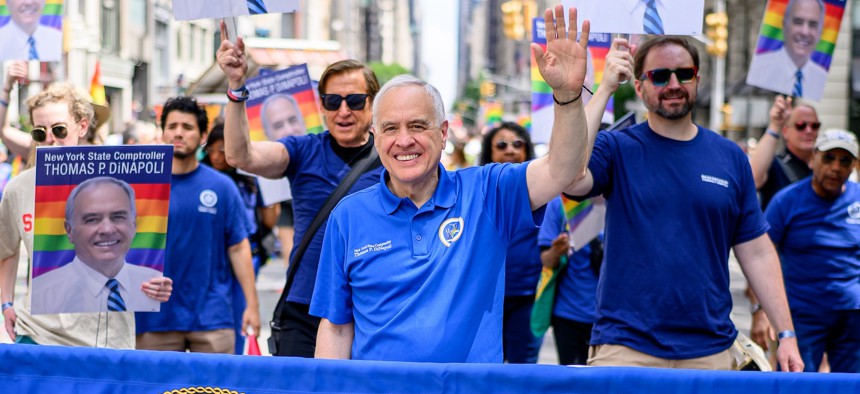
State Comptroller Tom DiNapoli had a lot to smile about after defeating his first-ever primary challengers handily. Roy Rochlin/Getty Images
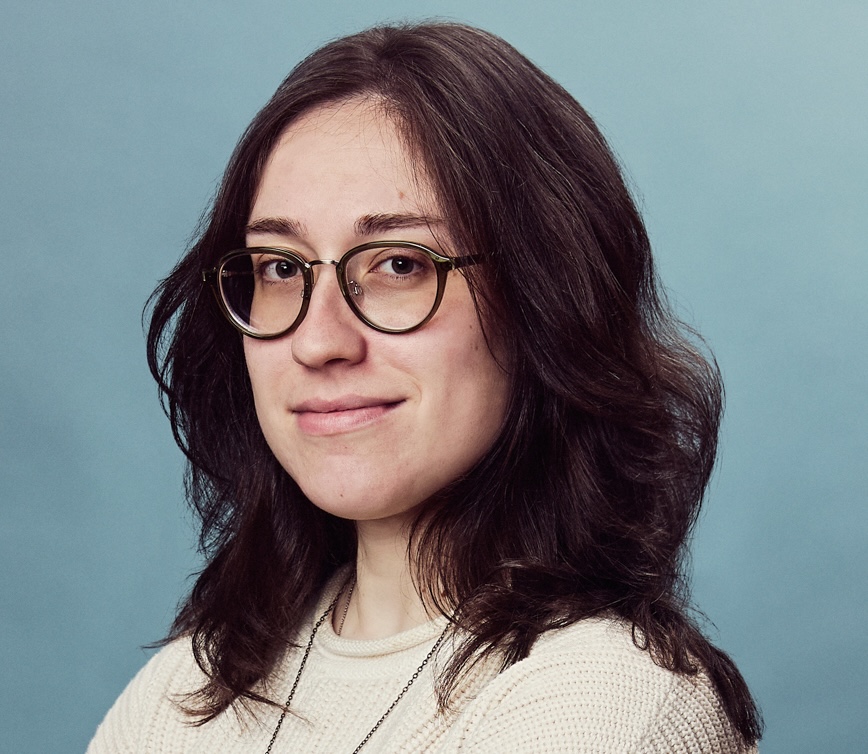

Neither of two Democratic challengers to state Comptroller Tom DiNapoli ultimately managed to defeat the longtime incumbent last week. But both Drew Warshaw and Raj Goyle benefited from matching funds, becoming the first candidates ever to test out the new public campaign finance system in a statewide race as they offered DiNapoli his first primary fight since taking office in 2007. That’s no coincidence.
Adopted in 2019, the state’s public campaign finance first went into effect for legislative races in 2024. But 2026 is the first time that matching funds have been used for a statewide election. As the only statewide race on the ballot in June, the candidates for comptroller became the first guinea pigs for the system.
Warshaw told City & State the availability of the public dollars “absolutely” played a role in his decision to take on the longtime incumbent this year. “It’s a great program that gives competitors a fighting chance, and one I got my start in politics fighting for years ago,” he said in a statement.
Warshaw received over $1.1 million in matching dollars according to the PCFB, and his campaign said he’s expected to get roughly $50,000 more in the final payout at the end of July. It’s nothing to sneeze at, but also the least of the three Democratic candidates. Combined with the nearly $2.4 million he raised, Warshaw was left with over $3.5 million to work with, per his campaign. He managed to pull about 20% of the vote statewide – not including blank and void ballots – according to preliminary election night results from the state Board of Elections.
Goyle received the second-most in matching funds. According to state Public Campaign Finance Board data, he got just shy of $2 million worth of public dollars. Goyle had raised about $2 million in traditional fundraising as of June 8, the last day included in required scheduled disclosures prior to the election, meaning he had a healthy $4 million to spend. Goyle received just under 14% of the vote, according to preliminary election night results.
“We are proud our campaign drew the most amount of small dollar support for a challenger this cycle,” Goyle said in a statement. “Public matching funds help fight the special interests that unfortunately continue to dominate our political system.”
DiNapoli still won decisively with 65% of the vote on election night. But Alex Camarda, senior policy adviser at Reinvent Albany, said the very existence of the race spoke to “the values of public matching funds.” “The public matching funds allowed challengers to Comptroller DiNapoli to get their voice out, to convey their message, to run a competitive race,” he told City & State. He added that “it’s healthy for democracy that the comptroller, after many years in office, faced a spirited competition from not one candidate but two candidates.”
But DiNapoli also opted into the matching funds system, which Camarda said was a smart move that “enabled him to probably reach out to more than the typical donors (and) to reach everyday New Yorkers rather than just large contributors.” The incumbent benefited the most from public dollars, receiving over $2.3 million, per the PCFB. As of June 8, he’d raised over $3.6 million in traditional contributions, which left him with about $6 million to campaign against his first-ever primary challengers. (And that’s not even including over $1 million in outside spending supporting DiNapoli during the primary.)
“Tom DiNapoli championed matching funds before they became law,” DiNapoli campaign spokesperson Aaron Ghitelman said in a statement. “Whether in statewide races or in down ballot races this cycle, matching funds allowed for candidates fighting for working families to get their messages out and win big at the ballot box, and Tom DiNapoli’s resounding victory was no different.”
The next big test of the statewide matching system will come in November, when Republican Bruce Blakeman attempts to unseat Gov. Kathy Hochul. It will be a different ballgame, though, as the Democratic incumbent and prolific fundraiser did not opt into the public finance program, while Blakeman did. And he already needed to go to court in order to get those dollars after the state PCFB initially denied him the funds on a technicality, a decision widely criticized by good government groups.
This story has been updated with comment from Goyle received after initial publication.
NEXT STORY: City Council, citywide officials could get 18% raise