

Politics
Zohran Mamdani is resurrecting the good old-fashioned Speech
The social media star is more quietly breaking ground in an older form of political communication.
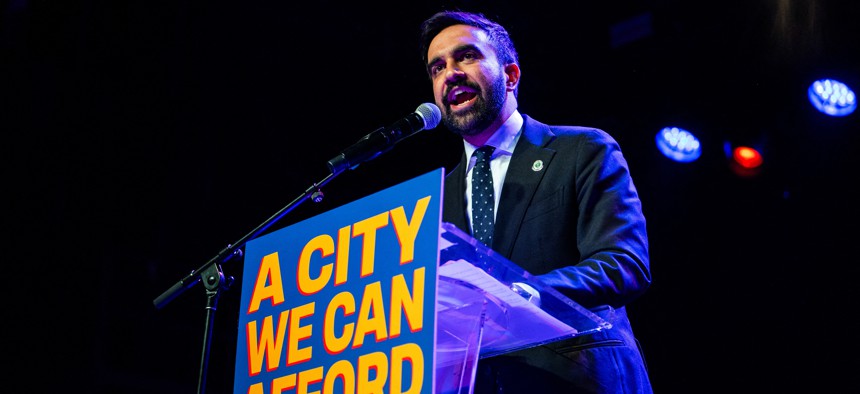
Then-New York City mayoral candidate Zohran Mamdani gave a major speech at Brooklyn Steel in May 2025. Madison Swart/Hans Lucas/AFP via Getty Images


Zohran Mamdani once walked the length of Manhattan. He took Broadway. It was nighttime.
To hear him tell it, he “set off” on the campaign trek “as the sun began to drop in the sky,” beginning “in Inwood, where music played and neighbors set out dominoes on the sidewalk,” making his way downtown to the sounds of rattling subway cars and instruments tuning at Lincoln Center, past waiters juggling plates, garbage trucks weaving through the streets and fishmongers carrying in “tomorrow’s wares.”
The sun is always rising and setting in Mamdani’s New York. His day does not merely start and end. Rather, dawn breaks – its light pouring in the windows of his still-new home on the East River – falling hours later on the Hudson, slowly dimming Riverside Drive and the West Side streets he once flew down on a Razor scooter.
Mamdani – at opportune moments, and more than many of his predecessors – does not speak. He speechifies.
The New York City mayor has been vaunted as a generational political communicator over his near-year in office and for much of the campaign season that preceded it. But it’s often his short-form videos and digital strategy, seen as load-bearing pillars of his campaign’s success, that are shown as the primary evidence of that talent.
More quietly, from campaign hotel rooms to the City Hall bullpen, from pen-streaked rough drafts to final text scrolling on teleprompters, Mamdani has sought to resurrect a more old-fashioned style of political communication: Oratory, or the capital-S Speech.
You hear it, of course, in his election night victory speeches, his inaugural address, his 100 days address. All built-in landmarks in which his predecessors, too, reached for slightly loftier language, dug for slightly richer imagery.
But you also see it in moments Mamdani has created. A July 3 video address with new American citizens. A treatise on Irish republicanism rich with references to James Connolly and The Pogues that helped clean up a flubbed off-the-cuff answer on Irish unification. And in his most personal speech, a reflection of growing up Muslim in New York, delivered amid Islamophobic attacks on the campaign trail.
In all of these moments, Mamdani, the son of a film director and a college professor and published author, has crafted a distinct style that borrows from history, leans heavily on rhetorical devices like alliteration and parallelism, and stretches metaphors to satisfying completion. He often seems to be directing scenes of New York like a movie, speaking to all five senses and reaching for whatever sixth sense is closest to the heart.
“Fingers bruised from lifting boxes on the warehouse floor, palms calloused from delivery bike handlebars, knuckles scarred from kitchen burns. These are not hands that have been allowed to hold power,” Mamdani said during his general election night victory speech last November, reading intently from a teleprompter. “And yet over the last 12 months, you have dared to reach for something greater. Tonight, against all odds, we have grasped it. The future is in our hands.”
A short-lived rapper, Mamdani’s voice doesn’t beat so much as it lilts. But his message is often bracing. He seems more comfortable advancing a broadside if it’s prewritten. No off-the-cuff comment has riled his doubters and critics as much as the celebration of the “warmth of collectivism” written into his inaugural address. He’s never cut as deep at President Donald Trump as when he told him last November to “turn the volume up” in his prepared general election victory remarks.
How much Mamdani’s formal speechmaking resonates compared to his other tools of communication is unclear – though his ode to the Knicks was heard round the world. But the overwhelming impression these speeches leave is that Mamdani would like to be known as a great American orator – harkening back to an older, possibly hibernating, political tradition.
Speechwriters for former mayors and other elected officials across the ideological spectrum believe he is on his way. “I think he understands the fundamental essence of what it means to make a good speech, which is that it needs to be grounded in language that is ambitious, but also language that’s beautiful,” said Camonghne Felix, a poet and former speechwriter for politicians including ex-Gov. Andrew Cuomo and U.S. Sen. Elizabeth Warren.
Felix argued that former Gov. Mario Cuomo’s oft-quoted refrain, “You campaign in poetry; you govern in prose” is often misunderstood. “Governance is a poetic tool as well. I think politicians who are best at governance understand that beauty as an oratory tool is not just a tool, but it is the essence of why people are attracted to things. It’s the essence of what makes people pay attention to things. People want to respond to beauty.”
Let it still rhyme
Calling the elder Cuomo a “great New Yorker,” Mamdani referenced that famous line in his general election victory speech: “If that must be true, let the prose we write still rhyme, and let us build a shining city for all.”
A year before that, Mamdani launched his mayoral campaign in Long Island City with a brief speech. It didn’t rhyme.
It was a perfectly serviceable address for the moment – it told his biography, laid down his three-part campaign platform and set forward a vision of lifting up working-class New Yorkers. But it didn’t quote from history. It lacked the varied cadence that he’d come to find persuasive in his later speeches. In it, Mamdani referred to New York as “our wild, beautiful city,” but skipped the scenes and characters he’d later rely on to paint its wildness and beauty. Even his favorite oratorical stamp – “for too long” – was missing.
“There weren’t even really a whole lot of opportunities to give proper speeches when you’re fighting for attention and when your name recognition is so low. The pitch has to be very concise and grab people immediately,” said Andrew Bard Epstein, who served as Mamdani’s communications director on the campaign and co-wrote that launch speech with him. Though that first speech features lines Mamdani still uses today – “we gather in the wealthiest city in the wealthiest country in the history of the world” – Epstein believes Mamdani’s “rhetorical ability has developed tremendously since then.”
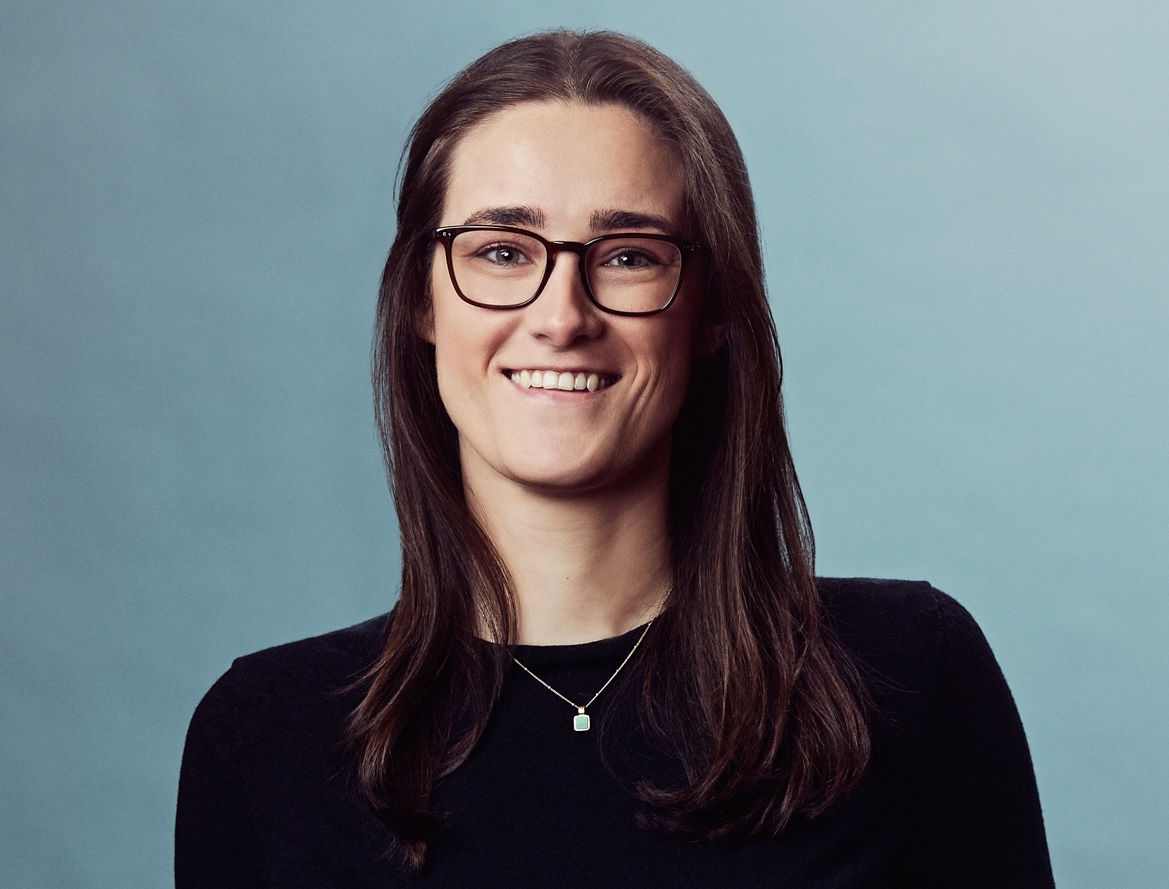
Epstein credits that to Mamdani and to his director of speechwriting, Julian Gerson, who joined the campaign as political director in March 2025. Though speechwriting wasn’t in his campaign job description, the team was aware of his past experience on Gov. Kathy Hochul’s speechwriting team. Soon, Gerson was relied on to gut-check social media posts or phrasing in press releases.
As Mamdani’s campaign gained momentum, the team aspired to loftier speeches. Gerson was brought in to work on a speech for a campaign rally at Brooklyn Steel in May, and then Epstein surrendered the pen to Gerson completely for a second rally at Terminal 5 in June.
“We created these opportunities to also make much bigger statements about the moment we find ourselves in, the politics that we’re confronting, the spirit of this campaign,” Epstein recalled. “Zohran and Julian just developed this flow where it could move so seamlessly between poetic reveries about New York City, but that ones that never got too saccharine or too cute, into the policies of the campaign, and I think also to make the cost of living crisis a human and emotional story.”
Gerson, 30 years old, grew up in Greenwich Village, the son of a professor like Mamdani and a product of elite schools (Dalton and Middlebury College) like Mamdani. And like Mamdani, he became civically engaged early on, interning in Bloomberg’s City Hall in high school, later working on Antonio Delgado’s congressional race and in Rep. Jerry Nadler’s office and on his 2022 campaign.
But Gerson, like every speechwriter, has to channel parts of Mamdani’s background he isn’t familiar with. Gerson doesn’t have roots in the New York City Democratic Socialists of America. He’s Jewish, not Muslim. Mamdani, it seems, is closely involved with his own speeches. Speaking to his alma mater’s paper earlier this year, Gerson described his working relationship with Mamdani as a partnership, and one that he told The Guardian that Mamdani engages in “intensively.” Epstein, too, recalled Mamdani as “intimately involved” and a careful editor on not just the big speeches, but scripts for social media videos during the campaign. City Hall did not make Gerson available for an interview.
Gerson now leads a team of three other speechwriters, including Sarah Gouda, Ruthie Kornblatt-Stier and Rio DeMello. They work on the longer-form speeches, but also shorter prepared remarks at regular press conferences and even social media posts that dive a little deeper. The size and scope of that office doesn’t differ much from past mayors. But Mamdani and his team are undeniably trying to do something new.
“A lot of the work we try to do with the mayor is to write different kinds of speeches, ones that speak intimately to what New Yorkers care about and draw on parts of history or the city that others might not invoke,” Gerson told the campus paper.
Communicators-in-chief
“Theoretically, you could lead from your desk without communicating with people,” Mario Cuomo, the last great New York orator, was quoted as saying. “But if you break that nexus, you are in great danger of losing power.”
New York has had talkers-in-chief, explainers-in-chief and power-pointers. But most mayors appreciate the value of a stage and a lectern. “To have an opportunity to speak to an audience on a topic you care about in a way that is sort of uninterrupted – that’s a little bit of a luxury,” said Howard Wolfson, Mike Bloomberg’s former deputy mayor of government affairs and communications.
Former Mayor Eric Adams was more likely to riff in a prepared speech, but he clung to catchy turns of phrase: “I’m perfectly imperfect,” he liked to say. “A bend in the road is not the end of the road as long as you make the turn,” he said in his election night victory speech.
In his inaugural address, Adams quoted Ed Koch. In more than one speech, he quoted Snapple. “In the words of one of the most famous Brooklynites, the owner of Snapple soft drinks, we are going to win because we are made of the best stuff on Earth.”
Like Mamdani, Bill de Blasio set up doubting straw men in his inaugural address, only to blow them down with rhetorical oomph. “There are some who think now, as we turn to governing – well, things will just continue pretty much like they always have,” de Blasio told a frigid crowd outside City Hall in 2014. “So let me be clear. When I said we would take dead aim at the ‘Tale of Two Cities,’ I meant it.”
David Dinkins spoke of the city’s “gorgeous mosaic.” Bloomberg declared the answers to our problems lay not in City Hall but “in the Rockaways, Bay Ridge, Washington Heights, New Dorp and Belmont, there and in the hundreds of neighborhoods throughout this great city.” Weeks after 9/11, Rudy Giuliani gave a reflection on patriotism on the floor of the United Nations.
But if giving speeches is a part of the job of the mayor of New York City, being a great speechmaker is not a job requirement. Josh Greenman, managing editor of Vital City and a former speechwriter, argued that Giuliani, Bloomberg and de Blasio were all more talkers than speakers. “That thing – being a talker not a speaker – I think meshes with a lot of people’s conceptions of the job because it’s seen as a job in which you just do things and you’re connecting with people in a very direct and pragmatic way,” he said. “(Mamdani) clearly believes that he has an important message to deliver politically, ideologically, about the importance of cities, about how cities should work, about how the economy should work. I think that’s why it is more of a fit for him than it was for other mayors.”
Stylistically, Mamdani’s speechmaking antecedents are not found in City Hall. “It really is more (President Barack) Obama for the repetition and the particular to the universal. Mario Cuomo for literary flourishes and storytelling structure – with a dash of Bernie Sanders and maybe a pinch of Lin-Manuel Miranda,” said John Avlon, who served as Giuliani’s speechwriter.
Obama often comes up in comparison to Mamdani’s speechmaking, though one of the former president’s former speechwriters said they’re less similar in style than they are in approach. “You’ve had really good presidents and good politicians and public speakers who sort of lead with the argument, and others who kind of lead with the values. Everybody has to do both, but usually one comes first,” said David Litt, who worked on Obama’s speechwriting team from 2011 to 2016. “More often than not, for both Mamdani and Obama, you see speeches that are rooted in both values and stories.”
Delivering on the vision
When asked to recall a Mamdani speech from the past year that left an impression, nearly every person interviewed for this story first mentioned one of his shorter ones: The 8-minute, 80-miles-an-hour, voice-cracking, earth-quaking poetic epic of New York pride at the Knicks championship parade. He pulled in every generation of Knicks fans with references to Charles Oakley pulling down rebounds, Nate Robinson stuffing Yao Ming, Allan Houston putting up a shot on Miami that “hung in the air for an eternity” and OG’s tip-in.
“We waited without ever knowing if this day would come,” Mamdani said, midway through a refrain. “We waited because we knew, deep down in our sick, suffering hearts, that it would.”
For all their flourish and fullness, Mamdani’s other capital-S Speeches aren’t as closely remembered as this one that deftly, but only briefly, transmitted his political vision and platform.
“(Former Mayor John) Lindsay described it as the second-hardest job in the country,” Avlon said of the mayoralty. “But I think the fact that so few mayoral speeches are remembered speaks to the fact that at the end of the day, it’s about results even more than rhetoric.”
So why the concerted effort, the painstaking historical references? Why not make another TikTok?
“There’s an easy argument to be made that people still see this as a skillset that is sort of linked to greatness,” said Arielle Goren, a former speechwriter for Andrew Cuomo and U.S. Senate Minority Leader Chuck Schumer. “There’s also a not totally dismissable counterargument that says that in this era of very short attention spans and hardly anyone sitting down to, say, watch TV news or another kind of medium that would really lend itself to a real speech, that it might not be the most effective use of his time.”
But Mamdani can and has, Goren observed, chopped up bits of his speeches to play over his more digestible and viral social media communiqués. The two can work in concert – even if it means taking an axe to the long-form speech.
Mamdani’s oratory style, if largely acclaimed, is not without potential downsides. Audiences, and supporters, will tire of rhetoric if it comes at the expense of substance.
Felix, who praises Mamdani’s oratory, also said she has been disappointed by what she saw as the “failures that he’s had around policing,” such as stalling reforms and keeping Police Department Commissioner Jessica Tisch. “When we talk about effectiveness, we’re not just talking about whether or not they can get people to the polls, but whether or not they’re actually able to achieve on some of these big lofty dreams that they’ve sold to the public,” she said. “Yeah, Mamdani’s an excellent speaker. He’s got great speechwriters. They’re all very good. Now that I know that, I’m going to be looking in between the lines, right? I want to see very clearly what his successes look like outside of the beauty, outside of the performance.”
For now, the sun still only dawning on the Mamdani era, beauty and performance are tied up in much of what he does. His soaring speeches recall respected, captivating leaders, much in the same way his always-on suit lends him a seriousness not often associated with the left. He “understands that there’s a dramaturgy and a theatricality to the entire process,” said Marjorie Sweeney, a former speechwriter for Adams and de Blasio.
If Mamdani’s goal is to break new ground in modern political speech, he is, so far, succeeding. “Clearly, there are way too many people playing it safe. Think how boring most speeches are. They are just a collection of clichés and lists and vague words that your mind just skates over,” Sweeney said. “I think it’s better to dare a little bit and go too far.”