

NYN Media
Opinion: Mamdani must act big (and small) on housing
Six ways the new administration can change the trajectory of affordability in New York City.
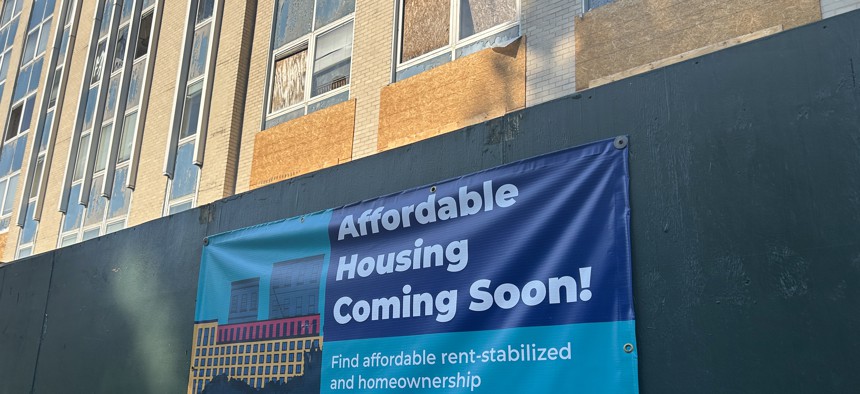
Speeding up the construction of affordable housing will be important for the Mamdani administration. Lindsey Nicholson/UCG/Universal Images Group via Getty Images


Last year’s New York City mayoral race made it clear that affordable housing preservation and production are fundamental parts of mitigating our housing affordability crisis. As the city begins a new era of leadership, we are still in a critical moment.
In the third quarter of 2025, the median asking rent in New York City reached $3,599 per month, an increase of 5.4% year-over-year, and continues to demand incomes far above what typical households earn to meet conventional affordability benchmarks.
Now with Mayor Zohran Mamdani in office, the question is no longer about what to promise, but how to deliver. This will be a governing test for 2026: the year where delivery matters more than debate. City Hall has more tools on paper than ever before – from recent land use reforms to new commitments to speed up housing approvals – but whether those tools translate into homes people can actually live in is the question that will define this administration.
The answer lies in the follow-through – which will need to take the form of both big actions and an even larger number of small fixes to city processes that can ensure neighborhoods add the many kinds of housing needed, can speed up housing starts and can ensure every affordable apartment gets occupied by income-eligible families as quickly as possible. And the reality is, changes, big or small, only work if built on a talented community-level implementation team. That means working with and learning from the experience of partners who share the city’s long-term public mission.
At this moment, as part of much-needed follow-through, Mamdani will need to rely on nonprofit housing developers like RiseBoro Community Partnership and The Community Builders to realize his promises. For over half a century, both TCB and RiseBoro have built and managed tens of thousands of homes that stay affordable because every dollar returns to their mission to build an affordable New York City. There are no shareholders to satisfy, only communities to serve. We hold properties for the long term, and we pair housing with supports like child care, health care access and employment connections. That’s not charity; it’s proven, efficient policy. The framework for Mamdani’s follow-through is already there. The nonprofit development model is particularly vital now, as building owners wrestle with higher insurance costs, rising interest rates on refinancing and new energy-efficiency standards. Without mission-driven stewards, too many buildings risk falling into speculative hands or disrepair, taking affordable homes offline just when New Yorkers need them the most.
In the first year of our new mayoral administration, here are some necessities to meaningfully change New York City’s affordability trajectory.
1. Make nonprofit capacity a core part of the city’s housing strategy: The city should direct more capital and land toward mission-driven developers who commit to permanent affordability and reinvest in their communities. We have our own form of “social housing” organizations that are proven and work – New York City’s amazing nonprofit housers.
2. Create a standing acquisition fund for preservation: Each month, some affordable buildings slip into the speculative market while other buildings needing reinvestment decay. A revolving city-backed fund could help nonprofits stabilize the properties they have and acquire others before they’re lost, keeping residents in place, buildings safe and neighborhoods intact.
3. Embed resident services into every affordable housing deal: Stable housing is about more than rent and more than a building. It’s about communities. Programs that connect residents to work, school and health resources improve outcomes and reduce turnover. In The Community Builders’ properties across the region, for example, 85% of residents are connected to school or work, and 80% of seniors rarely feel isolated. Those results should be the expectation, not the exception.
4. Streamline approvals for affordable housing projects: Recent land use reforms are a start and are intended to help speed up city land use approvals for affordable housing. But city and state funding approvals come thereafter, not simultaneously with the land use reviews. We ask our new mayor to add a predictable maximum one-year path from land use approvals to the start of construction for affordable projects that meet public goals. Without that clear timeline, rezonings and policy changes would potentially be unfulfilled promises on paper rather than resulting in homes built on the ground.
5. Centralize the administration of housing subsidies: Housing subsidies like the CityFHEPS program help homeless New Yorkers get housing, but the administration of the program can be slow, delaying the movement of households into permanent housing. Moving this and similar programs to a central oversight agency would improve efficiency. This year, while shelters remain full and apartments sit vacant, closing this administrative gap is one of the fastest, most humane changes the city can make.
6. Incentivize development of complementary investments to housing: New York has a history of building vibrant street-level commercial and community spaces to complement its housing investments. However, many new housing developments have challenges leasing these nonresidential storefronts, especially in outer borough neighborhoods. This creates difficulty in attracting the mix of neighborhood-based operations that help a community thrive.
Mamdani can build on the city’s success with the FRESH program that attracts grocery stores to food deserts by expanding this initiative. Also incentivizing day care, access to prescriptions in the increasing number of “pharmacy deserts” and other valuable first-floor uses can empower local entrepreneurs to start a new business in exchange for a commitment to build, buy and hire local.
New York has no shortage of ambition or expertise. The city’s affordable housing ecosystem is full of talent, from public agencies and nonprofit developers to mission-driven lenders and community advocates. What’s missing is alignment; a clear system of delivery with measurable outcomes that save costs and get people housed faster.
Mamdani can fix that by pairing scale with specificity, and vision with execution. That means setting bold housing production and preservation targets, and defining what success will look like for tenants, neighborhoods and working families. It means giving agencies the absolute mandate – and the flexibility – to move projects forward faster, while holding the city accountable for results residents can see.
This administration’s credibility on housing will be earned at ribbon-cuttings if those are paired with everyday wins: a family stays in their home because a preservation deal closes in time; a senior avoids isolation because services are built into their building; a vacant lot turns into new affordable housing without a decade of delay. The housing crisis at the center of this election will remain until swift and intentional action is taken.
Housing progress, like trust, is built block by block. If Mamdani leads with this discipline – uniting ambition with action – New York can turn its housing crisis into a coordinated, citywide renewal. This year, that means turning every new tool, reform and policy into the same simple outcome: more New Yorkers in safe, stable, permanently affordable homes.
Bart Mitchell is the president and CEO of The Community Builders and Kieran E. Harrington is the CEO of RiseBoro Community Partnership.