

NYN Media
Despite Trump cuts to HIV programs, private funders stay determined to find cure
A Q&A with Kyle Clifford, the first H.I.V. positive CEO of AIDS research organization amfAR.
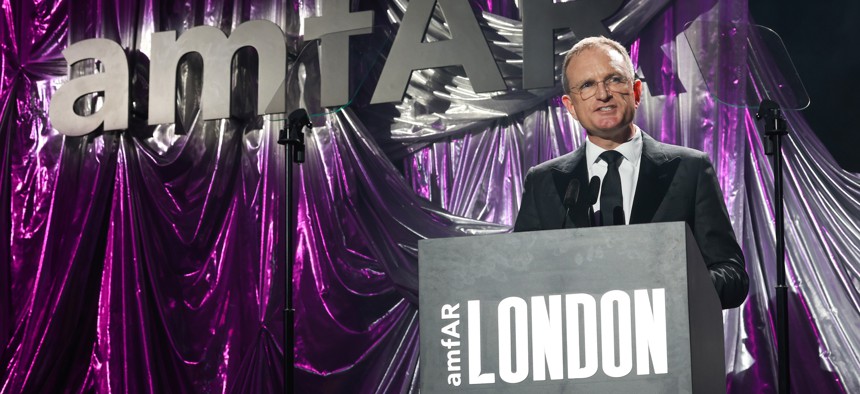
Kyle Clifford was chief development officer for amfAR before taking over as CEO in January. Lia Toby/amfAR/Getty Images for amfAR


By October of 1995, the U.S. reported over 500,000 AIDS cases, prompting the White House to recognize HIV as an epidemic. The following year, the FDA would approve the first HIV home testing kits, beginning an era of federally funded programs that would begin to slow mortality rates.
Since then, federal authorities have funded AIDS research and HIV prevention programs – but the Trump administration cut over $1.5 billion from domestic HIV care and pre-exposure prophylaxis programs, better known as PrEP. As thousands of Americans lose access to treatment, the White House has continued to enact sweeping cuts to global programs, most recently using HIV aid as a political ploy to access minerals in Zambia. As the HIV research space continues to face widespread instability, with some states now drastically limiting access to care, privately funded research organizations are stepping in to fill gaps.
The American Foundation for AIDS Research, known as amfAR, is the world’s first private AIDS scientific research organization, having awarded more than 3,800 grants and raised up to $950 million dollars since its founding in 1985. Last year, amfAR awarded $3.1 million in grants, including Mathilde Krim Fellowships in Biomedical Research which provide up to $180,000 to early-career investigators.
At the beginning of this year, amfAR welcomed its first HIV-positive CEO, Kyle Clifford, who leads the organization as global demand for private funding continues to grow and research areas expand into intersectional issues of aging and HIV-positive patients.
As HIV research continues to endure attacks from the Trump administration, NYN Media spoke to Clifford on the organization’s strategies to weather unpredictable funding and future research plans.
This interview has been edited for length and clarity.
You publicly came out as HIV positive in 2025, over a decade after finding out about your diagnosis in 2012. Was there a reason why you didn't want to share this with more people?
My natural default when I got my diagnosis was the impact on my loved ones. At the end of the day my health status is my health status. I am very lucky and fortunate to be of a certain demographic, at a certain time in history when I had access to medication and treatment.
When I got my diagnosis, I actually had what was an AIDS diagnosis, my T-cell count was that low. As a result of the diagnosis, I became intensely focused on a cure and amfAR kept coming up. If you fast forward when the headhunter reached out for me over six years ago, two things he did not know: that I was gay, I came out at a young age in Ireland where I lived through the fear of HIV, but also that I was HIV positive.
At that point, only my husband and my primary care doctor knew. I was leading a perfectly healthy life. I was also very comfortable with my status, and the reality of it is, it's complicated. It's very complicated for everyone, and it's a very individual decision. I was only in a position to make the decision to come out about my HIV status, because I have the foundational love and support of people around me. And so far, it's been a real interesting learning spur. You know, it's been a second coming out. Some people advised me against doing it, and that's understandable. And in New York, where I live, there's this very vibrant HIV, positive community. I would say to anyone who’s newly diagnosed, or has been positive for a while, you don't have to be alone. And just because you're HIV positive doesn't mean you have to come out about your status. That is a very individual, personal health matter, and it's also a very personal, complicated journey for everyone. I was lucky to have the foundational support. At the end of the day, how magical is that? I'm now leading an organization, a team, that has played a role in keeping me alive.
Since the beginning of the Trump administration, has demand for funding the HIV research space changed among private funders?
I think private funders in the last few years, under the current administration, have diversified their interests. Over the last few years, we've seen that some private funders are very committed to being involved politically. Others, at one point, were very committed to environmental causes. These things ebb and flow over time, so that's why it's really important for us to stay connected with existing and lapsed donors, because we think there is an opportunity to reengage people. Specifically in the HIV space, as a consequence of the decision making around the administration, with uncertainty and concern over the last 12 months on the direction of HIV and AIDS funding, there’s increased awareness about the challenges around HIV funding, but more importantly, the volatility of funding for researchers.
As HIV prevention programs and research continue to be attacked by the Trump administration, from funding cuts to access to treatment, how are organizations like amfAR ensuring that researchers are being supported?
There’s a heightened awareness with the public around the value of research. However, in tandem with that, we have seen a 20x demand for funding from our researchers. So researchers, all of us in this ecosystem, are trying to be very resourceful. We have one primary goal, which is to try and meet that demand.
In addition to that, what we've done for many years is bringing researchers together to collaborate and find innovative ways to fundraise. I just came back from a conference in Denver for HIV experts and their response is one of unity. If you think about it, we've been here before. This isn't new to us. The response to the HIV and AIDS epidemic required a grassroots solution to a domestic problem and a domestic crisis, which we've done for years. We come together, unify, collaborate, and that's exactly what we've been doing. We publicly announced our amfAR Research Council, which is this incredibly talented group of researchers that are cross-disciplinary, that helps navigate our research strategy and bring light to areas that we should be considering over the coming years.
Many people seem to no longer consider AIDS to be an epidemic. For organizations like amfAR, how do you get people to still care?
It's a real challenge that we're very proud of, because it means what we're doing is working, and it means that we’re dealing with a byproduct of our success. But the reality of it is, it causes a perception challenge. When we speak to people, our focus is: why would you run a marathon and not finish the last five miles? There's an obligation to ensure that we stay focused on finding a cure, but there's a broader story. When you invest in HIV research, you're investing in a whole range of other diseases and chronic illnesses. Innovations exist in cancer treatment, in cellular immunology and vaccine development all because of HIV and researchers trying to understand this incredibly complicated virus. So for us, it’s broader than HIV. It's about truly advancing scientific discovery.
Speaking of that, how did you leverage some of amfAR’s previous research to help develop the COVID-19 vaccine?
So as you may know, the foundational roots of what became the mRNA technology, which has provided for us all the COVID-19 vaccine all originate in the HIV space. In fact, Dr. Drew Weissman, the Nobel laureate, was one of our original grantees. So when COVID-19 occurred, needless to say, we were positioned to be in the perfect response, because we could plug into this global network of some of the most leading virologists in the world. Looking forward beyond COVID-19, we're hearing about the risks that are coming down the line right now, so we're positioned for pandemic preparedness.
With all the funding cuts impacting the nonprofit space, especially within the scientific community, how do you navigate through instability?
We've been doing exactly that since 1985, so the current challenges aren't new to amfAR. The secret to our success has been about being very focused and clear on our goals. I think what's really interesting is that we have an opportunity to engage and share this model with other not-for-profits across New York. I think in this current climate, there's a great opportunity for us to help each other, to share ideas and collaborate.
As amfAR relies completely on private philanthropy to stay afloat, do you envision that private philanthropy will play a bigger role in the scientific community?
100%. In fact, I see this becoming a bigger and bigger conversation. I think you are going to see other opportunities to engage more donors that could be your monthly sustainers. So whether people are giving you $25 a month or $50 a month, I think those and mid-level giving donors are the greatest opportunity for us. Our natural default is to be considering the large funders, they are absolutely crucial. I equally think, given where we are, that the real opportunity lies in engaging with a broader donor base.
As AIDS research has been politicized since the beginning of the epidemic, how do you stay focused?
For amfAR, it's about the research and nothing else. We have a long track record and history of advocating for the most disenfranchised in society. The greatest killer in the HIV community is stigma. While there are the terrible challenges of access, there is the volatility of funding, which amfAR will continue to advocate for across this country and globally. We will also advocate for access to the most disenfranchised in our society, and find a cure that we can provide globally, which is affordable and accessible to all communities.