

NYN Media
Study: Universal pre-K may reduce child neglect
The introduction of free preschool in New York City overlapped with reduced child maltreatment investigation rates
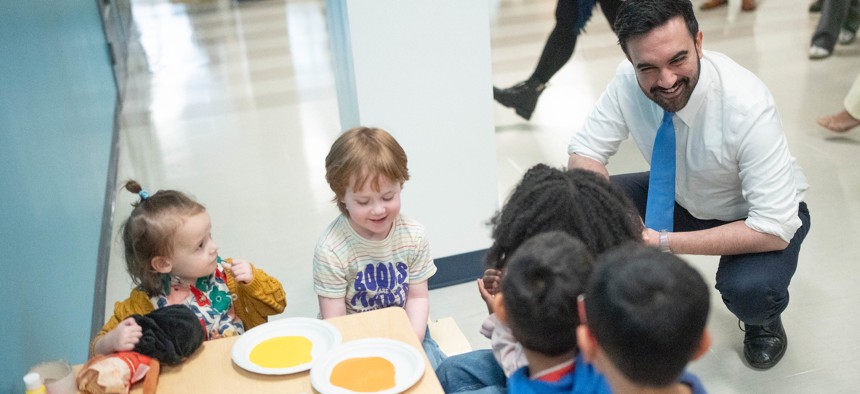


Jessica Pac knows firsthand the transformational impact of universal pre-K. With the help of New York City’s program, she completed her PhD in social work at Columbia University while also parenting two children.
“We went from spending maybe $20,000 a year on childcare to having access to this program that was free,” said Pac, now an assistant professor of social work at the University of Wisconsin-Madison. “It’s still by far the best after-school program my kids have ever experienced.”
The boon informed Pac’s decision to team up with two other social scientists to research the connection between universal pre-K and the well-being of some of the youngest New Yorkers. The resulting study of 1.6 million children, published in JAMA Pediatrics in January, found that making pre-K freely available to four-year-olds may significantly reduce their chance of involvement with the Administration for Children’s Services, the city agency tasked with investigating allegations of child abuse and neglect.
The researchers found a 7% reduction in ACS investigation rates among four-year-olds in the 2015-2016 school year, the first year after NYC implemented universal pre-K. By the third year, investigation rates dropped by 22%. Because the city introduced universal free meals at public schools in September 2017, the researchers focused on the first three years of universal pre-K to avoid any confounding variables.
Universal pre-K frees up time and money. Parents can work rather than stay home, and income can go to other necessities. The savings pre-K routes back to families are enormous; on average, childcare in New York City costs $26,000 a year.
The reductions identified by the study were entirely driven by neglect investigations. Neglect, as defined by ACS, includes a lack of medical care; inadequate food, clothing or shelter; lack of supervision; and malnutrition. The reduction in neglect investigations were also disproportionately concentrated among Black and Latino children. Over 86% of New York City children in foster care are Black or Latino. And while only 50% of the city’s population is Black or Latino, 81% of ACS investigations are of Black or Latino families.
ACS was established in 1996 by then-mayor Rudy Giuliani, following public outcry after a mother beat her six-year-old daughter to death. But, 30 years after the agency’s creation, abuse is not its primary target. In 2023, 75% of ACS cases alleged neglect alone, and each year, neglect cases make up the vast majority of ACS’s caseload.
“What this study suggests is that if you start chipping away at poverty, then the system has less to attack,” said Sean Eagan, a policy director at The Bronx Defenders. “Because it’s criminalizing poverty.”
Many of the parents caught up in the system are like Shavona Warmington, a Queens single mother of six who struggles to juggle childcare with working full time. Warmington told NYN Media she has been investigated by ACS more than 10 times since 2012, but has never been found responsible for abuse or neglect. “They’re kicking down your door, threatening to bring the cops in, letting me know my household is not conducive enough to house my kids,” said Warmington. “It’s seven of us in a two bedroom. I can’t afford a mansion. I make 18 an hour.” The investigations on her record mean that Warmington, a trained nurse, fails employer background checks for nursing jobs – creating a self-sustaining loop of financial instability and child welfare involvement.
A spokesperson for ACS said the agency is focused on prevention, not just punishment. The agency spends as much on preventative social services as it does on investigations, investing more than $300 million a year in everything from diaper access to childcare.
“ACS has long believed in an upstream approach that supports and invests in communities, caregivers and children,” the spokesperson said in a statement. “We know that proactive strategies – like making sure families have access to child care – enhance family stability and child well-being.”