

Opinion
Opinion: Why Block by Block matters for New York's future homeowners
Solving the housing crisis requires not just creating affordable renting housing, but also expanding opportunities for working families to become homeowners.
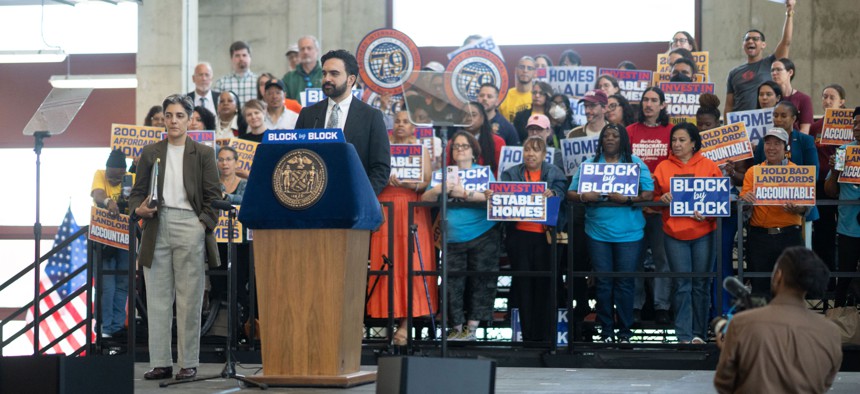
Mayor Zohran Mamdani announces his Block by Block housing program on May 26, 2026. Michael Appleton/Mayoral Photography Office


For decades, New York City's housing conversation has centered almost exclusively on renters. While protecting tenants remains critically important, we have not paid nearly enough attention to another essential piece of the housing continuum: creating pathways to affordable homeownership.
At Habitat for Humanity New York City and Westchester County, we see every day what homeownership makes possible. It provides stability for families, creates opportunities to build wealth, strengthens neighborhoods and gives people a lasting stake in their communities. Yet for far too many New Yorkers, homeownership remains out of reach.
That is why the homeownership provisions included in Mayor Zohran Mamdani's Block by Block housing plan are so significant. The plan recognizes something Habitat has long advocated for: solving the housing crisis requires not only creating affordable rental housing, but also expanding opportunities for working families to become homeowners.
The plan includes several initiatives that align closely with priorities Habitat has championed for years, including affordable cooperative ownership, community land trusts, accessory dwelling units and expanded investment in affordable homeownership production. Together, these strategies acknowledge that homeownership must be part of any serious effort to build a more equitable housing system.
One of the most promising proposals is the creation of the Our Home program, which will support the conversion of rental buildings into resident-controlled cooperative housing. For tenants, this represents more than a change in ownership structure. It creates an opportunity to build equity, participate in decision-making and gain greater control over the future of their homes while maintaining long-term affordability. HPD expects to support 300 new affordable cooperative units through the program over the next two fiscal years.
The expansion of the Open Door program is equally important. Open Door funds the construction of cooperative housing and one-to-four-family homes affordable to low-, moderate- and middle-income New Yorkers. Under Block by Block, the city will double production of these homeownership opportunities compared to recent years, helping more families establish roots, build equity and invest in their communities.
The plan also embraces accessory dwelling units, or ADUs, as a practical tool to help homeowners remain in their neighborhoods while creating additional housing opportunities.
Through ADU for You and the Plus One ADU program, homeowners can receive financial and technical assistance to add a new home to their property. With support of up to $395,000 available and new pathways for manufactured ADUs, the city is helping homeowners generate income, accommodate multigenerational living and contribute to housing production at the same time.
Community Land Trusts also play an important role in the plan's vision. Habitat has long supported CLTs because they provide a framework for permanent affordability and community stewardship. By placing land under nonprofit ownership and engaging residents directly in governance, CLTs help communities maintain affordability while ensuring local voices help shape neighborhood growth. The city's commitment to expanding partnerships with CLTs and identifying additional opportunities for land acquisition and stewardship is a meaningful step forward.
The renewed J-51 tax incentive is another important piece of the puzzle. Preserving affordability requires investment in existing housing as much as it requires building new homes. The extension of J-51 provides critical support for building owners, affordable cooperatives and condominiums undertaking major repairs, health and safety improvements and energy-efficiency upgrades, including compliance with Local Law 97.
Taken together, these initiatives represent a thoughtful and practical approach to expanding and preserving affordable homeownership. They recognize that families experience housing in different ways: as renters seeking a path to ownership, as homeowners trying to remain in their communities and as residents who want their neighborhoods to remain affordable and stable for future generations.
At Habitat, we are encouraged to see homeownership receiving the attention it deserves. But we also know that this work is far from finished.
Three hundred cooperative conversion units through Our Home is a strong beginning, but the need is much greater. Habitat will continue advocating for a fully funded Tenant Opportunity to Purchase Program, expanded financing tools that support cooperative conversions and preservation strategies and policies that dramatically increase the share of housing production dedicated to affordable homeownership. Our own policy agenda calls for growing affordable homeownership creation from just 2% of city housing production to 20%.
The urgency could not be clearer. New York continues to experience profound disparities in access to homeownership and the wealth-building opportunities it creates. According to Home Mortgage Disclosure Act data cited in the city's housing plan, only 10% of recent home purchasers were Black and another 10% were Hispanic.
Closing those gaps requires more than rhetoric. It requires sustained investment, policy innovation and a commitment to treating homeownership as an essential component of housing justice.
Every cooperative conversion. Every Open Door home. Every accessory dwelling unit. Every community land trust property. Each represents an opportunity for a family to build stability, create wealth, and remain rooted in the communities they call home.
At Habitat for Humanity NYC and Westchester, we believe affordable homeownership should not be the exception. It should be an achievable reality for far more New Yorkers. Block by Block moves us closer to that goal. Now the work is ensuring we deliver on its promise – and continue building a city where more families have the opportunity not only to live here, but to own a piece of its future.
Sabrina Lippman is the CEO of Habitat for Humanity New York City and Westchester County.
NEXT STORY: Opinion: How the City Council can help keep people and pets together