

Opinion
Opinion: Mamdani needs to give make-up services to students left behind during the pandemic
New York City has fought nonprofit Advocates for Children’s class action lawsuit for years.
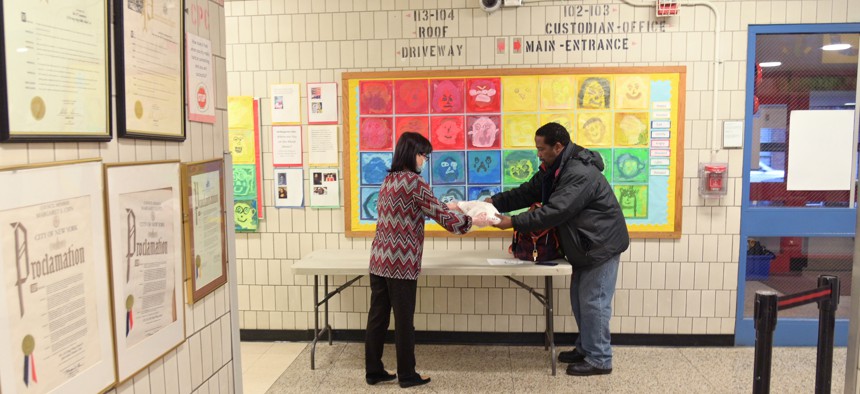
New York City schools handing out laptops to students for remote learning in 2020 worked for some students, but not everyone. Michael Loccisano/Getty Images


This month marks six years since our city shut down in the face of a growing pandemic and schools pivoted overnight to remote learning. It was a crucial and lifesaving decision. But for many students with disabilities, that pivot also meant losing access to the services and supports they rely on to learn – losses whose impacts are still being felt today.
At Advocates for Children of New York, each year we hear from and provide legal services to hundreds of families struggling to navigate the nation’s largest school system, in New York City.
Nearly six years after schools first closed, we still hear from students who regressed during the COVID-19 pandemic and never fully recovered. Students with disabilities who were barely managing before the pandemic now find themselves even further behind and struggling to attend school at all. Academic gaps have widened in the past six years. Mental health needs have intensified. Despite the city’s recovery efforts post-pandemic, the educational consequences of the pandemic remain especially severe for students with disabilities who were left behind during remote learning.
At the height of the pandemic, AFC, with the law firm Patterson Belknap, filed a class action lawsuit seeking a straightforward solution to ameliorate the impact on students with disabilities who could not access remote learning and services. We asked the city to create a streamlined, accessible process for families to obtain make-up services – services that the federal government made clear students had the right to receive – without requiring that each family individually fight the New York City Department of Education at a hearing to make the case for why their child should be awarded make-up services.
Instead, the city has spent more than five years fighting tooth and nail to dismiss our case. During that time, New York City students with disabilities have continued to suffer the consequences of missed educational supports and services. The time and public resources devoted to litigating the case could be far better spent delivering relief to families who urgently need it – especially for students who are close to aging out of the school system.
For these families, the clock is ticking. Students who were in second grade when the pandemic hit – just beginning to learn to read independently – are about to enter high school. Without the targeted remediation they deserve, many risk entering high school already far behind their peers. For some, the path to graduation, let alone college, may slip further out of reach.
Mayor Zohran Mamdani and Chancellor Kamar Samuels have articulated a welcome vision of collaboration. Real collaboration means removing unnecessary barriers, not forcing families through years of hearings and litigation. It means creating accessible systems that help students get the make-up services they need before it is too late.
The families we represent are not asking for special treatment. They are asking that their children get the education and services they were legally entitled to in the first place. For the sake of students with disabilities and their families who have already lost too much time, we cannot afford to run out the clock. We urge the mayor and chancellor to choose partnership, and ensure that the students most affected by the pandemic are not left behind yet again.
Matthew Lenaghan is deputy director of Advocates for Children of New York, a nonprofit organization focusing on ensuring a high-quality education for students from low-income backgrounds.
NEXT STORY: Opinion: County governments will benefit from income tax fairness, too