

Interviews & Profiles
Inside Ogden’s challenge to Jay Jacobs
Otsego County Democratic Party Chair Caitlin Ogden is looking to oust the sitting state party chair.
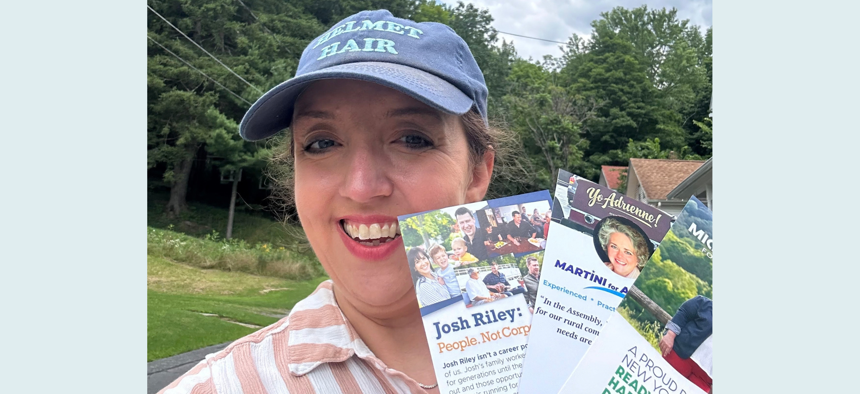
Otsego County Democratic Party Chair Caitlin Ogden is mounting a challenge to state Democratic Party Chair Jay Jacobs. Caitlin Ogden
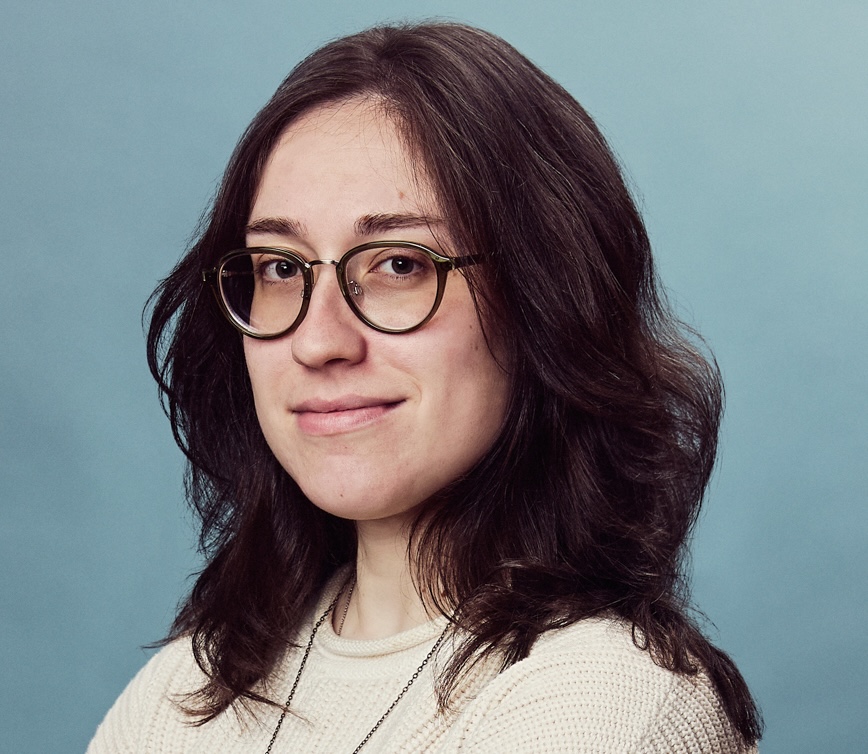

State Democratic Party Chair Jay Jacobs is getting his first serious challenge of his tenure from Otsego County Democratic Party Chair Caitlin Ogden. The rural party leader said many people are disappointed with how the party has been run under Jacobs, and she is stepping up to be the kind of change she’d like to see. But with the next organizing committee meeting and the leadership vote set for Oct. 1, Ogden has a short timeframe to muster up support for the insurgent campaign she officially announced last week.
It’s not the first time Jacobs has faced criticism, and he has previously been called on to resign. As she has in the past, Gov. Kathy Hochul said over the weekend that she’s sticking with her party chair against Ogden’s challenge. “It is time for Jay Jacobs to show that he is going to continue being the leader,” the governor told reporters in Albany over the weekend. “As I’m the head of the state party, he is my chairman. He'll be reelected, no problem.”
Ogden acknowledged that she’s not Hochul’s pick, but said she still looks forward to delivering the “annual statewide top-to-bottom coordinated campaign effort” that the governor has called for and first instituted in 2024. Ogden spoke to City & State about how she would deliver on that, her reasons for taking on Jacobs and her vision for the state party. This interview has been edited for length and clarity.
What kind of fight are you expecting?
I expect that (Jacobs) is going to make his case for his tenure as chair, and I think he tried to do that a little bit in the Politico article. Unfortunately, I think he just doesn’t really have a great vision. Amongst his accomplishments is the fact that he allows resolutions to the floor and be voted on instead of just tabling them, and that’s supposedly a mark of progress. So I think that it’s going to be an uphill battle in a lot of respects. But we have also created a culture of fear in the party that I think has served to quash any substantial opposition in the past. It’s difficult when you rely on the state party to help your small committees and your local candidates to try to go up against that and worry about if you get caught on the wrong side of the argument, will there be repercussions? I think a lot of that is kind of overblown, which is one of the reasons that I’m throwing my hat in. But we’ve been working really steadily to be in contact with state committee members from across the state. There is a lot of support, a lot of appetite for change, a lot of appetite for a vision that sees the growth of our party and actually offers something directly to our voters as a reason to subscribe, as opposed to just the status quo.
If you won, what would be your top priority? What is the platform you’re running on and how would you be different from Jacobs?
It’s a three-pronged effort. The overall goal is to have an annual, year-after-year, coordinated statewide campaign effort, which is very common in other states. In order to do that, we need resources. We need both monetary and energy resources – human energy in this case. I am a major gifts officer. My whole career is figuring out how to raise money, and I primarily work in rural areas of Central New York. I’ve worked for organizations that can easily raise $3 to $5 million a year. I think that (to) expand that out to statewide, we would be able to raise enough money to support that effort by having a grassroots statewide fundraising campaign, a grassroots nationwide fundraising campaign similar to what Wisconsin and California do that we do not currently do. And then change the way that we’re interacting with our major donors so that we’re bringing on donors who aren't just paying for action, but they're actually making investments in a party that has a vision, and they are making investments to help their community thrive. In order to get all of that work done, we actually have to tap into our biggest untapped resource, which is our state committee members, who are all incredibly dedicated volunteers who take the time and the trouble to run for the position. And it’s not just because they want to go (to committee meetings) twice a year and eat wine and cheese. It’s because they actually want to (do something) for their voters, for their candidates. So we need to start running (the) state state committee the same way that the most successful county committees run, by actually investing real power into the committee members to take ownership of the work.
What do you see as your path to victory right now?
Because this is an unusual kind of election, being that it is just amongst the members of the state committee and not a broader electorate, it’s a lot easier to work in a compressed timeline. We have been working for the last six months to build this coalition of supporters from the upstate, more rural areas, as well as the downstate – especially our more progressive wing of the party downstate. Because while we might both have different legislative priorities or be in different parts of the big tent, it is very unified feeling that current state leadership and the current chair are just kind of ignoring and leaving out (people like) a rural county that raises $1,000 a year to support candidates that he has decided are just a lost cause to a progressive primary campaign winner down in New York City, who identifies as a democratic socialist, but won’t get in endorsed by state party because he doesn't like progressives. There is an appetite all across the state for innovation, energy, vision and a leader who is actually in it, puts the sweat equity into it, and works for all Democrats. Because really, this isn’t about control of the Democratic Party. This is about listening to the will of the Democratic voters of New York and providing them with a party that works for them and candidates that work for them, because that's what it’s about.
How would you close the gap between the more progressive and more moderate wings of the Democratic Party in New York to have a unified party?
First, I think it starts with recognizing that different parts of the state are going to have different electorates. But one thing that’s important is that we have primaries wherever we have multiple candidates that are running. We don’t try to squash primaries which allow us to see in each district, whether it’s a town district or a congressional district, what the voters really want to see. And then support that candidate regardless of any personal feelings that I may have or the executive committee may have. Then I think it is making sure that we are selling the fact that the big tent of the party still means that we are all on the same side. I spoke to a chair from a really red part of the state just last night, and he was expressing concern – frustration – that sometimes he felt a more progressive representative downstate would do something that didn't really make sense from an upstate perspective, and the Republicans would seize onto that message, and they would just beat the Democrats with it. And that definitely happens, but it happens not because the two wings of our parties just have irreconcilable differences. It’s because the state party is not doing anything to highlight the good that is being done by the progressive wing, or the good that is being done by the centrists. We don’t have any sort of unified messaging.
I had heard rumblings of a challenge to Jacobs a few weeks ago. Were you approached by committee members or had you made a decision earlier to run against him?
I left the state convention (earlier this year) feeling very fired up, because I felt that there was a lot of attempts to use intimidation to get state committee members in line and vote the way the chair wanted them to vote, which was to only place Kathy Hochul on the ballot and not have a gubernatorial primary, not put Antonio Delgado on there as well. I had spoken at the convention in favor of him having ballot access, not because I’m an enemy of the governor’s. In fact, I’m volunteering to serve on the Central New York Advisory Committee with a lot of other chairs to help bolster her campaign because we’ve got to get her reelected. It was about that, (and) I felt strongly that 2024 illustrated that we had a mandate from the voters to have more primaries and a more inclusive process. I thought that it was only fair, given his long career in public service, that (Delgado) get that opportunity. So it was really just a disheartening sense from all of the intimidation tactics. I thought about it. I talked to some people. I made some kind of early plans. I had to take my foot off the gas a little bit as my mother passed away in late spring and put the wind out of my sails a little bit. But then I was approached by some state committee members who asked, as they noticed that I was starting to pop my head back up, if I would consider going at it for real. There were a lot of conversations about what the path to victory might look like, how we would actually accomplish this, what success would look like, even if it wasn’t a win in the end. So this has been cooking pretty much all year, and that’s how it happened. I waited for somebody to step up and give our committee members a choice, and I got tired of waiting.
Correction: This story previously misstated when the state committee's organizational meeting is. It is Oct. 1.
NEXT STORY: Lisa Kaul looks to oust Rolinson from state Senate