

Policy
Immigrant advocates have plans for ONA’s new funding
A new memo from the Care for Immigrant Families coalition recommends expanding emergency deportation defense services.
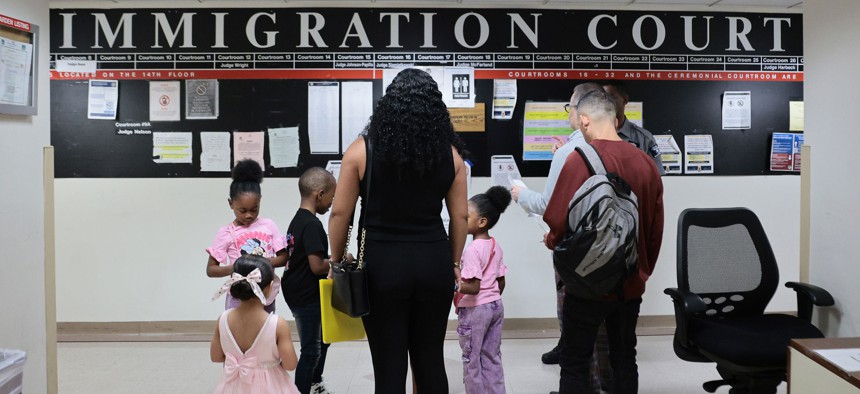
The Office of New Americans received additional funding for immigrant legal services in the fiscal year 2027 state budget. Michael M. Santiago / Getty Images



Funding for immigrant legal services through the state Office for New Americans got a $10 million bump in the state budget approved earlier this year, bringing the total to $74.2 million. Now, immigrant rights advocates have recommendations for the New York Department of State on how that additional money should be spent to best serve immigrant communities.
Although immigrant advocates wanted significantly more money in the state spending plan – $175 million total – they still welcomed even the small increase that came at a time of intense stress on legal service providers. A memo from the Care for Immigrant Families coalition – shared exclusively with City & State – presented three broad recommendation categories for how best to allocate the funds. Above all, the memo urges making investments to expand providers’ capacity to offer emergency deportation defense services. The rest, it says, should go toward recruitment and retention efforts for staff, and building out overall capacity for other immigration legal services in the long term.
“Providers across the state face significantly increased deportation defense needs,” the memo reads. “Without flexible, adequate resources to meet the rising demand for services … waitlists for deportation defense representation have lengthened.”
The memo also specifically recommends following blueprints for strengthening the immigrant legal services field described in the Building Up Immigrant Legal Defense Act, legislation that would go hand-in-hand with the Access to Representation Act that would create a statewide right to an attorney in immigration court. Neither bill has passed in the state Legislature despite years of advocacy from both activists and lawmakers.
“An even greater investment is desperately needed to defend immigrant New Yorkers against escalating ICE attacks,” Rosie Wang, program manager for the Advancing Universal Representation initiative at the Vera Institute of Justice, said in a statement. “But by allocating the funding strategically, the state can still ensure that it has the greatest possible impact.”
The memo offered further details for best allocation practices to the Office for New Americans on funding allocation decisions that would help ensure the success of providers and nonprofits receiving grants. That includes allowing contract flexibility for grantees that would make it easier to shift money and resources as necessary to meet ever evolving needs. That would be tied with new quarterly reporting requirements.
Those recommendations come on the heels of a new audit from the state comptroller’s office, which concluded the state didn’t collect enough data such as wait time for services, provider capacity and levels of unmet need necessary for properly evaluating success or areas with gaps.
Another specific recommendation in the memo would address that shortcoming as well. In Care for Immigrant Families also suggested the establishment of a shared reporting platform to be accessed by all nonprofits receiving grants from the Office for New Americans.