

Interviews & Profiles
Like AOC, but to the left
Darializa Avila Chevalier, a pro-Palestinian activist and self-described “millennial with an internet connection” is actually giving Rep. Adriano Espaillat a run for his money.

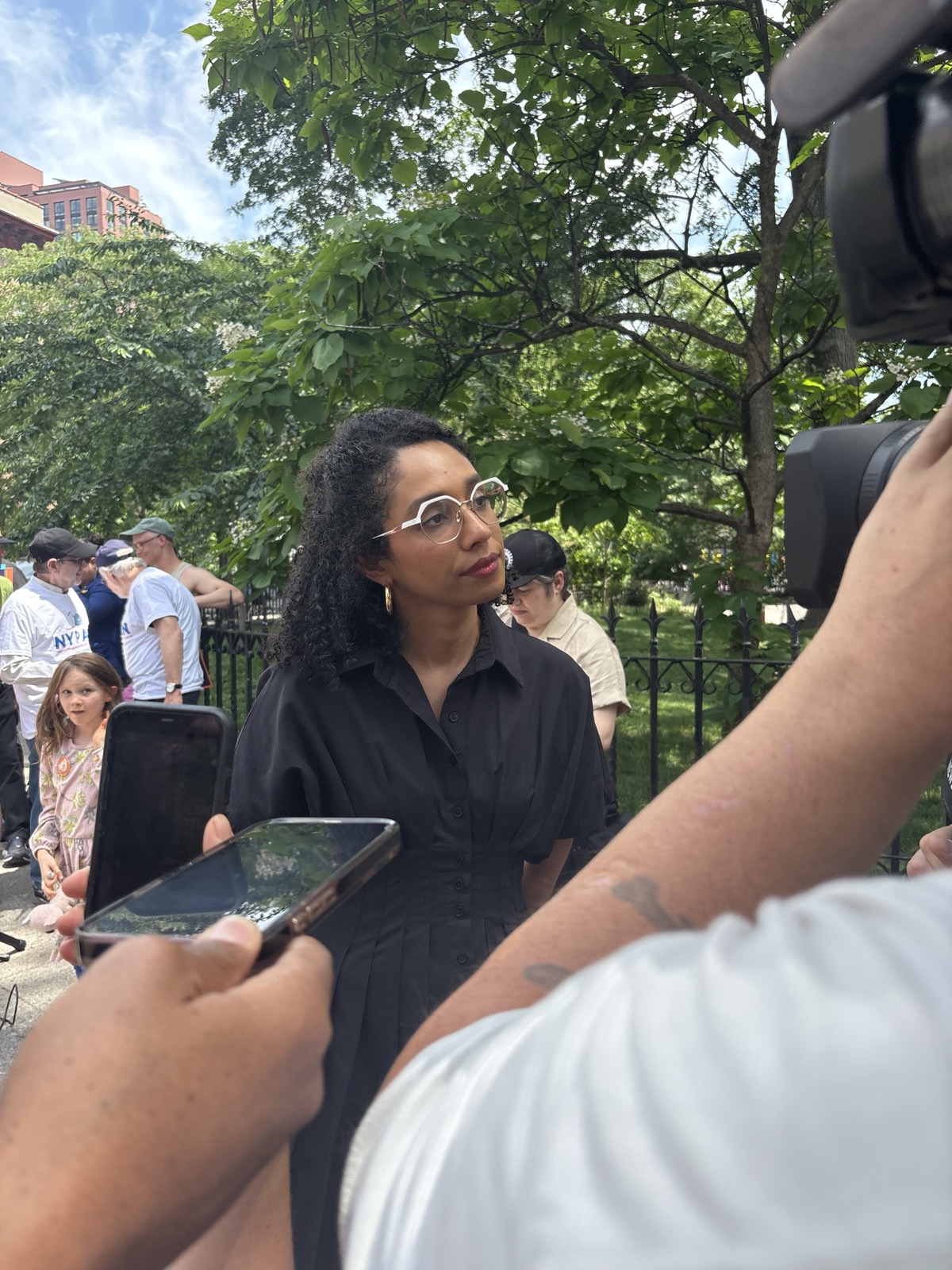
DAC, photographed in Fort Tryon Park. Nyasia Sylvester



In the summer of 2014, state Sen. Adriano Espaillat was locked in his second epic primary against the 44-year incumbent “Lion of Lenox Avenue” Rep. Charlie Rangel. Already, Espaillat had begun to form his uptown political alliance, mentoring candidates and boasting about how many mayoral hopefuls came to the Indian Road Cafe to court his support and the support of a growing Dominican voting bloc. Espaillat would lose to Rangel, just as he had two years prior. But the loss would harden his resolve to wrest the 13th Congressional District seat from the Black establishment to become the nation’s first Dominican member of Congress.
“This is the guy who came here as an undocumented immigrant and clawed his way up, forcing his way in, beating down the doors of the machine,” said New York City Comptroller Mark Levine, a loyal ally. “Nothing was handed to this guy.”
That same summer, a 20-year-old Columbia University student named Darializa Avila Chevalier was in Palestine – and her worldview was being turned upside down. With funding from school, she took an internship in Nablus, one of the largest cities in the West Bank, somewhat on a whim. For almost two months, she lived and worked at a center run by Tomorrow’s Youth Organization, teaching English to Palestinian kids as young as three. Right after she got back, the 2014 Gaza war began, a conflict in which more than 2,000 Palestinians died and 10,000 were injured.
“That was a really formative period for me, because I was essentially living in the heart of the occupation and seeing the way that Palestinians had to navigate all these systems, the impact that it had on children as young as the ones that I was working with,” Avila Chevalier said. “I came back, and I couldn't unsee all those things. And I started seeing them in our own systems, right? Our systems of policing, of deportation, of the controlling of our movement.”
In other words, that summer was radicalizing. Avila Chevalier was going through something many young people can relate to: a dawning of global consciousness, a realization that the way things are presented is different from the way things really are, a painful awakening to the disparities of human experience. Many people draw the curtain on these epiphanies as they enter adulthood – and this is seen as a mark of maturity. As we all now know because her old and not-so-old tweets saying things like “Fuck Kamala Harris” and “no more police at all ever” have been repeatedly published, Avila Chevalier did not moderate.
“The connections just solidified in my mind,” she said. “Oh, these are not only like systems, they are the same system. It was the same tear gas made in the USA that was being dropped on Gaza that was also being used against (Black Lives Matter) protesters in Ferguson.”
Within the Democratic Socialists of America, an organization Avila Chevalier officially joined less than a year ago and which voted overwhelmingly to back her in January, skeptics have called her a “Palestine ultra.” It’s an issue the now 32-year-old has oriented her whole adult life around. It has animated her interest in immigration policy, in anti-terrorism surveillance and in racial justice. It led to her conversion to Islam and to her protesting the ongoing Israel-Hamas war from the moment it began. And it animates her attempt to unseat Espaillat, now a five-term Congress member, more than a decade after that turning point summer.
That this is the candidate hand-picked by the primary factory Justice Democrats, backed by New York City DSA and endorsed by an enthusiastic Mayor Zohran Mamdani suggests that they believe pro-Palestinian activism is a winning issue. This is true particularly among the young people who showed up for Mamdani in droves last summer, but Avila Chevalier is testing the theory across a swath of Democrats in a district with a diverse primary electorate.
“We're in an interesting moment where new people are being politicized by the thousands through the anti-war movement,” said DSA co-Chair Gustavo Gordillo. “And it makes sense that a candidate who's been at the center of anti-imperialism has been able to tap into that interest and that outrage and agitation.”
It also speaks to the vulnerability of Espaillat – and to the weakening political power structure that he painstakingly cultivated. The Upper Manhattan and Bronx branch of the New York City chapter of DSA is the organization’s fastest growing. Mamdani won the district, which stretches across Manhattan north of 96th Street and includes a small portion of the West Bronx, by 13 points in the primary last summer, walloping Andrew Cuomo, whom Espaillat endorsed. Espaillat quickly adjusted, backing Mamdani right after he won the primary, but his overtures to Mamdani’s movement failed. After Mamdani endorsed Avila Chevalier on MS NOW last month, Gordillo said 200 volunteers have joined the campaign every week.
“We're talking about a 10-year Democratic incumbent running against an avowed leftist,” said political commentator and left whisperer Michael Lange, who has written extensively about the race. “Like, someone who might be the most left-leaning member of Congress if she wins.”
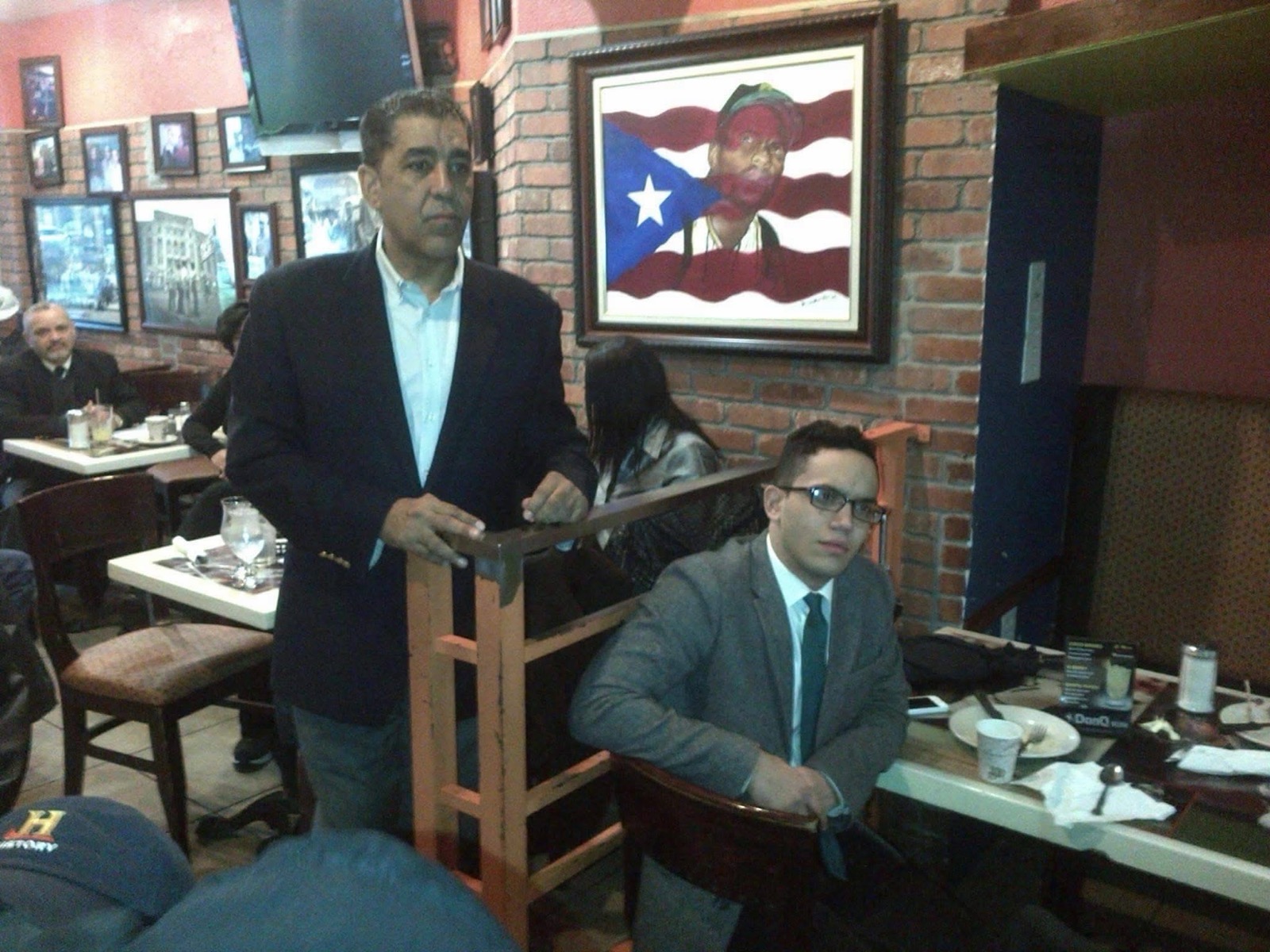
You can see how Espaillat might be bewildered by the situation. In some ways, Avila Chevalier, who is the daughter of Dominican immigrants and who speaks fluent Spanish, could be familiar to him. In another timeline, she might have ended up like 35-year-old City Council Majority Leader Shaun Abreu, who worked on Espaillat’s state Senate and congressional campaigns while a student at Columbia and whom Espaillat mentored into his City Council seat. “He's someone who has really looked out for young people, people like myself, the young generation of elected officials, and he's opened a lot of doors and opportunities,” Abreu said.
But here she is, as if from nowhere, challenging Espaillat, the original insurgent, with a totally different worldview, with a totally different relationship to the district. And he could very well lose to her. “I think it's up for grabs,” said Eli Valentin, author of “Politicking in the Barrio: Essays on Latino Politics in New York.” “Eight months ago, we would not have thought this was going to be possible.”
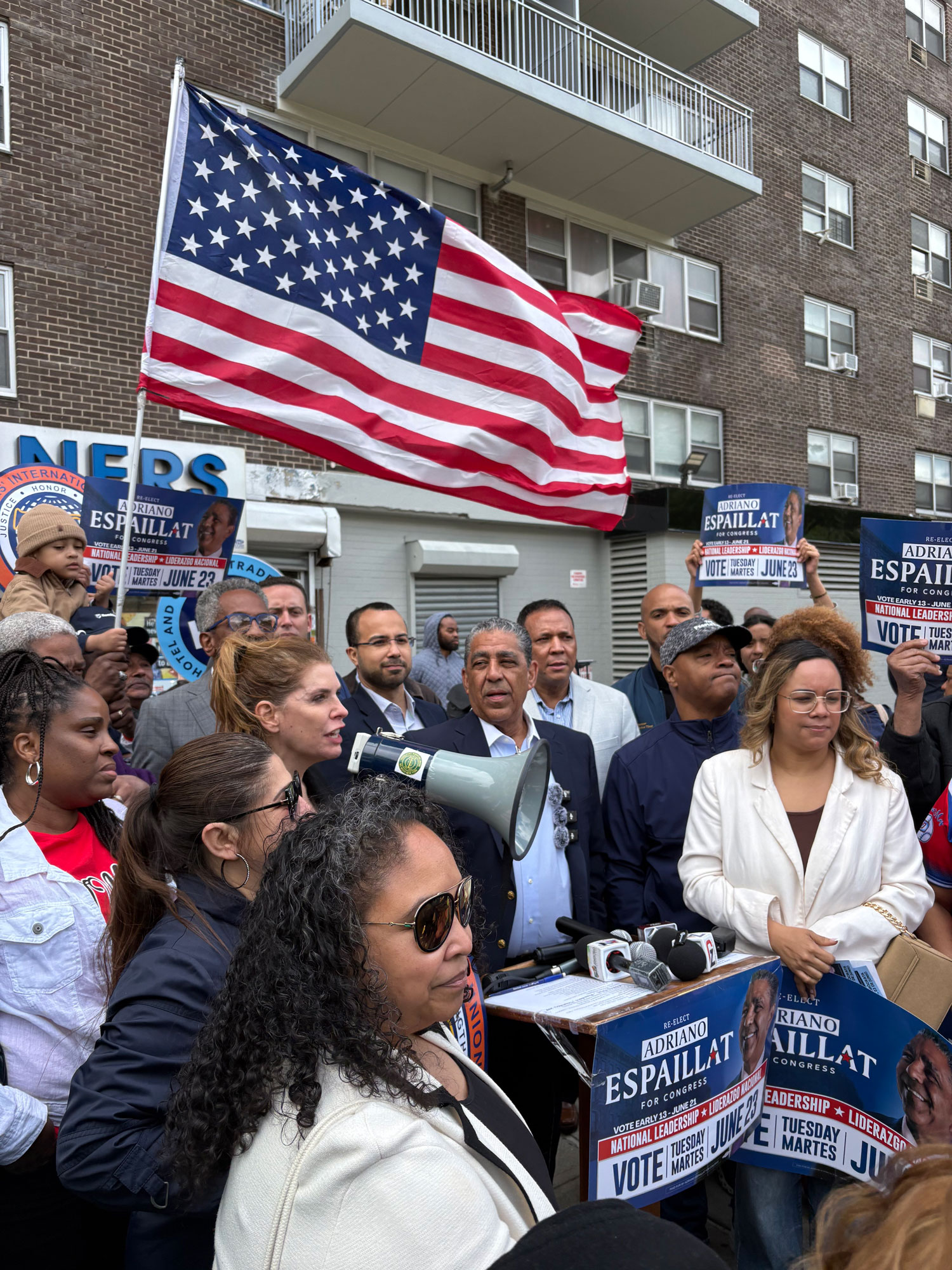
At a recent rally in Harlem with union supporters and elected officials, the 71-year-old Congress member was in true form – a master operator who has been forming alliances (and making enemies) since he first ran for City Council in 1989. The location of the rally, in front of the housing complex Esplanade Gardens, home to many Black voters, was telling. Espaillat, who was accused earlier in his career of capitalizing on racial politics to pit Black and Hispanic voters against each other, is now hearkening back to the 1989 mayoral race, talking about “a David Dinkins-type coalition,” where “a Black and brown labor coalition comes together to fight for a seat at the table.” In a district with a primary electorate that, at least in 2025, was a pretty even mix of white, Hispanic and Black voters, he seemed to be aiming for a coalition of the latter two. He introduced myriad labor leaders and elected officials without a script, alternating between English and Spanish, touting long relationships with each one. It was an unusually cold and windy day just after Mamdani announced he was endorsing Avila Chevalier – reneging on a commitment he had made to Espaillat.
“He's in the fight for his life, for his political career, and I'm proud to stand by him, and proud to stand by our community,” said Council Member Carmen De La Rosa, another Espaillat mentee. “Unfortunately, the candidate that has been chosen by the DSA and the mayor, I’ve never met, I’ve never seen, really.” It was a sentiment many shared. Espaillat went so far as to call for people like Avila Chevalier, who was raised in Florida but lived in New York City since she moved here for college 14 years ago, to be sent “back home packing wherever they came from.” It was the kind of thing you say if you don’t totally understand what you’re up against.
“The permission that I needed”
That inability to “unsee” after she returned from Nablus led Avila Chevalier to join the campus chapter of Students for Justice in Palestine at Columbia, where she co-founded the campaign to get the university to divest from Israeli assets. She studied Middle Eastern Studies, and went on to pursue a doctorate from the CUNY Graduate Center in sociology. Her unfinished dissertation focuses on the connection between the criminal legal system and deportations of immigrants and “on antiBlackness and securitization as undergirding ideological projects of this pipeline.” She collaborated with civil rights attorney Ramzi Kassem, who is now Mamdani’s chief counsel, to advocate for the release of Abdikadir Mohamed, a legal permanent resident of Somali origin who was detained at John F. Kennedy International Airport and held in immigration custody for more than a year. To support herself while she worked on her dissertation, she took a job as an investigator with public defense practice The Neighborhood Defender Service of Harlem. The day after the Oct. 7, 2023, attacks on Israel that launched the ongoing Israel-Hamas war, she was in Times Square with her keffiyeh on, advocating for Palestinian liberation at a rally that startled and frightened many Jewish New Yorkers. “I can only say I have been advocating for the human rights of Palestinians for most of my adult life,” she said. “Whenever anything happens on the ground (in Israel), there's always a really outsized reaction that costs thousands of people their lives, and that is what I was worried about.”
She threw herself into organizing against the war, focusing on her alma mater. She was there as an alumni organizer from the first day tents popped up on Columbia’s campus. She would go teach at Lehman College and NYU during the day, then come back to the encampment until late into the evening. A week after Palestinian campus activist Mahmoud Khalil, whom she calls a friend, was detained by Department of Homeland Security officers in March 2025, she wrote an op-ed defending him in USA Today. “Relying on racist tropes that depict Arab men as national security threats, President Trump has detained and defamed Mahmoud and denied him due process,” she wrote, calling the move “an authoritarian power grab.”
At a Memorial Day rally overlooking the George Washington Bridge in Washington Heights, it was clear that for Avila Chevalier, every issue connects to the Middle East. To describe how Espaillat had betrayed the district on immigration, she talked about his failure to stand up for Khalil. To describe how Congress had failed on affordability, she said she is “tired of being told that there is never enough money to feed our children while there is always enough money to bomb schoolchildren abroad.” Her primary attack against Espaillat, a member of the Congressional Progressive Caucus and the first formerly undocumented member of Congress, is that he is funded by the American Israel Public Affairs Committee. This cycle, AIPAC has directed roughly $145,000 to Espaillat’s campaign from about 100 donors as of the end of March. As of three weeks before the primary, he had about $1 million cash on hand, compared to Avila Chevalier’s $230,000. He’s also benefited from more than $3.4 million in super PAC spending so far – a number that’s sure to rise until the June 23 primary. Avila Chevalier also has been boosted by just over $1 million in spending from super PACs, including that of the Justice Democrats.
Avila Chevalier describes political conviction as a physical experience. “My politics have always felt like they’ve had a visceral sense about them, in the sense that when I see something that I feel is so deeply unjust, like, in my body, I just can't help but try to figure out what I can do about it.”
As she spent more and more time organizing, she was surrounded by Muslim friends and allies. Raised mostly by her mom, Maria, who worked several jobs throughout her childhood, the emphasis was always on education. She didn’t have a religious upbringing, though most of her family is Catholic. “When I felt most spiritual when I was doing work that was about my community,” she said. When Ramadan came around in 2019 or 2020, she decided to try fasting, “just to see if I could do it.” Then she fasted again the next year, and the next. The fourth year she was fasting, a friend gently confronted her: “She's like, ‘Darializa what are we doing here? Are you converting? Are you not? Like, why are you continuing to fast? What's the goal?’” It was the push she needed to admit that she actually wanted to be Muslim. “I remember being able to articulate that, and then a few days later going to Halaqa, which is like, Quran study, and the Imam said, ‘You know, Allah introduces himself to us as the most gracious and the most merciful. He will always be that, and whenever you're feeling any type of doubt, you can always come back to that,’ and I remember crying, and being like, ‘Oh, that was the permission that I needed.’”
“Darializa knew”
The narrative with Justice Democrats often goes that they pluck out reluctant candidates from obscurity after reviewing thousands of nominations – like with Rep. Alexandria Ocasio-Cortez. But it was Avila Chevalier who first reached out to the organization, according to spokesperson Usamah Andrabi. It was February 2025. In an email, she introduced herself as part of the “collective Uptown for Palestine” and said she had been frustrated with the lack of response from Espaillat’s office on the issue. “A few of us have been thinking that it might be worth introducing an electoral strategy to unseat or push him on his policies,” she wrote. “Personally, my organizing experience is in grassroots/direct action work and would love to talk with someone who would be willing to do some strategy/power mapping with us on the feasibility of an electoral strategy against an establishment Dem.”
This was long before Mamdani’s campaign, for which Avila Chevalier was a field lead, proved that the 13th Congressional District could be fertile ground for a progressive upset. “We had not been looking at this district first and foremost, but we were definitely interested in doing so,” Andrabi said. “Darializa knew what the feeling on the ground was before any poll showed it.” (And polls have since shown it. A Justice Democrats survey from early June had her up 4 points. An internal Espaillat poll reportedly had the race “tightening.”)
Both Justice Democrats and Avila Chevalier say it took some convincing to actually get her to be the candidate to challenge Espaillat. Maybe, maybe not. She certainly fits the mold of a Justice Dems pick. Like AOC, she’s a young, dynamic, bilingual woman of color who comes from a working-class background, graduated from an elite college and looks great on TV. Whether she needed coaxing or not, what is certain is that the campaign has been brutal – especially as the political and media classes have caught up to the fact that this is a real race and started dissecting her vast online footprint. On the tweets from her 20s, Avila Chevalier said the old, fun Twitter was a haven after her brother died: “I am a millennial with an internet connection, and obviously the way I talk about these things now is not at all how I talked about them then.”
After a recent press conference denouncing Espaillat for his ties to AIPAC, Avila Chevalier’s aide tried to make the press get on line for one-on-one interviews with the candidate, as opposed to the more traditional media scrum. The reporters refused, crowding around Avila Chevalier, cameras up, microphones in her face. The questions came in a harsh staccato, a handy summary of the narrative she’s up against: “Darializa, can you respond to past comments that you said the U.S. was ‘a fucking disgrace’ and you also said the U.S. ‘bullied Russia?’” “Are you the gentrifiers’ candidate?” “Can you explain why you attended the rally on Oct. 8 in Times Square that considered the attacks from Hamas on Israel, the taking of 251 hostages, including children, as ‘resistance?’”
If she pulls this off – and many observers across the political spectrum think she has a real chance – these would be the kinds of inquiries she’d hear for two years straight. And Espaillat and his still-vibrant network of protegés are not keen to give this seat up. If she wins, she’ll have to defend the seat, maybe immediately. Ill-fated Justice Dem Jamaal Bowman lost reelection after just two terms. But she’s keeping things in perspective. Avila Chevalier said she was recently asked about community organizing: “How do you know what will work?” She said, "I don't. You just plant the seed, you just do the work, the rest is with God.”
– With reporting from Sahalie Donaldson